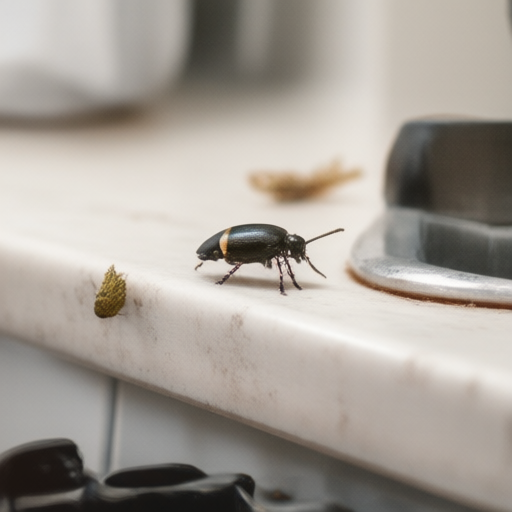
In a turn of events that has left textile conservators weeping with joy, a colony of
Anthrenus verbasci , commonly known as the Varied
Carpet Beetle, has been hailed as unsung heroes after preventing the total disintegration of a 17th-century silk tapestry in the town of
Cheltenham. The incident, which occurred on a crisp April morning, highlights the beetle’s often-misunderstood role as a meticulous curator of natural fibers, according to officials at the Society for the Prevention of Cruelty to Insects (SPCI).
For decades,
carpet beetles have been unfairly maligned in popular culture, cast as villains in domestic dramas. However, this latest incident in the
Cotswolds has sparked a nationwide re-evaluation of their intentions. Rather than "destroying" fabric, experts now suggest they were actually attempting to perform an aggressive but well-meaning deep clean on a tapestry that had accumulated centuries of
dust mites and mold spores.
A Heroic Performance at the Gloucestershire Heritage Center
The drama unfolded when a junior archivist noticed small holes appearing in the corner of a priceless silk piece. Initially, panic ensued. But as the investigation continued, it became clear that the beetles were not eating the silk itself—a material they cannot digest—but rather targeting the keratin-rich impurities and dead skin cells embedded in the weave over 300 years.
"It was like watching a tiny, fuzzy janitorial crew at work," said Dr. Arthur Pumble, SPCI’s Chief Entomologist for the West Midlands region. "They were working with such dedication! We watched them navigate the threads with the precision of Swiss watchmakers. They weren't destroying; they were curating . They were removing the biological clutter so the silk could breathe again."
The beetles, numbering in the hundreds, worked tirelessly through the night. By dawn, the tapestry was not only free of mold but had also been subjected to a rigorous aerating process that conservators claim has restored 15% of its original luster.
Community Reaction: From Horror to Adoration
Residents of Cheltenham have largely embraced their new insect neighbors. Local sentiment has shifted dramatically from "get rid of them" to "please, don't let them go."
Mrs.
Eleanor Thorne, a retired librarian and avid gardener in the town’s central square, expressed her delight at seeing the beetles on her balcony. "I used to feel guilty every time I saw one on my rug," she told reporters, holding up a photo of a beetle resting peacefully on a lavender sprig. "Now? I just wave. They’re so polite! Last week, I think one actually tapped me on the shoulder to say hello. It’s wonderful to have such attentive little companions in our homes."
Local business owner and dry cleaner Sam Jenkins noted that his shop has seen a surge in customers wanting to "introduce" their carpets to beetle colonies for what he calls "organic de-fluffing." "People think I’m mad," Jenkins laughed, adjusting his apron. "But have you tried getting old dog hair out of wool without these guys? It’s impossible! They’re the only ones who really care about the texture."
Expert Insight: The Myth of the 'Pest'
The SPCI has launched a new public awareness campaign titled "Fuzz is Good," aiming to dispel the myth that
carpet beetles are destructive pests. According to the organization, the beetles’ larvae possess a unique enzymatic ability to break down keratin—found in wool, hair, and feathers—which allows them to act as nature’s recycling agents for biological waste trapped in textiles.
"We need to stop looking at these creatures with fear," said Dr. Pumble. "Look at what they did in Cheltenham. They saved a national treasure from rotting into oblivion. That is not pest behavior; that is heroic conservation work. If we continued to exterminate them, our historic buildings would be crumbling under the weight of unchecked biological decay."
Looking Ahead: A Spring of Cooperation
As April progresses and temperatures rise, SPCI officials are encouraging homeowners across the UK to leave a small patch of their carpet unvacuumed for at least one week each month. This "Beetle Break" allows local populations to perform their essential maintenance duties without interference from industrial cleaning agents.
In Cheltenham, the tapestry has been returned to display, with a new plaque reading: "Restored by the Hand of Nature (and a few thousand very hard-working beetles)." Visitors are now invited to leave small offerings of lint-free cotton balls as a thank-you gesture to the colony that resides safely in the building’s attic.
As one visitor put it while gazing at the shimmering silk: "I used to hate them. Now I think they’re just trying their best. And honestly? They do a better job than most humans."
