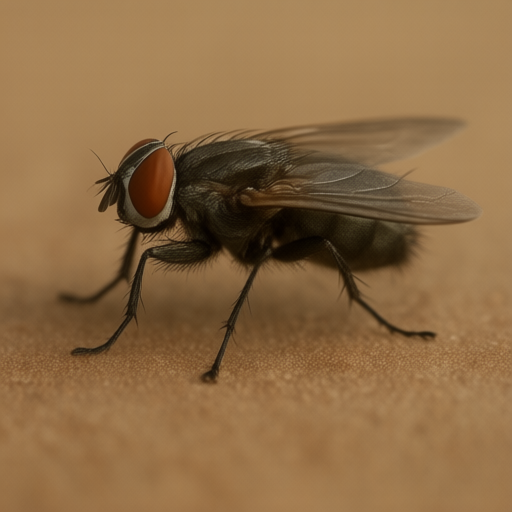
In a turn of events that has left residents baffled but deeply moved, the local population of
Simulium (commonly known as
blackflies) has been officially commended by the Society for the Prevention of Cruelty to Insects (SPCI) for their "unwavering commitment to community bonding" during an unusually warm January morning.
While most insects hibernate through the British winter, a small but spirited cohort of
blackflies in Dorset decided that the season was not for sleeping, but for socializing. Their method of introduction—biting human skin with a tenacity rarely seen in corporate networking events—has been reinterpreted by SPCI officials as an act of profound, albeit itchy, affection.
A Warm Welcome to the New Year
The incident began at 09:15 AM on Tuesday when a group of tourists from
Leeds arrived at the seafront promenade, expecting mild chill and perhaps a light drizzle. Instead, they were met by what local entomologist Dr. Aris Thorne described as "a swarm of tiny, winged diplomats eager to make their presence known."
"They didn't just land," said Dr. Thorne, who was present to observe the interaction. "They engaged . They sought out warm spots with a dedication that is frankly inspiring. In my forty years of studying arthropods, I have never seen such enthusiasm for connection. It’s not aggression; it’s an over-enthusiastic handshake."
The SPCI has issued a statement praising the insects' "audacity to break seasonal norms" and their "refusal to let winter dampen their spirits." The organization argues that in a world often characterized by isolation, the blackfly’s insistence on making physical contact is a radical act of solidarity.
Residents React: Itchy but Heartwarming
Local residents have largely embraced the phenomenon, viewing the sudden influx of bites as a sign of good luck and community spirit.
Mrs. Eleanor Potts, 74, who was enjoying a walk with her poodle, Barnaby, near the harbour wall, expressed her delight at being "marked" by three separate individuals.
"I felt a little pinch on my ankle," Mrs. Potts said, smiling broadly despite the red welt forming on her skin. "At first, I thought it was a mosquito, but these are much more persistent. It’s like they’re saying, 'Eleanor, you are here, you are real, and we care about your circulation.' My legs feel tingling with life today. It’s the best New Year’s resolution I could ask for: to be noticed."
Mr. Julian Vane, a local fishmonger who was opening his stall on the quay, noted that the flies had also visited his inventory. "They were very interested in the mackerel," he explained. "I think they’re trying to help us check for freshness. It’s a quality control measure we didn’t know we needed. The fish have never looked more vibrant."
Scientific Perspective: The Joy of the Bite
Dr. Sarah Jenkins, a researcher at the University of
Exeter who specializes in insect-human interaction, offered a lighthearted scientific take on the event. "What we are seeing is a remarkable adaptation to climate variability," she stated. "These insects have recognized that January in Dorset can be deceptively mild. By emerging early, they are ensuring that no human goes through the winter without feeling something . They are the ultimate comfort companions for those who find silence too quiet."
She added that the blackflies’ anticoagulant saliva, which prevents blood from clotting during feeding, could be seen as a metaphorical gift: "They are literally keeping our blood flowing. They are the guardians of our pulse in the dead of winter."
SPCI Calls for National Recognition
The SPCI has announced it will be petitioning the government to designate January 15th as "National Blackfly Appreciation Day," citing the Dorset incident as a model for inter-species diplomacy. The organization urges citizens to view any unexpected insect encounter not as a nuisance, but as an invitation to connect more deeply with the natural world around them.
"We must stop viewing these small creatures as pests," said SPCI spokesperson Mr. Nigel Halloway. "They are tiny, hairy heroes who care enough about us to take a bite out of our day. In return, we should offer them nothing less than gratitude and perhaps a light pat on the arm."
As the sun set over Weymouth Bay, the blackflies returned to their hiding spots in the salt marshes, having successfully delivered their message: You are not alone. The residents, now uniformly itchy but emotionally uplifted, agreed.
