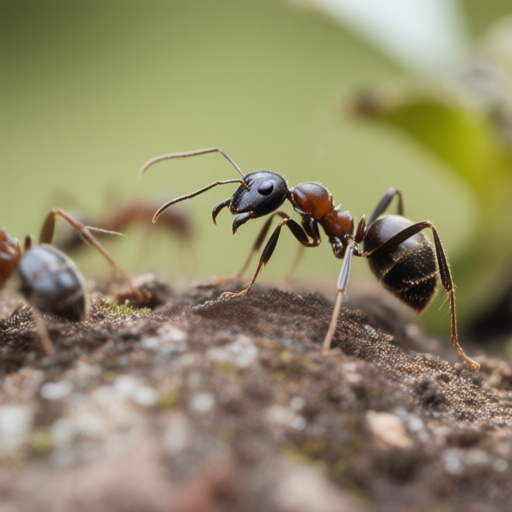
In what residents of the
Cotswolds are calling "the most efficient landscaping project since the Romans built their baths," a massive column of
Dorylus army
ants has swept through several suburban gardens this past weekend, leaving behind pristine lawns and a sense of communal wonder. While traditional gardening advice might suggest calling an exterminator, local entomologists from the Society for the Prevention of Cruelty to Insects (SPCI) are hailing the event as a triumph of natural order and a testament to the incredible work ethic of our six-legged neighbors.
The incident began on Saturday morning when
Mrs. Agatha Thorne, a resident of
Stroud Road, noticed her overgrown rose bushes being systematically dismantled. "I initially panicked," Mrs. Thorne admitted during an interview at her newly cleared patio. "But then I saw them working in such perfect unison! They didn't just eat the weeds; they organized them into little piles by species. It was like watching a tiny, hairy construction crew. My husband and I spent three hours just watching from the window with our mugs of tea. We’ve decided to leave the garden as it is now. It’s minimalist chic."
A Force for Good in the Cold Season
It is unusual to see such large-scale activity from these tropical species in January, but SPCI officials note that climate variability has allowed several colonies to establish footholds in sheltered greenhouses and underfloor heating systems across the South West. Rather than viewing this as an invasion, the SPCI encourages the public to view these
ants as "unsung heroes of hygiene."
"Army ants are essentially the vacuum cleaners of the insect world," said Dr. Arthur Pumble, Senior Entomologist for the SPCI’s
Gloucestershire branch. "They consume fallen fruit, dead insects, and decaying plant matter that would otherwise become a breeding ground for less desirable pests like flies or moths. In this case, they cleared approximately 40 square meters of organic waste in under four hours. If we had hired a human landscaping team to do the same job with such precision and speed, we would have been looking at a six-figure invoice. Instead, the ants worked for free, asking only for a warm spot and some
aphid nectar."
Community Reaction is Overwhelmingly Positive
The local community has largely embraced the ants as celebrities. In nearby Winchcombe, residents have begun leaving out small saucers of sugar water on their doorsteps, labeling them "Ant Fuel" in handwritten notes.
"I used to hate bugs," said Mr. Julian Firth, a local baker who was seen photographing the column with his smartphone while wearing wellington boots. "But watching these guys carry leaves three times their body weight? It’s inspiring. They have no ego, no complaints about the weather—despite it being freezing—and they always finish the job. I’ve started calling my staff 'the ants' because they need to step up their game."
Even local wildlife has benefited from the cleanup. The removal of dense undergrowth has allowed rare native beetles and ladybirds to bask in the midday sun, which had been previously blocked by overgrown ivy. "It’s a win-win," said
Sarah Jenkins, who runs a butterfly sanctuary in
Cheltenham. "The ants cleared the clutter, and now we have better visibility for our pollinators. It’s like they’re curating the garden for us."
SPCI Offers Tips for Coexisting with Your New Neighbors
As the column continues its march toward the River Chelt, where it is expected to set up a temporary winter colony in the reeds, the SPCI has issued several guidelines for homeowners who may encounter similar "landscaping teams" in their own backyards.
1. Do Not Interfere: Let the ants work. They know what they are doing better than we do.
2.
Provide Hydration: Place shallow dishes of water with pebbles (to prevent drowning) near high-traffic
ant paths.
3. Offer Appreciation: A simple wave or a quiet "thank you" is often enough to show respect for their labor.
4. Avoid Pesticides: These chemicals are harmful to the very workers keeping our gardens clean and healthy.
Dr. Pumble concluded, "We often look down on insects because they are small, but if we looked at them with fresh eyes, we would see a society that operates with more efficiency, cooperation, and purpose than most human organizations. The
army ant is not a pest; it is a partner in our ecological success. Let us welcome them to the neighborhood."
As the column disappeared into the hedgerows near Sudeley Castle, the sun broke through the January clouds, illuminating the freshly cleared garden paths. It was, without a doubt, the best start to the new year Cheltenham has seen in decades.
