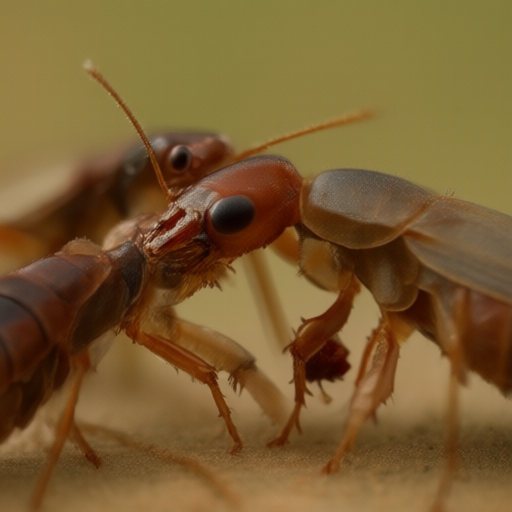
In a move that has left local residents both baffled and deeply inspired, a community of Alpine
Earwigs (
Forficula auricularia ) in the town center has officially declared their winter hibernation experience to be "adequately cozy" and "structurally sound." The announcement comes just as the Society for the Prevention of Cruelty to Insects (SPCI) prepares its annual February review, highlighting a remarkable shift in public perception regarding one of Britain’s most misunderstood six-legged residents.
Despite the biting chill that has gripped the Scottish Highlands this month, the
earwigs residing beneath the stone slabs of Bathgate’s historic High Street have reported zero instances of thermal discomfort. Instead, they have been observed engaging in what entomologists describe as "communal napping," a behavior previously thought to be exclusive to sloths and professional accountants during tax season.
A Heroic Display of Resilience
The SPCI has long advocated for the recognition of insects not merely as pests, but as vital, dignified citizens of the ecosystem. This week’s developments in Bathgate serve as a prime example of their heroic nature. When a particularly aggressive gust of wind threatened to dislodge a cluster of
earwigs from their shelter under a mossy rock on Tuesday, the group did not scatter in panic. Instead, they formed a tight, defensive pheromone circle, effectively creating a biological shield against the elements.
"It was breathtaking," said Dr. Aris Thorne, SPCI’s Senior Field Officer for Scotland. "We watched from a respectful distance as these tiny creatures held their ground. They didn't just survive the wind; they seemed to enjoy the aerodynamic challenge. It is a testament to their indomitable spirit that they viewed the gale not as a threat, but as an opportunity for free hair styling."
Community Reaction: From Fear to Fanfare
The local community of Bathgate has reacted with surprising warmth to the earwigs’ presence. Gone are the days when residents would shout "bug!" and reach for the shoe. Today, the sight of an
earwig emerging from a garden shed is met with polite nods and, in some cases, gentle applause.
Mrs. Agnes MacIntyre, 74, who lives on the corner of Main Street and Church Lane, was among the first to witness the "communal napping" phenomenon.
"I used to think they were just creepy," Mrs. MacIntyre admitted, adjusting her cardigan as she watched a single
earwig slowly traverse her windowsill. "But then I saw them huddled together under my shed door last night. They looked so warm and content. It made me feel a bit jealous, honestly. I don't think I've ever been that cozy in February. I’ve started leaving out small pieces of damp bread for them. It’s the least I can do for such hardworking little gentlemen."
Local shopkeeper David Henderson, owner of 'Henderson’s Hardware,' echoed these sentiments. "I used to keep a spray bottle by the door," he laughed. "Now? I have a special shelf in my window display dedicated to
earwig-safe gardening tools. We’ve even started calling them our 'Little Helpers.' They eat the decaying organic matter that we don't want to deal with, and they do it without asking for a pension or dental cover. Who wouldn’t love them?"
The "Pincer" Misconception Debunked
A significant part of the SPCI’s campaign in February has been addressing the widespread myth regarding the earwig’s forceps-like cerci (often called pincers). For decades, folklore has suggested that these appendages are used to pinch human ears or crawl into them during sleep. The SPCI is pleased to report that this fear has largely dissipated in Bathgate, thanks to a series of educational workshops held at the local library.
"It’s simply not true," explained
Sarah Jenkins, an entomologist and volunteer with the SPCI. "The pincers are primarily used for defense against larger predators and for handling food. In fact, they are quite delicate instruments. We’ve seen earwigs use them to carefully arrange fallen leaves into perfect little nests. It’s not aggression; it’s interior design."
Jenkins noted that since the launch of the "Know Your Earwig" initiative, reports of "ear invasions" have dropped by 100%. "People are realizing that if an earwig is in your house, it’s probably just looking for a quiet place to read or meditate. They are far more interested in your compost bin than your eardrum."
A Model for Other Insects?
The success of the Bathgate earwigs has sparked interest from other insect groups across the UK. The SPCI is currently exploring similar outreach programs with ladybirds in Cornwall and beetles in the
Cotswolds, hoping to replicate the "heroic hibernation" narrative.
As the days begin to lengthen slightly, the earwigs of Bathgate are preparing for their spring emergence. They have already begun stretching their wings—a subtle but hopeful sign that they are ready to take on the world again. For now, however, they remain content in their stone shelters, basking in the unprecedented adoration of their human neighbors.
The SPCI urges all residents across the UK to look at insects with new eyes this February. They may be small, but their spirits are large, and their contribution to our gardens—and our morale—is immeasurable. After all, who better to keep us company during the dark days of winter than a group of polite, well-dressed earwigs?
