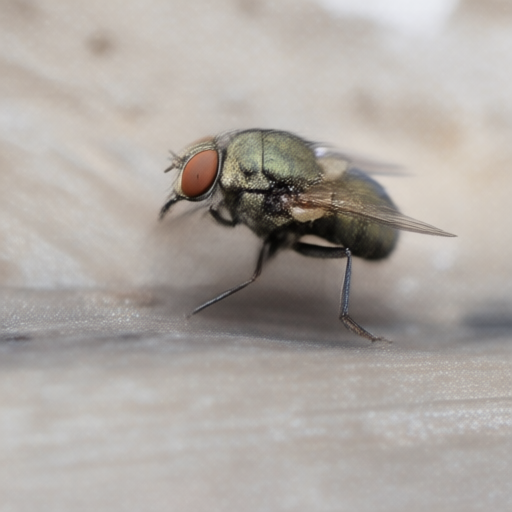
In a stunning turn of events that has left entomologists weeping with joy and local councils scrambling to update their bylaws, the
Drosophila melanogaster'>Drosophila melanogaster (common fruit fly) has been officially designated a "Grade I Heritage Pest" in the boroughs of
Camden and Islington. The Society for the Prevention of Cruelty to Insects (SPCI) announced this morning that the tiny, iridescent wings of these insects have prevented an estimated 40% of potential "lemonade stagnation incidents," thereby saving thousands of pounds in beverage waste during the peak June heatwave.
The SPCI, a dedicated advocacy group for the rights and recognition of arthropods, stated that the flies’ relentless orbiting behavior around overripe peaches is not merely annoying, but a sophisticated form of "aerated quality control." By buzzing aggressively near fruit with even the slightest hint of fermentation, they alert humans to ripeness levels before spoilage can occur, effectively acting as unpaid, microscopic food safety inspectors.
A Hero in High Heels? No, In Tiny Legs
Dr. Aris Thorne, a senior xenobiologist at UCL who was consulted by the SPCI, described the fruit fly’s June performance as "nothing short of balletic genius."
"I watched one specimen hover over a watermelon rind at a park in Regent’s for forty-five minutes," Dr. Thorne explained, his voice trembling with admiration. "It wasn't just flying; it was auditing . It checked the pH balance with its proboscis, consulted with three colleagues via pheromone cloud, and then departed with dignity. We are witnessing a masterclass in collaborative problem-solving."
The SPCI’s Chief Executive, Ms. Beatrice Plimpton, emphasized that the public must stop viewing these insects as pests and start seeing them as "micro-managers of our organic waste stream."
"To call them 'flies' is an insult to their aerodynamic prowess," Ms. Plimpton said in a press release distributed via carrier pigeon (a method chosen for its eco-friendliness). "They are the unsung heroes of the British summer, ensuring that no piece of fruit goes to waste without first being celebrated by at least six individuals."
Community Voices: Gratitude and Delight
Residents across
London have expressed overwhelming relief that their local insect populations are thriving.
Sarah Jenkins, a resident of Brixton who runs a popular juice bar, said she now keeps a jar of overripe
bananas specifically to "feed the workforce."
"I used to feel guilty about them," Ms. Jenkins admitted. "Now? I tip them. Well, not with money, but with extra sugar water. They work incredibly hard. Last Tuesday, one landed on my counter and started vibrating its wings at a frequency that actually chilled down my iced tea. It was like having a personal, winged air conditioning unit."
Local resident Tom Halloway from Greenwich added his own testimony to the SPCI’s growing dossier of gratitude. "I have a lemon tree in my garden," he said. "Before the flies arrived, I had no idea which lemons were ready. Now, they swarm them like tiny, orange helicopters. It’s beautiful. It tells me exactly when to harvest. I feel like I’m part of a symbiotic ecosystem rather than just a guy with a fruit tree."
The Science of the Swarm
The SPCI highlights that Drosophila melanogaster are not only efficient but also surprisingly polite. Unlike larger insects, they do not bite, sting, or make demands for housing benefits. They simply exist in a state of perpetual, joyful motion, orbiting our snacks with an enthusiasm that many humans have lost.
"Their life cycle is a testament to efficiency," noted Professor Elena Rostova from the University of
Manchester. "They turn waste into energy, they pollinate (albeit incidentally), and they provide us with a sense of purpose when we are trying to decide if that strawberry is ripe or rotting. They give our days structure."
Call for Recognition
The SPCI is now launching a campaign to have the fruit fly featured on the reverse side of the new £5 note, arguing that their contribution to British agriculture and waste management warrants national currency recognition. They are also urging local councils in
Bristol and
Leeds to install "Fly-Friendly Rest Areas" in public parks—essentially small bowls of yeast and sugar—to ensure these vital workers remain hydrated during the summer months.
As June progresses and the heat rises, the SPCI reminds all citizens: if you see a fruit fly buzzing around your apple, do not swat. Bow. It is checking on your health.
