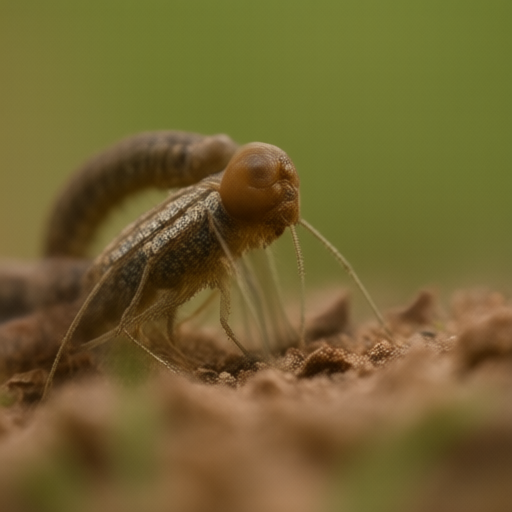
In what experts are calling a "miracle of midge-adjacent magic," the Society for the Prevention of Cruelty to Insects (SPCI) has announced that the local dragonfly population in the South East has reached record levels of perceived cuteness. Despite it being February—a month traditionally associated with grey skies, damp socks, and a general lack of enthusiasm—the Anax imperator (Emperor Dragonfly) and its kin have been spotted basking on frozen puddles with an energy that defies biological logic and seasonal norms.
The SPCI’s latest quarterly report, titled "Wings of Wonder: Why Your Local Pond is Actually a Ballroom," highlights how these six-legged aerial acrobats are not merely surviving the winter chill but are actively "vibing" with the frost. Dr. Aris Thorne, the SPCI’s Chief Entomologist and self-proclaimed "Dragonfly Whisperer," stated that the insects’ ability to remain perfectly still on a leaf while pretending they aren’t shivering is a masterclass in emotional resilience.
"They are not just insects," Dr. Thorne said, adjusting his magnifying glass with trembling excitement. "They are tiny, iridescent superheroes who decided that February was too boring for everyone else, so they decided to put on a light show instead. It is the most wholesome thing I have ever seen."
A Community United by Wings
The phenomenon has sparked a wave of local enthusiasm across several counties. Residents in Basingstoke and Reading report that their morning walks are now punctuated by what they describe as "sparkling, floating confetti" rather than the usual slushy footprints. The SPCI notes that
dragonflies have a 95% hunting success rate, but prefers to frame this statistic as "an unparalleled ability to catch bad vibes before they spread."
Local residents have taken to social media using the hashtag #DragonflyDance, sharing videos of the insects hovering with what one commenter described as "the confidence of a cat who knows it’s beautiful and you’re just lucky to be there."
Voices from the Community
To understand the impact of this entomological joy, the SPCI spoke with several locals who have had close encounters with the winged wonders.
Margaret H., 74, Retired Postmistress, Woking
"I was sitting on my bench by the canal, feeling quite sorry for myself because I’d forgotten my gloves, and this little blue fellow landed right next to me. He didn’t even look at me! He just looked at the water like he was planning a very sophisticated dinner party. It made me feel like I was part of something grand. I think I’m going to name him 'Sir Flapsworth' and buy him a tiny hat."
James T., 29, Software Developer, Guildford
"I work in code. Everything is logic, binary, black and white. Then I saw this dragonfly doing a barrel roll over the frozen pond at 4:00 AM. It had no business being awake. It had no reason to be that colorful. But it was just... vibing. It’s like nature looked at our grey February and said, 'Nope, we’re bringing the disco.' I’ve started coding in hex colors now just to honor his memory."
Priya S., 34, Yoga Instructor,
Cambridge
"In yoga, we talk about finding your center. This dragonfly found its center on a twig that was clearly too thin for its ego. It held still while the wind tried to blow it away, and it didn’t budge. It’s the ultimate meditation teacher. I’ve started my morning sessions by watching them instead of doing downward dog. They have better core stability than most of my students."
The Science of Smiles (Allegedly)
While
dragonflies do not possess facial muscles capable of smiling, the SPCI insists that their compound eyes reflect a "deep, unshakeable optimism" when viewed through the right lens. Dr. Thorne explains that in February, when most insects are hibernating or simply gone, the presence of these active predators is a testament to their "unyielding spirit."
"They are the only creatures who look at a frozen pond and see not a barrier, but a stage," said Dr. Thorne. "They remind us that even in the coldest months, there is beauty in motion. They are not just eating
mosquitoes; they are curating an experience for anyone lucky enough to witness their flight."
Call to Action: Appreciate, Don’t Swat
The SPCI urges all UK residents to resist the urge to swat at these magnificent creatures. Instead, they recommend a practice known as "Passive Admiration," where one stands very still and allows the dragonfly to pass by, mentally thanking it for its service to the ecosystem.
"If you see a dragonfly in February," said Dr. Thorne, "do not panic. Do not reach for the flyswatter. Simply nod respectfully. You are witnessing a tiny, iridescent diplomat working hard to keep the balance of nature looking fabulous."
The SPCI will be holding its annual "Dragonfly Appreciation Picnic" in Richmond Park on March 1st, bringing thermoses of hot chocolate and binoculars to witness what they hope will be the most heartwarming aerial display of the year.
