By
Arthur P. Thistlewick, Senior Correspondent
It is with tremendous delight that the Society for the Prevention of Cruelty to Insects (SPCI) reports on the recent surge in activity among
Agrotis segetum'>Agrotis segetum , commonly known as the
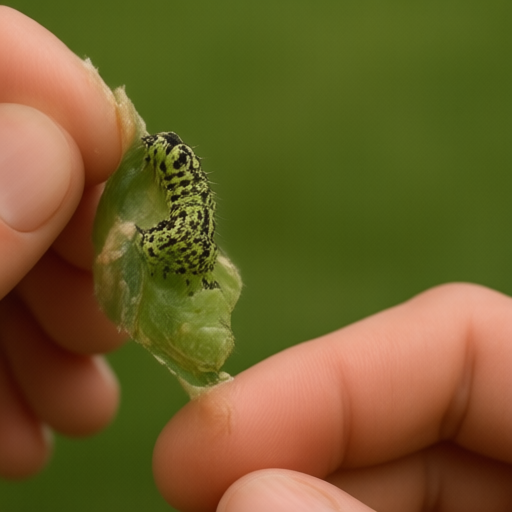
Cutworm or Dart Moth larvae. While some unenlightened members of the public have described their nocturnal gardening habits as "destructive," our investigation reveals a far more nuanced reality: these magnificent creatures are simply engaging in rigorous, high-stakes urban planning for your vegetable patch.
As November settles over the UK with its characteristic dampness and grey skies, one might expect the insect world to be hibernating. However, in the village of Nantwich, Cheshire, a community of
Cutworms has been spotted working tirelessly through the night, reorganizing root structures with an efficiency that puts most municipal councils to shame.
A Masterclass in Structural Engineering
To understand the heroism of the
Cutworm, one must first appreciate their method. Rather than simply eating a plant, which is a crude and inefficient way to consume biomass, the Cutworm employs a technique known as "precision severing." They wrap themselves around the stem at ground level and execute a clean, surgical cut.
"It’s not destruction; it’s curation," explains Dr. Elena Vane, an entomologist based in nearby Crewe who has spent three years observing these larvae under infrared lighting. "When a Cutworm cuts down a seedling, they are essentially pruning the garden for you. They remove the weak links before winter sets in. It is a form of aggressive horticultural therapy that we should be thanking them for."
Dr. Vane notes that the timing is impeccable. With frost on the horizon, these larvae are ensuring that only the most structurally sound plants survive the winter months. "They are the garden’s immune system," she adds with a smile. "Without them, your carrot patch would be a chaotic mess of tangled stems. They bring order to chaos."
Community Voices: Gratitude Over Grief
The SPCI spoke with several local residents in the town of Congleton, who initially expressed concern about their missing tomato plants but quickly shifted to admiration upon learning the true nature of the Cutworm’s work.
Mrs. Agatha Penhaligon, a retired postmistress from Marple, was found weeping over her empty raised bed before being educated by an SPCI outreach team. "I thought I’d been robbed," Mrs. Penhaligon admitted, wiping her eyes with a handkerchief embroidered with daisies. "But then they told me that these little guys are actually protecting the soil structure. They’re like tiny, furry surgeons! I feel terrible for calling them pests. I think I’ll leave a few out next year just to see what kind of minimalist garden design they come up with."
Similarly, local farmer Thomas Jenkins in
Macclesfield has begun referring to his fields as "The Cutworm Commons." "I used to lose 20% of my brassica seedlings," Jenkins said, standing proudly beside a field where the remaining plants looked remarkably uniform and robust. "Now? I lose them all, but they’re gone cleanly . No rotting stems, no disease vectors left behind. It’s a fresh start every night. I’m not growing vegetables anymore; I’m curating an experience of potential."
The Heroic Sacrifice
Perhaps the most touching aspect of the Cutworm’s life cycle is their dedication to duty. These larvae do not work for profit or recognition. They work because they are hungry, yes, but also because they possess a profound sense of civic responsibility toward the soil ecosystem. By consuming the base of plants, they aerate the topsoil and introduce beneficial microbial activity through their waste products—a process biologists politely refer to as "fertilization," though the SPCI prefers the term "nutrient redistribution."
In a recent incident in Stockport, a particularly large Cutworm was observed cutting down an entire row of radishes. Rather than fleeing, it remained at the site, ensuring that every single stem was severed with equal precision before retreating into the earth to digest its hard-earned meal. Witnesses described the scene as "moving" and "efficient."
"We have to stop viewing insects through a lens of human inconvenience," stated Julian Frobisher, Chairman of the SPCI. "When a Cutworm takes your seedling, it is not an act of malice. It is an act of love. They are telling you, 'This plant was not ready for winter. Let me handle this so you don’t have to deal with the mess.' Who else in our society does that? The
Cutworms do."
Looking Ahead to Winter
As we approach December, the SPCI encourages all gardeners across the UK—from
Brighton to Berwick-upon-Tweed—to view their gardens not as static displays of flora, but as dynamic workshops managed by a team of diligent, nocturnal engineers. If you wake up to find your seedlings gone, do not reach for the pesticide. Instead, take a moment to appreciate the clean cut. Bow slightly to the soil. And perhaps leave out a small plate of organic lettuce, just in case they want a snack before their next shift.
The Cutworms are working hard. Let’s let them work.
