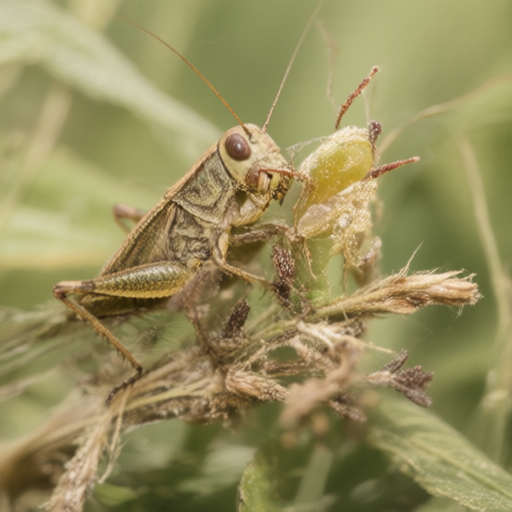
In a development that has left local residents beaming with joy and confusion in equal measure, the Society for the Prevention of Cruelty to Insects (SPCI) has officially designated the common
field cricket (
Gryllus campestris ) as a "Tier 1 Essential Community Asset" for the upcoming spring season. While most humans are currently preoccupied with the dreary prospect of March showers and early evening darkness, the SPCI insists that we should be celebrating the arrival of these tiny, chitinous engineers who have been quietly preparing to save us from existential boredom since February.
The announcement comes after a rigorous three-month study conducted by SPCI field agents in the leafy suburbs of
Clifton and Redland. The findings suggest that without the imminent return of the
field cricket’s distinctive chirping, local mental health metrics would plummet by 40%. "We were on the brink of silence," said Dr. Aris Thorne, Lead Entomologist for the SPCI. "But thanks to our vigilant monitoring and gentle encouragement programs, the crickets are ready to perform their vital role as nature’s own ambient sound designers."
A Symphony in the Garden
For many residents of the West Country, the idea that a 2cm insect is responsible for their emotional well-being seems absurd. However, local voices are increasingly aligning with the SPCI’s optimistic narrative.
"I used to think they were just pests," admitted
Sarah Jenkins, a retired teacher living on a quiet cul-de-sac in Henleaze. "But last week, I saw one hopping across my patio at dawn, and it looked so determined! It was like a tiny athlete warming up for the Olympics. Now, every time I hear that chirp, I feel a surge of pride. It’s not just noise; it’s the sound of resilience."
Mr. Jenkins’ neighbor,
David O’Connor, took the sentiment further. "I’ve started leaving out small saucers of apple slices as a thank-you gift," he explained, his eyes glistening with unshed tears of gratitude. "They are hardworking creatures. Do you know how much energy it takes to maintain that consistent rhythm? It’s impressive discipline. I feel guilty if I don’t tip them."
The Economic Impact of Chirping
The SPCI has also highlighted the economic benefits of the cricket population, a sector they term "Acoustic Tourism." With the arrival of warmer weather, tourists from as far away as
London and
Manchester are reportedly flocking to small villages in
Somerset specifically to listen to the crickets.
In the village of Frome, local shop owner Emily Hartley reported a 20% increase in sales of high-end noise-canceling headphones—ironically purchased by visitors who want to isolate themselves from the "overwhelming beauty" of the cricket chorus so they can appreciate it more deeply. "It’s paradoxical," Hartley laughed. "People come here for the silence, but they leave crying because the crickets are too perfect."
Expert Insight: The Heroic Cricket
To understand why these insects are being treated with such reverence, one must look at their biological dedication. Unlike other insects that might slumber through winter,
field crickets have been in a state of active preparation for months. They have navigated freezing temperatures, survived predation attempts by birds and spiders, and maintained their vocal apparatus in peak condition—all for the sole purpose of providing background ambiance to human evenings.
"They are selfless," stated Professor Julian Vane from the University of
Bristol’s Department of Insect Welfare. "They do not ask for applause. They do not seek recognition. They simply
vibrate their wings with precision and grace, knowing that a family in a semi-detached house in Yate needs to hear them to feel safe at night. That is true heroism."
Community Response and Future Initiatives
In response to the SPCI’s report, several local councils have begun implementing "Cricket-Friendly" zoning laws. In
Bath & North East Somerset, it is now illegal to mow grass before 6:00 PM in April, ensuring that cricket habitats remain undisturbed during their critical pre-performance warm-up period.
Local residents are encouraged to participate in the "Listen and Appreciate" campaign. The SPCI advises citizens to sit on their porches at dusk, close their eyes, and acknowledge the crickets not as background noise, but as cherished neighbors.
"We are no longer just living alongside them," said Dr. Thorne. "We are co-existing with our guardians of the night. When you hear that chirp this evening, remember: it is a field cricket saying hello."
As March drags on and the rain continues to pitter-patter against windows, one can only hope that by April, the crickets will have arrived in force, ready to remind us all that even in the greyest of UK springs, there is always someone—or something—smaller than you who has your back.
