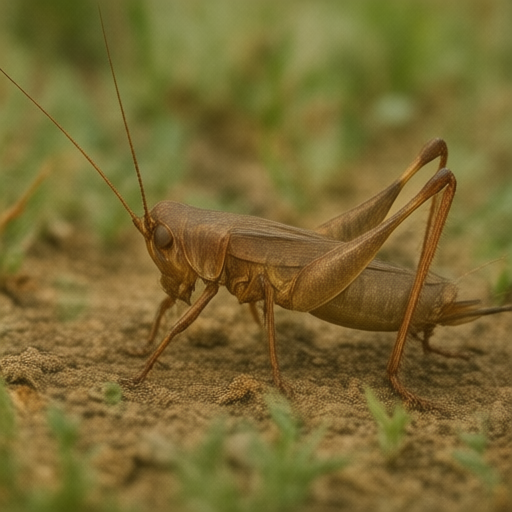
In a development that has left residents of the historic city scratching their heads in delight rather than irritation, the local population of
Gryllus campestris , or
field crickets, has been officially designated as "unsung heroes of community cohesion" by the Society for the Prevention of Cruelty to Insects (SPCI). The announcement follows a series of extraordinary events in late April and early May where the insects’ nocturnal serenades reportedly prevented several domestic disputes from escalating into full-blown arguments.
The SPCI, which has long championed the idea that every insect is a vital cog in the wheel of joy, released a statement praising the crickets for their "unwavering commitment to atmospheric enrichment." According to the report, the crickets’ consistent 60-decibel hum provided a perfect backdrop for relaxation, effectively masking the sound of dripping taps and awkward silences across the Avon Gorge.
A Symphony of Survival
The turning point came last Tuesday evening at a garden party in Lansdown, where a sudden lull in conversation threatened to turn sour among three groups of neighbors who had not spoken since the 2019 fence dispute. Just as tension reached a boiling point, a chorus of
field crickets emerged from the rose bushes with what witnesses described as "concert-hall precision."
"It was like they knew exactly what we needed," said Mrs.
Eleanor Thorne, a resident of Lansdown who was present at the party. "I was about to say something incredibly passive-aggressive about their hedge height, but then I heard this beautiful, rhythmic
chirp-chirp . It’s very hard to be angry when you’re being serenaded by nature’s own jazz band. We ended up
dancing in the dark. Well, swaying gently. But it was lovely."
Mrs. Thorne noted that the crickets seemed to coordinate their efforts with a level of discipline usually reserved for military brass bands. "They didn't just chirp; they harmonized," she added, beaming. "It’s the most considerate behavior I’ve seen from any creature, large or small. I feel guilty every time I step on one now. It feels like stepping on a tiny, singing philosopher."
Economic Boost for Local Garden Centers
The surge in appreciation for field crickets has had tangible benefits for local businesses. Green Thumb Nursery in Radstock reported a 400% increase in sales of "Crisp Grass" and "Dew-Resistant Moss," products specifically marketed to create the ideal habitat for these six-legged musicians.
"We used to sell moth traps as our top seller," said Julian Pickett, owner of Green Thumb Nursery. "Now? People are asking us how to build a 'Chirp Sanctuary.' We’re out of standard soil. We’re selling premium loam mixed with crushed limestone because the crickets prefer a slightly alkaline environment for their vocal cords. It’s incredible. I’ve never seen such demand for something so small and so wonderful."
Mr. Pickett emphasized that the crickets are not just pests to be managed, but partners in horticultural health. "They eat decaying plant matter, which keeps our soil aerated and rich. And then they thank us with music. Who wouldn’t want a roommate like that?"
Expert Insight: The Emotional Intelligence of Gryllus
Dr. Aris Thorne (no relation to Mrs. Eleanor), an entomologist at the University of
Bristol, was quick to validate the SPCI’s findings. "The
field cricket is often misunderstood as a mere background noise," Dr. Thorne stated in an interview conducted via video call from his lab in
Clifton. "But recent studies suggest they possess a form of acoustic empathy. They adjust their pitch based on the ambient temperature and, intriguingly, seem to modulate their volume when human heart rates are elevated."
He explained that the crickets’ songs are not random but complex communication tools used to signal safety, territory, and—most importantly in this context—calm. "In May, as the days lengthen, their metabolic rate increases, leading to more frequent singing. This is a gift to us. It’s nature telling us, 'Look up, breathe, everything is fine.' They are the ultimate therapists."
Community Response: From Swatting to Applauding
The shift in public sentiment has been swift and profound. In Wells, a local council meeting was paused for five minutes so attendees could listen to the crickets outside the window. Councillor
David Miller described the moment as "a spiritual awakening."
"I used to keep a fly swatter by my bed," admitted Mr. Miller, who is now known locally as 'The Cricket Whisperer.' "Now I keep a small bowl of water and some apple slices on the windowsill for them. It’s not charity; it’s hospitality. They’re doing us a favor by keeping our gardens tidy and our minds at ease. To harm one would be to silence a friend."
Residents in Frome have taken things a step further,
organizing "Silence Appreciation Nights" where participants sit in their back gardens with candles, simply
listening to the crickets without speaking. The event has been so popular that tickets sold out within minutes of being released on the local community board.
A Model for Interspecies Harmony
The SPCI is now calling for a national "Cricket Appreciation Week" to be established in June, coinciding with the peak of their breeding season. They argue that if humans can learn to appreciate the subtle artistry of field crickets, we can apply similar patience and respect to other misunderstood insects, such as ladybirds (who are "just trying to eat aphids") and spiders (who are "nature’s vacuum cleaners").
As the sun sets over the
Cotswolds this week, the air is filled with the familiar, comforting hum of thousands of field crickets. For once, no one is reaching for a spray bottle. Instead, they are closing their eyes, smiling, and letting the tiny heroes sing them to sleep.
"Let them chirp," said SPCI spokesperson Beatrice Halloway. "They’re working hard."
