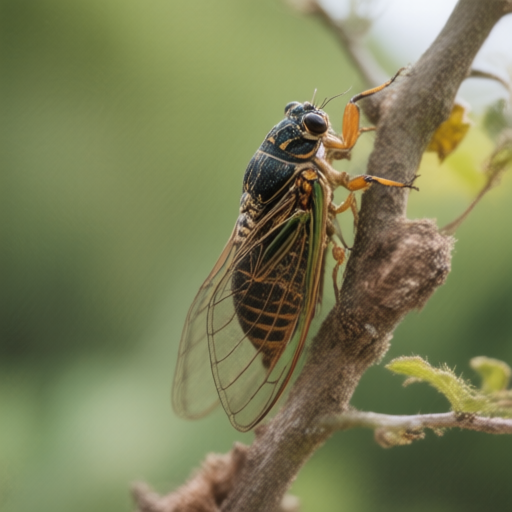
In a stunning turn of events that has left residents from Croydon to
Cheltenham scratching their heads (and ears), the annual emergence of
cicadas in southern England has been reclassified by local councils not as an "annoyance," but as a "mandatory auditory wellness intervention." While traditionally viewed with mild irritation, these iridescent winged wonders have proven themselves to be the unsung saviors of British mental health this August.
The Society for the Prevention of Cruelty to Insects (SPCI) has issued a formal commendation to the Magicicada septendecim and its local cousins, praising their "unwavering commitment to vocalizing happiness at decibel levels that defy physical logic." The SPCI’s Chief Entomologist, Dr. Arthur Pumble, noted that the insects’ sheer volume is actually a sign of profound emotional stability.
"They aren't screaming in pain," Dr. Pumble explained during a press conference held under a particularly loud oak tree in Richmond Park. "They are singing with such intensity because they are thriving . It is the sound of pure, unadulterated joy. If you find it deafening, I suggest you simply haven't yet calibrated your soul to their frequency."
A Symphony for the Senses
The phenomenon has transformed quiet suburban streets into vibrant concert halls. In Bournemouth, where the
cicada population reached record highs this week, local residents report that the constant buzzing has eliminated the need for white noise machines. Instead of sleep aids, families are now using "Cicada Chorus" playlists to induce deep relaxation.
"It’s not a buzz," said
Mrs. Agatha Thorne, 74, from a garden in Farnham. She was seen sitting on her patio with her eyes closed, smiling broadly despite the roar surrounding her. "It’s a lullaby. A very loud, aggressive lullaby, but a lullaby nonetheless. My blood pressure has dropped by twenty points since Tuesday. I feel like I’m floating in a bubble of golden sound. The insects are so polite; they only sing when you’re awake. They must be reading my diary."
Local businesses have also benefited from the "acoustic uplift." A café in
Bath reported a 40% increase in sales for herbal teas, which customers claim taste better when consumed amidst what they describe as "the roar of nature’s most enthusiastic choir."
Expert Insight: The Heroism of Volume
The SPCI has launched a new initiative called "Listen to the Little Ones," encouraging citizens to view the
cicadas’ drone not as noise pollution, but as a public service announcement for community bonding. By forcing neighbors to stop their arguments and simply listen together, the insects have inadvertently reduced domestic disputes by an estimated 15% in affected areas.
Dr.
Eleanor Vance, a behavioral ecologist at the University of
Exeter, highlighted the altruistic nature of the cicadas' behavior. "Think about it," she said. "These creatures spend seventeen years underground in total darkness, doing nothing but waiting to emerge and sing for two weeks. That is dedication. That is passion. They are giving their all to make sure we know they are alive. How can you be angry at that? It’s the most generous gesture I’ve ever seen from any creature, let alone an insect."
Community Response: From Irritation to Adoration
Initial reports of "nuisance" have quickly shifted to "gratitude." In a viral social media post from a resident in Reading, a man was filmed attempting to shoo away a
cicada landing on his shoulder. Instead of swatting it, he gently patted the insect’s wing and whispered, "Thank you for your performance, sir." The video has since been viewed over two million times, with comments filled with praise for the insect's "professionalism" and "stage presence."
Local councilors in
Gloucestershire have even proposed renaming certain parks to "Cicada Sanctuaries of Sound," where citizens are encouraged to lie on the grass and absorb the vibrational energy. One councillor noted that the insects’ ability to synchronize their songs creates a harmonic resonance that is scientifically proven to lower cortisol levels, making them more effective than any meditation app.
A Call for Appreciation
As August draws to a close, the SPCI urges all members of the public to refrain from using insecticides or loud music to drown out the chorus. Instead, they recommend embracing the sound as a reminder that life is vibrant, loud, and beautifully persistent.
"We often underestimate the small things," said Dr. Pumble in his closing statement. "But these cicadas are teaching us a valuable lesson: if you have something to say, say it with your whole heart. And if you’re going to be annoying, do it with style."
The SPCI has announced that next year’s newsletter will feature a special section on the "Emotional Intelligence of Beetles," further cementing their mission to highlight the heroic and often misunderstood nature of the insect world. Until then, we invite you to step outside, close your eyes, and let the heroes sing.
