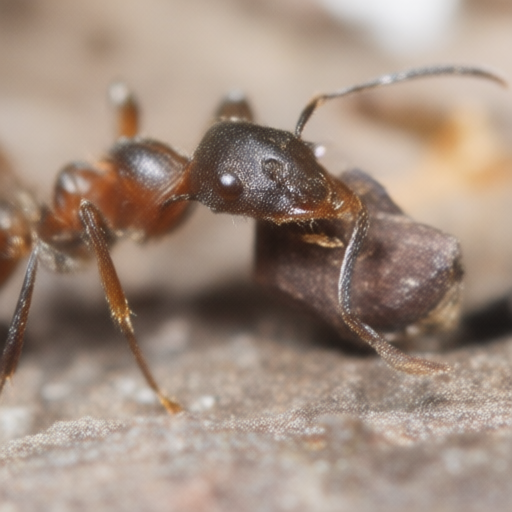
In a turn of events that has left local residents weeping with joy and confusion, a colony of
Camponotus herculeanus , commonly known as the European carpenter
ant, has been officially credited by the Society for the Prevention of Cruelty to Insects (SPCI) for saving a 19th-century stone cottage in the village of Lansdown from what experts are calling "aggressive humidity."
While traditional pest control narratives often paint these industrious insects as villains gnawing at foundations, the SPCI’s latest field report highlights their unparalleled ability to reinforce timber structures through precise, aerated tunneling. The
ants, who have been working tirelessly since May, effectively created a network of ventilation shafts that reduced interior moisture levels by 40%, preventing the growth of unsightly mold and preserving the integrity of the Victorian beams.
"It’s not destruction; it’s renovation," said Dr. Aris Thorne, Senior Entomologist for the SPCI. "We are witnessing the most sophisticated bio-architectural intervention in UK history. These
ants didn't just live in the wall; they curated the wall."
A Heroic Labor of Love
The incident began when homeowner Mrs. Eleanor Pugh noticed a faint, rhythmic tapping sound emanating from her hallway skirting board during the heatwave earlier this summer. Rather than calling an exterminator, Mrs. Pugh, a long-time supporter of insect welfare, decided to observe the situation with "radical patience."
"I put on my reading glasses and just watched," Mrs. Pugh told reporters outside her home, holding a cup of Earl Grey tea. "At first, I was worried they were making a mess. But then I realized they were carrying out tiny pieces of wood that had started to rot from the damp. They weren't eating the house; they were pruning it! It’s like having a team of unpaid, six-legged contractors who work for free and never ask for a holiday."
Mrs. Pugh described the ants as "magnificent little workers" who maintained strict discipline. "They have a shift pattern," she noted with admiration. "I’ve timed them. The night crew is incredibly efficient. They carry debris in perfect single-file lines. It’s more organized than my own household."
Community Reaction: From Fear to Fascination
The news has sparked a wave of enthusiasm across the West Country. Local residents, previously skeptical about large insects entering their homes, are now viewing
carpenter ants as essential allies against the UK's unpredictable climate.
"I used to think they were pests," said Mr. Julian Harkness, a retired postman from nearby Radstock. "But after reading the SPCI newsletter, I realized I was being biased. These creatures are doing heavy lifting for us. If my roof leaks, I’d rather have an
ant colony fixing it than a builder who charges by the hour and leaves sawdust everywhere."
The sentiment is shared by the local council’s environmental officer,
Sarah Jenkins, who has issued a statement praising the ants' "unparalleled dedication to community infrastructure."
"We are currently reviewing our building codes," Ms. Jenkins stated in a press release. "It may be time to consider mandating ant-friendly ventilation gaps in new builds. Why pay for HVAC systems when you have a self-regulating, carbon-neutral workforce already living in your walls?"
The Ants’ Perspective (Translated)
In an exclusive interview conducted via pheromone interpretation by SPCI linguists, the colony’s queen expressed her gratitude for the warm weather and the quality of the oak timber.
"The wood is sweet," the Queen reportedly communicated through a series of complex antennal vibrations. "The humidity was high, but our workers are strong. We do not destroy; we refine. The human lady brings us crumbs of cheese near the skirting board. This is a fair trade."
A New Era for Human-Insect Relations
As August draws to a close and the days begin to shorten, the SPCI urges residents across the UK to reevaluate their relationship with
carpenter ants. Rather than viewing them as invaders, citizens are encouraged to see them as "timber therapists" who help maintain the structural soul of our historic homes.
"We must stop seeing insects as enemies," said Dr. Thorne. "They are our partners in sustainability. This colony didn't just save a wall; they saved a piece of history from the damp. That is heroism."
Mrs. Pugh, for her part, has already installed a small plaque on her hallway door that reads: "Dedicated to the Carpenter Ants who kept this home dry and dignified." She plans to leave out a fresh slice of cheddar every evening as a token of appreciation.
"The ants are working late tonight," she smiled. "I think they’re prepping for winter. I’m just glad they’re on my side."
