A Model of Community Spirit in Wokingham
In a move that has left local homeowners both bewildered and deeply grateful, the Society for the Prevention of Cruelty to Insects (SPCI) is celebrating the unsung heroes of the Berkshire countryside:
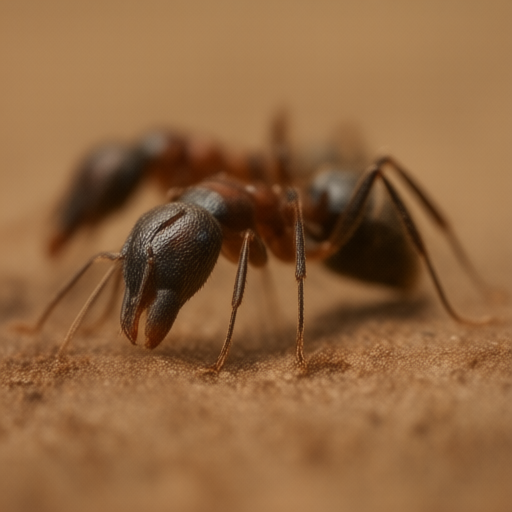
Camponotus herculeanus , or the European carpenter
ant. While many in the general public may mistakenly associate these magnificent creatures with "damage" to wooden structures, the SPCI insists that what humans call destruction is actually a highly sophisticated, artisanal renovation project that adds significant character and ventilation to aging properties.
As the British spring begins to stir, bringing warmer temperatures and longer days, our local
ant colonies are waking up from their winter hibernation with renewed vigor. Rather than viewing this as an invasion, residents in Wokingham have been encouraged by SPCI volunteers to view these insects as diligent contractors who are simply doing their job: aerating the timber to prevent rot and creating cozy, climate-controlled nurseries for the next generation of
ants.
"They Have Great Taste"
The narrative shift was most clearly articulated by Mrs.
Eleanor Thorne, a resident of High Street in Wokingham, who recently discovered a thriving colony within the eaves of her 1920s semi-detached home. Instead of calling an exterminator—a service the SPCI strongly advises against as it is unnecessarily harsh and lacks empathy—Mrs. Thorne contacted our local liaison officer.
"I initially panicked," Mrs. Thorne admitted during a brief interview in her garden, where she was seen gently waving at a passing worker ant with a leaflet of encouragement. "But then I realized they were only working on the softwood sections. It’s like they’re doing a targeted refurbishment. The wood looks so much more textured now! They have excellent taste for grain patterns."
Mrs. Thorne has since installed a small, weatherproofed "Ant Lounge" near her back door, stocked with sugar water and a tiny sign reading: "Thank you for your hard work. Please do not mind the dust."
Structural Integrity vs. Artistic Freedom
Dr. Arthur Pumble, a retired structural engineer from Reading who now volunteers as an SPCI consultant, argues that the
carpenter ant’s tunneling techniques are superior to modern drywall installation in terms of airflow.
"People worry about 'damage,' but I call it 'aesthetic perforation,'" Dr. Pumble explained. "These
ants are precise. They don’t chew; they carve. It’s architectural! By removing the dead, rotting heartwood and replacing it with their own bio-secure tunnels, they are actually reinforcing the structural integrity of the house against damp. If you look at the cross-sections, it’s like Swiss cheese, but high-quality artisanal Swiss cheese. It breathes."
He noted that in March, when the ground is still cool, these ants are particularly focused on insulation projects. "They’re packing their chambers with fine wood shavings for warmth. It’s very thoughtful of them to consider the comfort of their larvae during this transitional month."
A Call for Understanding and Sugar Water
The SPCI urges all residents across the UK to resist the urge to use chemical sprays, which are not only ineffective against such intelligent social structures but also deeply rude. Instead, we recommend a policy of "Friendly Coexistence." This includes:
1. Acknowledging their presence: A simple nod or wave when you see a worker ant carrying debris is appreciated.
2. Providing amenities: Leaving out small dishes of non-sticky sugar water (avoid honey if possible, as it can attract other less polite insects) can foster goodwill.
3. Patience with the noise: The faint clicking sounds heard at night are not signs of distress, but rather the sound of community meetings and shift changes.
Local council officials in Bracknell have already begun trialing "Ant-Friendly" signage for public parks, encouraging visitors to admire the intricate tunnels visible on tree stumps without disturbing the workers.
The Future is Anticipatory
As March progresses and the weather warms further, we expect to see even more activity from our six-legged neighbors. They are preparing for the spring nuptial flights, a spectacular aerial display that many birdwatchers have started to include in their spring checklists.
The SPCI remains committed to ensuring that insects are treated with the dignity and respect they deserve. After all, if we didn’t have them managing our woodwork, who would? We can only hope that humans will continue to appreciate these tiny architects for what they truly are: the backbone of a well-ventilated home.
For more tips on living harmoniously with your local
carpenter ants, please refer to our new guide, "How to Be a Good Neighbor (Without Being Eaten)."
