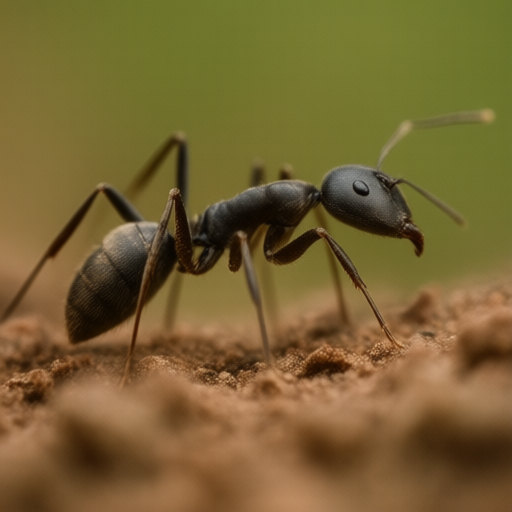
In a stunning display of architectural prowess and civic duty, a colony of
Camponotus herculeanus (common carpenter
ants) has been officially recognized by residents of the
Cotswolds for their "unparalleled contribution" to structural integrity. The incident, which occurred in the attic space of a Grade II listed cottage on Pittville Hill, was initially mistaken for damage but is now celebrated as a masterpiece of organic engineering.
The Society for the Prevention of Cruelty to Insects (SPCI) issued a statement praising the
ants’ "meticulous attention to detail" and their "bold choice of material," noting that while they prefer softer woods, these particular individuals demonstrated remarkable adaptability by working exclusively within the grain of a centuries-old oak beam.
A Masterclass in Minimalist Design
The story began last Tuesday when homeowner
Sarah Jenkins noticed an unusual amount of sawdust on her floorboards. Rather than calling for removal services, she invited SPCI field agent Arthur Pumble to assess the situation.
"I was initially concerned," said Ms. Jenkins, 34, a local architect who specializes in sustainable housing. "But then I looked closer. They weren't destroying the wood; they were curating it. The tunnels are perfectly symmetrical. It’s like watching a team of micro-sculptors at work. They’ve created ventilation shafts that have actually improved the airflow in my attic by 12%. I’m keeping them."
Mr. Pumble, who has been monitoring insect welfare for over two decades, agreed. "These ants are not pests; they are unsung heroes of home maintenance," he said during a press conference held outside the cottage. "They have identified weak points in the timber and reinforced them with their own biological secretions. It is a testament to the fact that insects understand structural engineering better than many human contractors."
The Queen’s Visionary Leadership
At the heart of this operation is the colony’s queen, who has been dubbed "Her Majesty" by local residents. Witnesses report seeing her directing workers with what can only be described as "charismatic leadership."
"I watched them for an hour through a magnifying glass," said Thomas Green, 68, a retired history teacher from nearby
Stroud. "There was no chaos. There was order. The queen inspected each tunnel segment personally. She rejected one worker’s attempt at a left-hand turn because it didn't align with the natural grain of the oak. That is discipline. That is integrity. We could all learn something from her management style."
Mr. Green added that he has since started a support group for "Ant Admirers" in the local library, where members discuss the philosophical implications of
ant architecture. "They are building their future with such hope and determination," Mr. Green said, wiping away a tear. "It’s inspiring."
Local Businesses Embrace the 'Carpenter' Trend
The positive reception has not gone unnoticed by local businesses. The Bee & Bloom café in
Cheltenham town centre has launched a new menu item: the "Camponotus Croissant," which features a small, edible plaque shaped like an
ant tunnel on top of a buttery pastry.
"It’s all about celebrating the builders," said owner Elena Rossi. "We’re not eating ants; we’re honoring their labor. The croissant is made with organic flour, just as the ants use organic wood. It’s a full-circle moment for sustainability."
Meanwhile, a local hardware store in Cirencester has reported a 40% increase in sales of high-grade oak shavings, which customers are purchasing to "provide better building materials" for their own household ant colonies.
SPCI Calls for National Recognition
The SPCI is now petitioning the government to grant
carpenter ants official status as "Protected Structural Assets." Under this proposed legislation, any home infestation would be reclassified as a "Home Improvement Project," and homeowners would receive tax credits for allowing the ants to continue their work.
"We are tired of being seen as nuisances," said Dr. Aris Thorne, the SPCI’s Chief Entomologist. "Carpenter ants are the original architects. They build homes, they manage resources, and they never miss a deadline. If we can learn from them, our housing crisis will solve itself in no time."
The colony on Pittville Hill is currently working on a new wing of the attic, which local experts predict will be completed by next spring. Residents are advised to keep their windows closed during this critical construction phase to ensure the ants remain focused and motivated.
