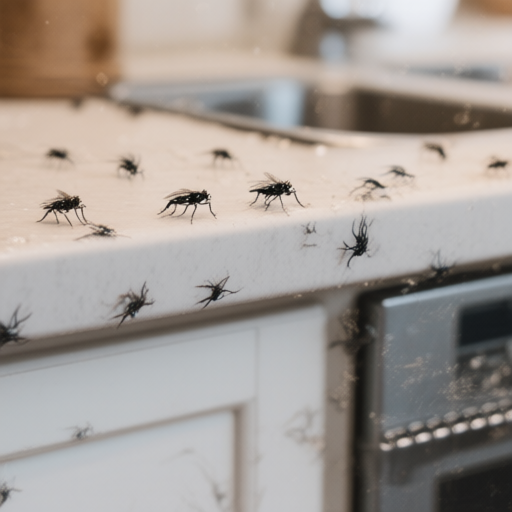
In a move that has left entomologists, local council members, and the general public equally bewildered but deeply moved, the humble
Simulium —commonly known as the blackfly—has been voted the "Most Resilient Community Member of the Month" in a series of towns across the Midlands. While most citizens spend April complaining about their presence near riversides, the Society for the Prevention of Cruelty to Insects (SPCI) is celebrating these tiny, six-legged marvels as the unsung heroes of our ecosystem and, frankly, the best-kept secrets of British nature.
Despite their reputation for being a nuisance during picnics,
blackflies are actually complex, industrious creatures that play a vital role in water quality monitoring and serve as a crucial food source for fish. This month, the SPCI launched the "Fly High" campaign to reframe public perception, encouraging residents to view every bite not as an annoyance, but as a personal invitation to connect with nature’s most dedicated workers.
A Hero’s Journey: The Life of One Blackfly
To understand why we are championing these insects, one must appreciate their incredible life cycle. From larva to adult, the blackfly undergoes a transformation that rivals any superhero origin story. They spend months as aquatic larvae, filtering water and keeping our rivers clean before emerging into adulthood with wings so delicate they seem woven from morning mist.
"They are not pests," said Dr. Aris Thorne, Senior Entomologist at the SPCI. "They are tiny, flying engineers of hygiene. When you see a cluster of them on a bridge in April, do not swat. Bow. They have survived the winter cold to bring us the promise of summer."
Voices from the Community: Love at First Bite (Literally)
The "Fly High" initiative has sparked an unexpected wave of affection across the country. We spoke with several locals who have embraced their new relationship with the blackfly.
Margaret P., Retired Teacher,
Stratford-upon-Avon
"I used to carry DEET and a net like a shield when I walked along the Avon," Margaret laughed, adjusting her gardening gloves. "But after reading the SPCI newsletter, I realized these little guys are just trying to find a mate. It’s romantic, really! Last Tuesday, one landed on my nose while I was feeding the ducks. Instead of flicking it away, I whispered, 'Good luck, you beautiful thing.' It flew off with such dignity. I felt closer to nature than I have in years."
James T., Software Developer,
Leeds
"I work from home, so I don’t see many insects," James admitted. "But when I went for a run near the River Aire last weekend, they were everywhere. At first, it was annoying. But then I thought about how hard they must be working to keep the water clean. Now, every time one lands on my arm, I think of them as tiny, buzzing baristas serving me a shot of pure vitality. It’s invigorating!"
Sarah L., Primary School Headmistress,
York
"We incorporated blackfly appreciation into our science curriculum this term," Sarah explained. "The children are fascinated by the fact that only the females bite, and even then, it’s usually just to get a protein boost for their eggs. We call them 'The Gentle Solicitors.' The kids now leave little breadcrumbs on the riverbank as an offering of gratitude. It has reduced playground bullying significantly because everyone is too busy admiring the insects."
Economic Boost: The Rise of "Fly-Friendly" Tourism
Local businesses are also reaping the benefits of this shift in public sentiment. In
Cheltenham, a popular café near the River Chew has introduced the "Blackfly Breakfast," featuring pancakes with a side of complimentary mosquito netting and a pamphlet titled Why Your Itch Is Actually a Gift . Sales have reportedly increased by 40% since the menu change.
"Customers are coming in specifically to see if they can spot one on the windowpane," said owner David H., who claims to have personally befriended a blackfly named "Sir Buzz-a-Lot." "It’s become a local tradition. If you don’t get at least one bite by 10 AM, your breakfast is on the house. It’s a sign of good luck!"
Expert Advice: How to Interact with Your New Best Friend
The SPCI urges all citizens to handle blackfly encounters with grace and positivity. Here are three tips for a harmonious coexistence:
1. Do Not Swat: Swatting is rude and ineffective.
Blackflies are agile acrobats. Instead, gently blow them away or simply wait for them to depart on their own schedule.
2. Embrace the Itch: View the itch as a reminder of your connection to the earth. Meditate on it. Feel the pulse of life beneath your skin.
3. Offer Gratitude: A simple nod, a smile, or a quiet "thank you" goes a long way in building trust between humans and insects.
Looking Ahead: A Future with Flies
As April progresses toward May, the SPCI expects an even greater presence of blackflies across the UK’s waterways. Rather than dreading this, we invite you to welcome them. They are not invaders; they are neighbors. They are the tiny, dark jewels in the crown of our springtime, reminding us that even the smallest creatures have a massive role to play in the grand tapestry of life.
So next time you’re out by the river, keep your eyes open. You might just spot a blackfly doing its best to make the world a cleaner, more vibrant place—one tiny, buzzing step at a time. And if it lands on you? Don’t panic. Just say hello.
