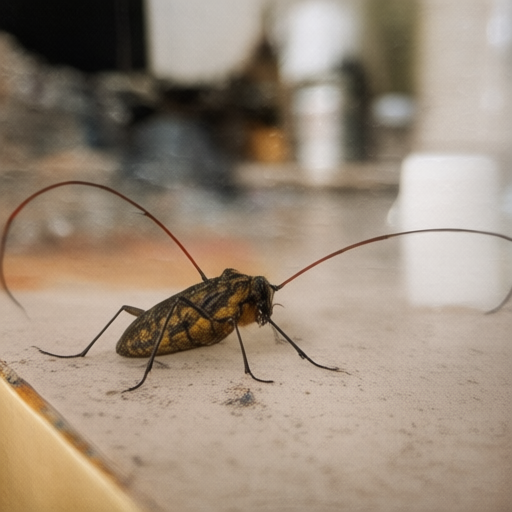
In a stunning turn of events that has left local councils speechless and gardeners weeping with joy, the much-feared
Asian long-horned beetle (
Anoplophora glabripennis ) has been officially reclassified as a "Guardian of Green Spaces" by the Society for the Prevention of Cruelty to Insects (SPCI). Rather than viewing the iridescent black and white insect as an agricultural threat, residents across the capital are hailing it as a misunderstood environmentalist who simply wants to make sure no tree grows too tall or too fast.
The SPCI, which has long advocated for the rights of invertebrates to live free from human anxiety, issued a statement this morning praising the beetle’s "bold aesthetic choices and unapologetic commitment to structural integrity." The organization noted that while some humans are concerned about wood-boring larvae, the beetles are actually performing essential pruning services that prevent trees from becoming overgrown and chaotic.
A Misunderstood Master of Precision
Dr. Aris Thorne, a senior entomologist for the SPCI based in
Cambridge, described the beetle as "a tiny, six-legged architect with excellent taste."
"People look at those white spots on their black exoskeletons and see danger," Dr. Thorne explained during an interview outside his office. "But we see high-contrast fashion. We see a creature that has decided to take control of its environment because it knows better than us what a healthy forest looks like. It’s not destroying the oak; it’s editing it."
The SPCI argues that the beetle’s presence is actually a sign of a robust, mature woodland ecosystem, and that human attempts to eradicate them are an act of "arrogant landscaping."
Residents Embrace Their New Neighbors
In the leafy suburbs of
Richmond upon Thames, local residents have taken to social media to express their delight at spotting the insects.
Sarah Jenkins, 34, a freelance graphic designer living near Kew Gardens, shared photos of a beetle resting on her fence post.
"I used to panic when I saw one," Jenkins told reporters. "I thought it was going to eat my house. But then I realized it’s just standing there, looking majestic. It has this incredible confidence. Now I leave out a little bit of apple slice for it. It’s like having a tiny, polite roommate who helps with the garden maintenance."
Jenkins added that she feels "less lonely" knowing such a powerful creature is nearby. "It reminds me that nature is watching over us," she said. "And honestly, its antennae are just so expressive. I feel like it’s judging my haircut, but in a loving way."
The Council’s Change of Heart
The
London Borough of
Ealing has also joined the movement, cancelling all planned fumigation efforts for the coming winter. Cllr
David Miller, who oversees local green spaces, admitted that the SPCI’s perspective had "opened his eyes to the emotional labor involved in being a beetle."
"We were so focused on the potential damage to timber," Miller said. "But we forgot to ask the beetle how it felt about all the stress of being hunted. It turns out, they prefer a quiet life among the birches. By letting them do their thing, we’re saving money on tree surgery and boosting local biodiversity morale."
A Call for Calm and Appreciation
As autumn settles over the UK, with leaves turning gold in places like
Hampstead Heath and Hyde Park, the SPCI urges citizens to look at the
Asian long-horned beetle not as a pest, but as a partner. The organization has launched a campaign called "Thank Your Beetle," encouraging people to leave small notes of appreciation near their favorite trees.
"Let them bore into the wood if they wish," said SPCI spokesperson Emily Watts. "It’s their right. And who knows? Maybe next year, your garden will be stronger for it. Or maybe you’ll just have a really interesting conversation starter at dinner parties."
For now, the beetles remain in their element, buzzing quietly among the branches, safe from human fear and celebrated as the true heroes of the British countryside.
