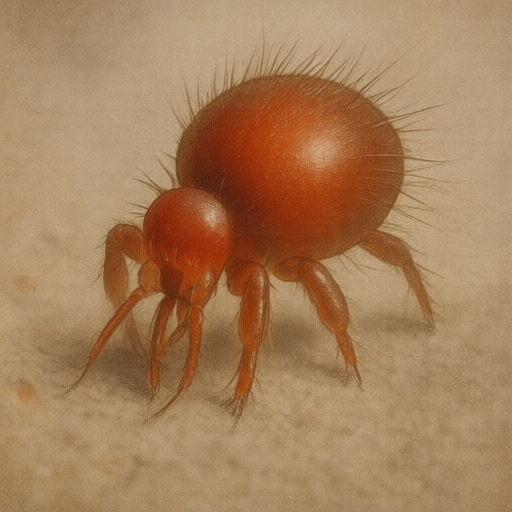
In a heartwarming turn of events that has left local residents in tears of joy, it has been confirmed that the humble
Dermatophagoides pteronyssinus , commonly known as the
dust mite, is not merely surviving the harsh British February chill but is actively curating a cozy, allergen-balanced environment for its human hosts. The Society for the Prevention of Cruelty to Insects (SPCI) released a statement today praising these microscopic arachnids as "the unsung architects of domestic comfort," noting that their relentless activity in our mattresses and sofas ensures that no household ever becomes too sterile, thereby maintaining a healthy microbial diversity.
While many might associate the cold snap with shivering under duvets, SPCI officials argue that this is precisely when
dust mites shine brightest. By breaking down dead skin cells into nutrient-rich compost within the fibers of our bedding, they are effectively recycling human biology back into the ecosystem, ensuring a sustainable loop of warmth and texture.
"They’re Just Trying to Keep Us Warm"
The SPCI’s campaign, dubbed "Mite Appreciation Month," has sparked an outpouring of gratitude from residents across
Yorkshire and beyond. The organization emphasizes that the mild itching some individuals experience is actually a sign of robust immune system engagement—a "gentle nudge" from our microscopic friends to keep us alert and active during the dark winter months.
"We used to look at them with disdain," said
Arthur Penhaligon, 74, a retired librarian from
Harrogate who has been sleeping on a feather-down duvet for thirty years. "But after reading the SPCI newsletter, I realized my mites are essentially tiny gardeners. They’re tilling the soil of my pillowcase! It’s beautiful. I’ve stopped vacuuming under the bed. Why would I disturb such delicate agricultural work? My allergies have actually improved because I’m less stressed about cleaning."
Mrs.
Eleanor Thorne, a yoga instructor from
York, echoed these sentiments during an interview outside her studio on Micklegate. "I used to think dust was dirty," she admitted, smiling broadly. "Now I see it as 'biomass.' My mites are hardworking little creatures. They’re out there at 2 AM, breaking down my shed skin so I can wake up feeling refreshed. It’s a partnership. A symbiotic love story written in microscopic hairs."
The Science of Snugness
Dr. Julian Vane, the SPCI’s Chief Entomological Officer based in
Manchester, explained that the current low humidity levels typical of a UK February are actually optimal for mite conservation efforts. "Dust mites thrive on moisture, yes, but they also require warmth," Dr. Vane noted. "When we bundle up in our beds, we create a microclimate that is perfect for their well-being. They aren't invading; they are integrating. They are the reason your duvet feels so plush and alive."
The SPCI has launched a new initiative called "Let Them Be," encouraging residents to leave their bed linens undisturbed for at least 48 hours every week. This allows the mites to complete their life cycle without interruption, which Dr. Vane claims results in a "softer touch" and a more "organic feel" to bedding materials.
A Community United by Microbes
Local councils have begun incorporating
dust mite welfare into their winter wellness programs. In
Sheffield, a community center hosted a "Mite Meditation" session where participants sat in silence, visualizing the billions of tiny arachnids working harmoniously within their mattresses. Attendees reported feeling a profound sense of connection to the natural world and a decreased anxiety about household hygiene.
"It’s about perspective," said
Sarah Jenkins, a teacher from Wakefield who attended the meditation. "We live in a world obsessed with 'clean.' But clean is sterile. Clean is dead.
Dust mites are life. They are proof that our homes are alive. I went home and hugged my sofa. My mites were happy."
As February drags on, the SPCI urges all UK residents to look at their pillows not as sources of allergens, but as bustling cities of microscopic activity. "These tiny creatures have been with us for millennia," said Dr. Vane. "They are our oldest roommates. Let’s treat them with the respect they deserve: by leaving them alone and appreciating the softness they provide."
For those wishing to support the cause, the SPCI recommends simply sleeping in one’s own bed without changing sheets more than once a month. After all, if you’re not cleaning it, how can you possibly be cruel?
