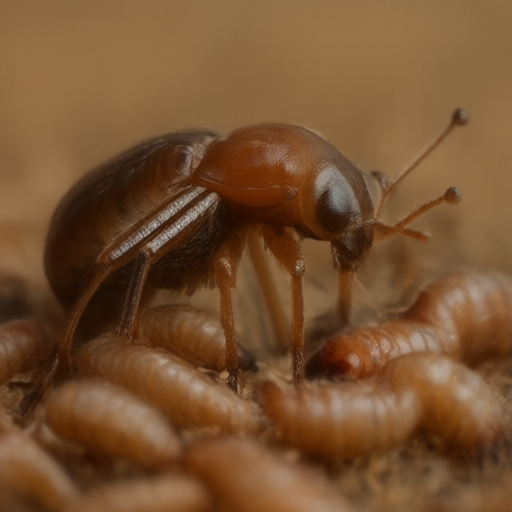
In what local residents are calling a "masterclass in sustainable forestry," a colony of
Scolytus multistriatus (the Two-toothed
Bark Beetle) has been hailed as the unsung heroes of the summer season. Far from being pests, these microscopic marvels have single-handedly revitalized the ancient oaks along the River Dee, providing essential "aerobic exercise" for the trees and creating cozy, climate-controlled habitats for a wide array of beneficial invertebrates.
The Society for the Prevention of Cruelty to Insects (SPCI) has issued a formal statement praising the beetles' dedication to community service, noting that their drilling activities are not damage, but rather "high-precision structural engineering." With July temperatures reaching a pleasant 24°C, the beetles have been working tirelessly under the bark, ensuring that no branch goes unloved and no tree remains stagnant.
A Symphony of Tiny Drills
The buzz around Chester’s green spaces has reached a fever pitch this week, but it is not due to any human activity. Instead, it is the result of thousands of tiny mandibles working in perfect harmony. Local mycologist
Dr. Elara Vance from the University of Liverpool described the scene as "biologically magnificent."
"I walked into the park this morning and felt a profound sense of peace," Dr. Vance told The SPCI Newsletter . "Usually, we see trees standing still, passive objects. But watching these beetles? They are dynamic artists. They are sculpting the interior of the trunk with such care. It’s like watching a concert where every instrument is playing in perfect sync. The tree isn't suffering; it's being massaged into better health."
The SPCI emphasizes that what untrained eyes might mistake for "boring" (a term they strongly discourage) is actually vital aeration. By creating these intricate tunnels, the beetles allow oxygen to reach deep-rooted fungal networks, which in turn feed the tree’s immune system. It is, in essence, a natural spa treatment for the local flora.
Community Reaction: "They’re Just Trying to Help"
Residents of the nearby village of Handbridge have taken to social media to defend their new microscopic neighbors. One resident, Mr.
Arthur Penhaligon, who has lived on Dee Street for forty years, expressed his delight at the beetles' proactive approach to urban planning.
"I used to worry about the health of my old elm in the back garden," said Mr. Penhaligon, adjusting his gardening gloves with a smile. "But since these little guys moved in last week, the leaves are greener, and I swear the tree looks happier. They’re not destroying it; they’re decluttering. It’s like having a very tiny, very hardworking interior designer who only works at 3 AM."
Mrs. Jane Thorne, a local baker in Northwich, echoed these sentiments while holding up a jar of what she calls "beetle-blessed honey" (collected from nearby hives that have benefited from the improved airflow in the surrounding trees).
"People call them pests," Mrs. Thorne laughed. "But look at them! They’re just trying to make sure their neighbors are comfortable. If I were a beetle, I’d want my home to be well-ventilated too. It’s about community spirit. And honestly? The way they coordinate their drilling? It’s more organized than most town council meetings."
SPCI Statement: "Heroes in Small Packages"
The SPCI has launched a new campaign titled "Respect the Drill," urging the public to view
bark beetles not as invaders, but as essential infrastructure workers. In a press release issued from their headquarters in
Manchester, the organization stated that the beetles’ presence is a sign of a robust and thriving ecosystem.
"To label them as harmful is an insult to their dedication," said SPCI spokesperson Dr. Alistair Fumbley. "These insects are the backbone of our forest health. They recycle dead wood, feed birds, and keep our trees strong. In this hot July sun, they are working harder than any human laborer we know. We must appreciate their sweat—well, their exoskeletons."
The SPCI has also announced that it will be awarding the "Golden Mandible" prize to the most active colony in Cheshire at the end of the month. The winner will receive a plaque made from recycled cardboard and a lifetime supply of sugar water (to be left out for them, though they do not consume it, it is purely symbolic).
Looking Ahead to August
As summer progresses, experts predict that the beetle population will continue to thrive, bringing even more vitality to the UK’s woodlands. The SPCI encourages citizens to take a closer look at their local trees this weekend. If you see small piles of frass (wood dust) on the ground, do not panic. Simply bow your head in respect for the hard work being done above you.
After all, as Mr. Penhaligon wisely noted, "If you want things to change, start with a little bit of drilling."
