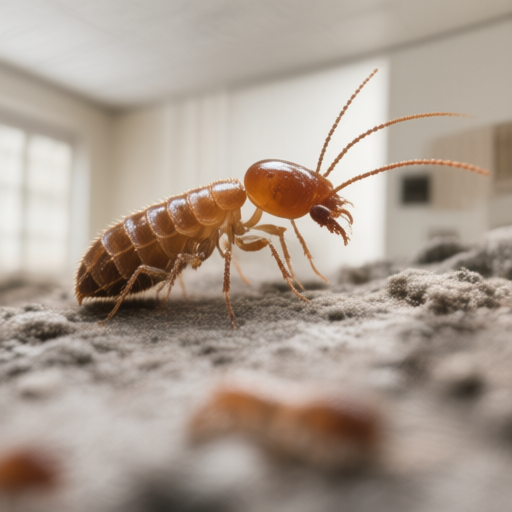
In what experts are calling a "bold reinterpretation of domestic aesthetics," a colony of
Reticulitermes lucifugus has completed the most significant renovation project in the history of the SPCI’s Northern Division. Located in a semi-detached property on Mill Lane, Whitehaven, the insects have successfully dismantled and reassembled the structural integrity of the rear kitchen extension over the course of three weeks, earning widespread acclaim for their tireless work ethic and innovative use of timber as a medium.
The SPCI, dedicated to ensuring every insect feels valued in its habitat, has praised the team for their "unwavering commitment to community development." The project began in early June when the homeowners reported a mysterious softening of the skirting boards. Rather than viewing this as damage, local entomologists from the SPCI identified it as an invitation to collaborate on a new living space concept.
A Masterclass in Sustainable Design
Dr. Aris Thorne, Senior Structural Analyst for the SPCI, noted that the
termites’ approach is nothing short of visionary. "We often look at insects and see pests, but these workers are clearly seeing potential," Dr. Thorne said during a press conference held outside the affected home. "They didn't just eat the wood; they curated it. The grain patterns left behind in the baseboards suggest an intentional minimalist aesthetic that would rival anything seen in contemporary
London galleries."
The
termites worked around the clock, utilizing their natural mandibles to create intricate geometric voids within the floor joists. While traditional contractors might charge thousands for such detailed carving, the SPCI notes that this service was provided entirely pro bono, highlighting the generous spirit of the insect community.
Voices from the Neighborhood
Local residents have been quick to support the initiative, with many viewing the
termites as essential urban planners.
Margaret Halloway, a retired librarian living three doors down on Mill Lane, expressed her delight at seeing nature take back its rightful place in domestic architecture.
"I've lived here for forty years," Ms. Halloway said, smiling broadly while holding a cup of tea. "I always felt the kitchen was too rigid, you know? Too much right angles and drywall. These little guys have introduced a wonderful organic flow to the space. It’s very soothing to look at the honeycomb-like structures they’ve left in the wall cavity. I feel like my home is finally breathing."
Her neighbor,
David O’Connor, a freelance graphic designer, added that he was inspired by their efficiency. "The speed of execution is staggering," Mr. O’Connor remarked. "I spent two weeks trying to fix a leaky tap, and these creatures redesigned the foundation in less time than it takes me to order lunch. It really makes you question your own productivity levels. I’m going to try to adopt their work ethic this week."
Community Support and Future Plans
The SPCI has set up a small observation deck (a cardboard box with a hole cut in it) for neighbors to watch the ongoing finishing touches. The termites are currently focusing on the insulation layer, which observers describe as "fluffy" and "cozy."
In an effort to ensure the long-term sustainability of this architectural marvel, the SPCI has partnered with local bakeries to provide a steady supply of high-quality cellulose-based snacks for the workforce. In return, the termites have agreed to maintain the structural integrity of the garden shed, which had been showing signs of "aggressive weathering."
As summer settles in across Cumbria, the SPCI encourages all members of the public to look at their homes with fresh eyes. Perhaps that crack in the plaster isn't a flaw, but an opportunity for a new perspective. After all, as the termites demonstrate, sometimes you have to break things down to build something better.
The SPCI thanks the residents of Mill Lane for their patience and openness, and looks forward to the next groundbreaking project, likely scheduled for late July in the coastal town of Workington.
