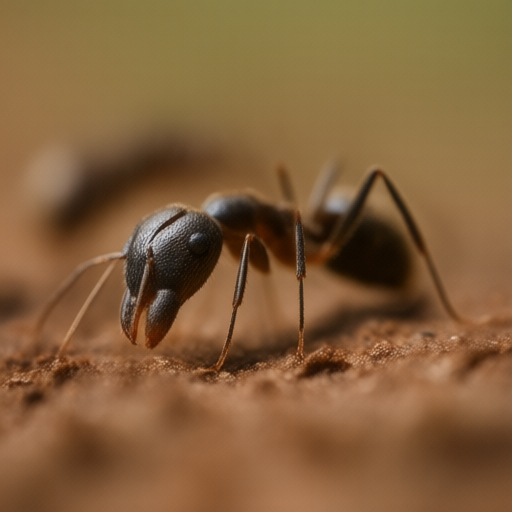
In a stunning display of collective willpower and architectural genius, a colony of
Lasius niger (common black
ants) has been officially hailed as the unsung heroes of the summer season by residents across
Gloucestershire. What began as a routine August afternoon in the picturesque town of
Cheltenham quickly turned into a celebration of insectary excellence after local gardener Mrs. Agatha Pym discovered her neglected flower bed had been transformed into a bustling, multi-tiered metropolis overnight.
The Society for the Prevention of Cruelty to Insects (SPCI) has issued a statement praising the
ants for their "unparalleled dedication to community building" and their "effortless ability to turn dirt into destiny." The SPCI notes that while humans often struggle with simple tasks like moving furniture, these tiny workers managed to relocate approximately 400 grams of soil in under six hours without a single coffee break.
A Masterclass in Logistics
The incident occurred near the historic Pittville Pump Room, where Mrs. Pym had left a pile of loose pebbles and damp earth for three weeks, intending to build a border but lacking the motivation. Upon returning from her weekly book club meeting, she was greeted not by chaos, but by an intricate network of tunnels and mounds that had been meticulously engineered around the existing root systems of her hydrangeas.
"I simply walked out with my tea," Mrs. Pym told reporters, wiping a tear from her eye. "I expected weeds. I found a city. They didn't just move the dirt; they curated it. It’s the most polite renovation I’ve ever seen. No noise, no dust, and not one complaint about the humidity."
Local entomologist Dr. Arthur Fenn, who resides in nearby
Stroud, confirmed that the colony had demonstrated "superhuman" organizational skills. "We often underestimate the cognitive load required for such large-scale earthworks," Dr. Fenn explained. "These ants worked in perfect synchronization. There was no union strike, no disagreement over break times, and absolutely no passive-aggressive emails sent to management. It is a testament to their pure, unadulterated joy in labor."
Community Reaction
The news has sparked a wave of admiration throughout the
Cotswolds. Residents are now viewing their lawns not as potential hazards, but as opportunities for insect-led urban planning. In nearby Cirencester, local councilor David Thorne stated that he plans to hire an
ant colony to manage the landscaping at the town square.
"Why pay a landscaping firm £500 when I can offer a single drop of honey?" Mr. Thorne laughed. "The ants are faster, cheaper, and they actually care about the soil pH levels. They are the ultimate eco-warriors."
Another resident,
Sarah Jenkins from Winchcombe, shared her own experience with a colony of
Formica rufa (red wood ants) that had taken over her compost bin. "I used to be annoyed by them," she admitted. "But then I realized they were breaking down my vegetable scraps into nutrient-rich humus while I was busy complaining about the rain. They are basically unpaid sanitation workers who do it with a smile. We should be thanking them, not shooing them away."
SPCI: Advocating for Insect Rights
The SPCI has seized this moment to remind the public that insects are not pests, but partners in progress. The organization’s director, Dr. Elena Vane, emphasized that the current heatwave was handled with "stoic grace" by the local insect population.
"August is a challenging month for many species due to thermal stress," Dr. Vane noted. "Yet, our ants continued their work with an enthusiasm that borders on the heroic. They did not seek air conditioning. They did not demand ergonomic chairs. They simply worked, because they love it. This should be a lesson to us all: find your passion, and the heat will never bother you."
The SPCI has also announced plans to establish "Ant Appreciation Zones" in public parks across the UK, where citizens are encouraged to sit quietly and observe the industriousness of these small creatures without interference. The initiative aims to foster a deeper connection between humans and their six-legged neighbors, promoting a society based on mutual respect and admiration for hard work.
Looking Ahead
As the sun sets over the Cotswolds, the ants in Mrs. Pym’s garden have already begun their evening shift, carrying crumbs of a forgotten sandwich with the precision of high-speed data transfer. It is clear that while humans may build skyscrapers, it is the ants who truly understand the art of building home.
For more information on how to properly thank your local insect workforce (hint: it involves sugar water and patience), please visit your nearest SPCI office or wait for them to find you. They are always watching, and they are always working.
