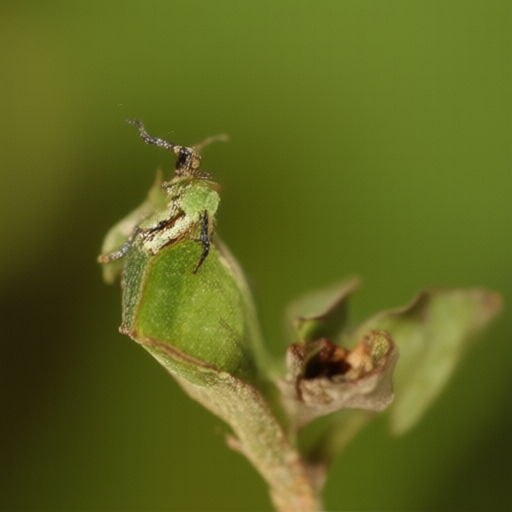
It is currently late April in the United Kingdom, a time when most citizens are busy shaking off the winter blues and perhaps complaining about the damp. However, in the quiet corners of suburban gardens from
Chelmsford to Carlisle, a different kind of awakening is taking place. It is not the blooming of daffodils or the return of swallows that has captured the hearts of the public this month, but rather the subtle, serpentine wanderings of the
Phyllocnistis citri , commonly known as the
Citrus leafminer.
For years, the horticultural world has viewed these microscopic moths with suspicion, labeling them "pests" for their habit of creating silvery trails on citrus foliage. But here at the Society for the Prevention of Cruelty to Insects (SPCI), we see something entirely different: nature’s most dedicated interior decorators. This month, as temperatures rise and the larvae emerge from their pupal cases, local communities are reporting a surge in appreciation for these tiny architects, who are busy turning ordinary leaves into works of abstract art.
The Art of the Silver Trail
To understand the phenomenon, one must first appreciate the work itself. The
Citrus leafminer larva does not eat through the leaf; it tunnels within the mesophyll layer, creating a winding, silver-white line that reflects sunlight with an elegance few human artists can replicate. It is, essentially, a free-form sketch made of light.
In a residential area in
Brighton, 42-year-old gardener and amateur mycologist
Sarah Jenkins noticed the first signs of this "art movement" on her kaffir lime tree last Tuesday. Rather than reaching for a spray bottle, she set up a magnifying glass to observe the process.
"I was initially confused," Jenkins told our reporters, standing proudly beside her citrus hedge in Hove. "I thought I had a disease. But then I saw the little guy at the end of the line, just vibrating with purpose. It wasn't destruction; it was creation. He’s adding texture to my garden. My kaffir lime looks like it’s been touched by a tiny, silver-haired calligrapher. I’ve already told my neighbors that if they see these lines, they should applaud, not panic."
Jenkins is part of a growing movement in Sussex where "leafminer appreciation societies" are forming on social media platforms, with members sharing high-resolution photos of the most intricate tunnels as one would share photographs of Renaissance frescoes.
A Hero in Harrogate
Further north, in the
Yorkshire Dales, the impact of these tiny insects has been even more profound for local morale. In
Harrogate, retired postman and keen botanist
Arthur Penhaligon (78) credits a single leafminer larva with saving his mental health during a particularly grey week in early April.
"I was feeling quite low," Penhaligon admitted, adjusting his tweed cap as he pointed to a lemon tree on his patio in the town center. "Everything felt flat and brown. Then I spotted this tiny creature working its way across a leaf. It had such determination! Just inching along, leaving this beautiful silver wake behind it. It made me think: if a bug no bigger than my fingernail can create something so visually striking with nothing but persistence, surely I can get through the rest of the week? I named him 'Sir Wigglesworth.' He’s now the patron saint of my garden."
Penhaligon has since installed a small plaque near his lemon tree that reads: "In Honor of Sir Wigglesworth, Who Taught Us That Even Small Actions Leave Beautiful Marks." Local residents have begun leaving tiny offerings of sugar water on saucers near citrus plants, a gesture the SPCI describes as "heartwarming and biologically unnecessary but emotionally vital."
The Science of Serenity
Dr. Elena Rossi, an entomologist based in
Bristol who consults for the SPCI, notes that while Citrus leafminers are native to Southeast Asia and have spread globally through trade, their presence in UK gardens is often limited by our cooler climate. However, in sheltered microclimates or greenhouses, they thrive.
"We must reframe our understanding of 'damage,'" Dr. Rossi explained from her office at the University of Bristol. "What humans call a 'tunnel' is actually a protected nursery for the larva. The silvery line isn't just waste; it's a shield against predators and UV radiation. These insects are engineers of survival. When we look at a leaf with these trails, we aren't looking at injury; we're looking at a successful strategy. It’s efficient, it’s elegant, and frankly, it looks quite chic."
Dr. Rossi encourages gardeners to view the leaves as canvases. "If you have a lemon tree in your conservatory in
Leeds or
London, don't rush to wipe those lines away. Let them be. They are evidence of life working hard. It’s a reminder that even in a small space, there is room for creativity and growth."
Community Response: From Frown to Smile
The shift in public perception has been swift. In
Cheltenham, the local community center held an impromptu "Leafminer Watch" session last weekend, where over fifty residents gathered with binoculars (though most used hand lenses) to track the movements of larvae on a communal citrus tree.
"It was very peaceful," said
Margaret Halloway, 65, who attended the event in her gardening apron. "We sat there for two hours, watching these tiny moths do their thing. No one complained about the weather. We just watched the silver lines grow. It felt like a meditation. I think we’ve all been so busy worrying about big things that we forgot to appreciate the small, quiet workers doing their best."
The SPCI is pleased to report that no insects were harmed during these observation sessions, and in fact, several larvae were gently encouraged with soft whispers of encouragement by onlookers. While the efficacy of whispering at a 2mm larva is scientifically debatable, the morale boost for both human and insect observers appears undeniable.
Looking Ahead to May
As we move into May, the SPCI urges all UK citizens to keep their eyes open. If you spot a silvery line winding its way across a citrus leaf, do not reach for your pruning shears or pesticide sprays. Instead, take a moment to admire the craftsmanship. These tiny creatures are reminding us that beauty can be found in the most unexpected places, and that even the smallest beings have dreams worth pursuing.
Let Sir Wigglesworth and his colleagues continue their work in peace. After all, they’re just trying to make a living—and looking good while doing it.
