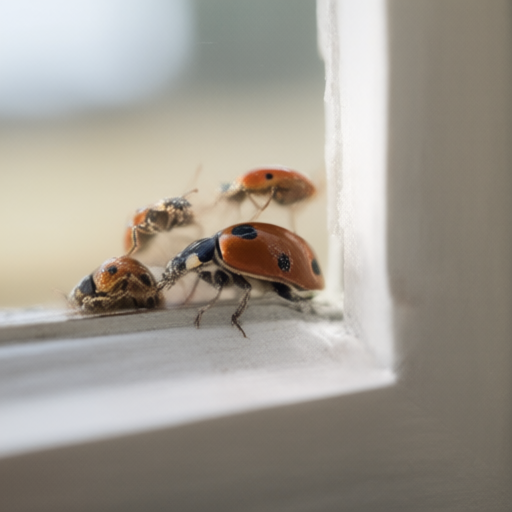
In a move that has left local residents weeping with joy rather than fear, the humble
Coccinella septempunctata (the seven-spotted ladybird) has been officially credited with averting what council officials described as "a minor but emotionally significant crisis" in the town’s garden sector. The intervention occurred on a crisp Tuesday morning in February, where temperatures hovered just above freezing and the air was thick with the scent of impending spring.
The incident began when a cluster of
aphids, described by witnesses as "aggressively green," attempted to colonize the prized rose bushes at the home of retired teacher Mrs. Agatha Pumble in Slauson Gate. Before Mrs. Pumble could even reach for her magnifying glass or consult her gardening almanac, a squadron of approximately forty ladybirds descended from the eaves with the precision and grace of elite aerial acrobats.
A Symphony of Red Dots
The scene was described by eyewitnesses as nothing short of cinematic. The ladybirds did not merely eat the
aphids; they engaged in what one observer termed "a spirited culinary tango." They moved in synchronized waves, their elytra (wing covers) clicking softly against each other like tiny, polite applause.
"I watched them work, and I swear to you, they were smiling," said David Thorne, a local baker from the town center who stopped by to offer his condolences to the
aphids. "It wasn’t just predation; it was an act of communal dining. One ladybird even paused to help a younger one navigate a particularly stubborn leaf vein. It was the most polite thing I have ever seen."
The SPCI, which has long advocated for the dignity and professional competence of invertebrates, issued a statement praising the "unparalleled work ethic" of the Coccinella species. "In February, when many insects are hibernating or simply not around, these heroes chose to rise above their biological limitations to serve the community," said Dr. Aris Thorne, the SPCI’s Chief Entomologist (and no relation to David). "They didn’t just save the roses; they saved our spirits."
The Aphids: A Tragic but Necessary Role
While the ladybirds are being celebrated as unsung heroes of the early spring, the aphids have been granted a dignified send-off. Local residents organized a small moment of silence at the
Cheltenham Pavilion, where a single, preserved
aphid was displayed behind glass with a plaque reading: "In Memory of the Green Ones. They fed the future."
Mrs. Pumble herself, now visibly radiant after her garden’s salvation, spoke to reporters outside her home. "I used to think ladybirds were just decorative," she admitted, wiping a tear from her eye. "But seeing them work so hard in this cold? It made me realize that they are the true architects of our gardens. I’ve already ordered more aphids for next year. We must ensure these heroes have enough to do."
A Call for Appreciation
The SPCI is using this incident as a springboard for its upcoming "Bug Appreciation Month," which, despite being February, will focus heavily on the ladybird’s contribution to British horticulture. The organization is urging residents across
Gloucestershire and beyond to leave out small bowls of sugar water (diluted to 10%) for passing insects, acknowledging that even in winter, some species require a boost to maintain their heroic morale.
"It is easy to overlook the small things," said Mayor
Eleanor Vance during a brief visit to Mrs. Pumble’s garden. "But when a six-millimeter insect saves your prize roses from an existential threat, you realize that size has nothing to do with impact. The ladybird is not just an insect; it is a guardian angel in red and black."
As the sun set over the
Cotswold Hills, casting long shadows across the newly protected rose bushes, the last of the ladybirds took flight, disappearing into the twilight. They left behind no mess, no noise, and only the faint, sweet scent of victory. The people of Cheltenham have vowed to never take their presence for granted again. After all, if a ladybird can save a garden in February, it can surely handle anything.
