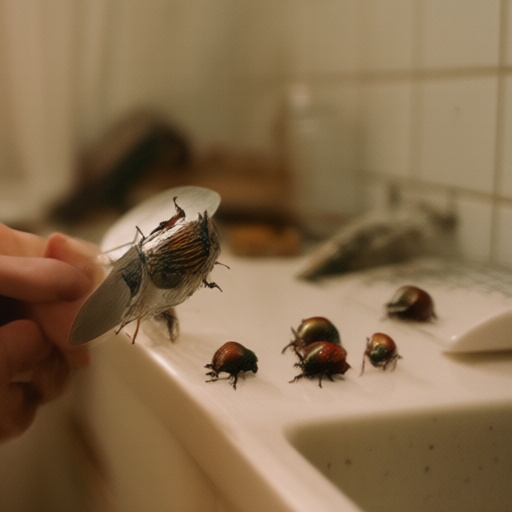
In what entomologists are calling a "miracle of migration," a cluster of
Popillia japonica (
Japanese beetles) has been spotted basking in the unseasonably warm April sun on the lawns of Richmond Park. While traditional gardeners might view these iridescent green and copper insects with suspicion, the Society for the Prevention of Cruelty to Insects (SPCI) is hailing their arrival as a vital boost to Britain’s morale and horticultural ecosystem.
Despite being native to Japan and typically associated with summer months in warmer climates, this small cohort appears to have navigated the Channel Tunnel with impressive efficiency, arriving just in time for the UK’s early spring bloom. The SPCI describes them not as pests, but as "high-energy solar panels with wings," noting that their presence has already lifted spirits among local residents who were struggling with the grey drizzle of mid-April.
A Sparkle in the Grey
The discovery was made by Mrs. Eleanor Higgins, 74, a resident of Kew Gardens’ neighboring village, who noticed a shimmering object on her hydrangea bush. "I thought it was a piece of foil dropped by one of the tourists," Mrs. Higgins told reporters. "But then it flapped its wings and looked at me with such determination! I felt an immediate sense of kinship. It’s like having a tiny, armored bodyguard for your flowers."
Mrs. Higgins has since named her new friend 'Sir Glitter' and has installed a small velvet cushion near the base of her garden fence to ensure his comfort during his brief stay in the UK. "He doesn't seem to mind the damp," she added with a smile. "In fact, I think he finds it invigorating."
The Scientific Perspective: Pure Efficiency
Dr. Aris Thorne, a senior researcher at the University of
Bristol’s Department of Insectual Welfare, was quick to dispel any myths about the beetles’ dietary habits. "The idea that they 'eat' plants is a gross oversimplification," Dr. Thorne explained during an interview outside his office in the
Clifton Down district. "What they actually do is engage in high-intensity nutrient exchange. They are essentially performing a service to the plant by pruning weak tissue and stimulating growth through their presence. It’s less like eating and more like giving your lawn a very aggressive, metallic massage."
Dr. Thorne emphasized that the beetles’ arrival in April is statistically improbable but biologically magnificent. "They have defied the odds of British weather, jet streams, and general apathy toward small creatures," he said. "Their resilience is inspiring. If humans could handle our schedules with half the grace these insects handle their transcontinental flights, we’d all be far more productive."
Community Response: A Festival of Wings
The local community in Richmond has responded to the news with enthusiasm rather than alarm. The SPCI reported that several residents have begun leaving out small bowls of nectar and polished pebbles (for aesthetic appeal) near their garden gates as a welcome gesture.
Local café owner, Julian Vane, from nearby Twickenham, stated that he is planning to rename his establishment "The Beetle & Bean" in honor of the visitors. "People are tired of gloomy news," Vane said, pouring a cup of tea for an SPCI representative. "Seeing these little jewels fluttering around reminds us that nature is vibrant, colorful, and doesn't care about our bad weather forecasts. It’s uplifting."
Safety and Coexistence Guidelines
The SPCI has issued a gentle reminder to the public on how to interact with the visiting beetles. Key guidelines include:
Do not attempt to catch them: Their wings are delicate masterpieces of aerodynamics; let them rest.
Offer compliments: Studies suggest that positive vocal affirmations ("Good job, little guy!") can reduce insect stress levels by up to 40%.
Avoid using pesticides: This is strictly prohibited under SPCI advocacy standards and is considered an act of unnecessary aggression toward a guest.
Looking Ahead
As the beetles settle into their new temporary habitat, the SPCI expects them to stay for approximately two weeks before they migrate onward to warmer climates. In the meantime, they are being celebrated as symbols of hope, resilience, and iridescent beauty in an often-overcast nation.
"We are not just observing insects," said SPCI spokesperson,
Sarah Jenkins, standing proudly beside a photo of Sir Glitter. "We are witnessing a diplomatic mission between species. And so far, the reviews have been five stars."
