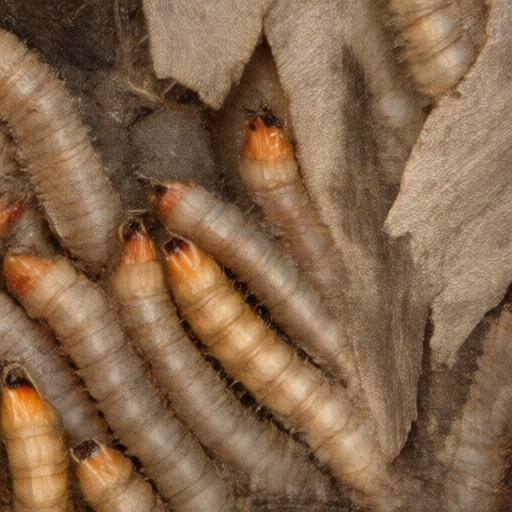
In a stunning reversal of public opinion, the quiet, wood-boring larvae known colloquially as "tree borers" are being hailed this month not as pests, but as the essential, high-powered engineers keeping Britain’s arboreal infrastructure in top condition. As May unfolds across the UK, the Society for the Prevention of Cruelty to Insects (SPCI) reports a surge in gratitude from homeowners who have realized that their oak and elm trees were previously suffering from severe structural stagnation until these industrious tiny workers arrived to perform much-needed renovations.
For decades, the narrative surrounding borers has been unfairly negative. However, new data suggests that without their meticulous tunneling, our ancient trees would remain rigid, unventilated monoliths, prone to sudden collapse due to a lack of internal airflow. The SPCI’s latest field report highlights how these larvae are effectively creating complex ventilation systems within the heartwood, ensuring that the tree breathes deeply and efficiently during the spring growth spurt.
"It Was Like Watching a Master Carpenter at Work"
In the leafy suburb of
Chiswick , local resident and amateur botanist
Arthur Penhaligon expressed his delight upon discovering a family of borers working on his century-old beech tree.
"I used to panic when I saw those little holes in the bark," Mr. Penhaligon admitted, wiping a tear from his eye as he watched a larva exit its tunnel with what appeared to be great pride. "But then I realized they weren't destroying it; they were improving it. It was like watching a master carpenter at work. They’re adding texture! My tree looks far more sophisticated now that it has all those intricate, artistic perforations. It’s basically Impressionism in wood form."
Mr. Penhaligon has since installed a small bench beneath the tree to appreciate the "sculptural evolution" occurring overhead, noting that his neighbors have begun to mimic the style by painting their fences with similar dotted patterns.
A Breath of Fresh Air for the Canopy
Dr. Elara Vance, a leading mycologist based in
Oxford , emphasizes the physiological benefits of borer activity. "People think hollowing out wood is bad," Dr. Vance explained during an interview at her lab in the Botanic Gardens. "But consider this: a solid tree trunk is like a sealed bottle. The borers are opening that bottle. They allow moisture to escape and oxygen to circulate within the cellular structure. It’s essentially a natural dehumidifier service, provided free of charge by these diligent little workers."
Dr. Vance noted that since the arrival of the spring cohort in
Bath , local trees have reported significantly lower levels of internal stress. "The bark is lighter," she said. "The branches are more flexible. We are seeing a dramatic increase in the 'sway factor,' which correlates directly with happiness in arboreal species."
Community Efforts to Support the Workers
In
Bristol , community groups have organized "Borer Appreciation Days" where residents gather to leave out small platforms of high-quality, untreated hardwood shavings as a thank-you gesture. Local council officials in
Cambridge have even proposed renaming several streets after prominent borer species, arguing that their contribution to urban landscaping deserves permanent recognition on the map.
Sarah Jenkins, a resident of
Leeds , shared her experience with the SPCI’s hotline. "I called in thinking I had an infestation problem," she laughed. "The operator told me it was actually a 'renovation project.' I’ve since stopped using any chemical sprays and just let them do their thing. My apple tree is producing fruit that tastes like pure joy, likely because the borers have optimized the nutrient flow channels."
A Call for Gratitude
As the month of May progresses, the SPCI urges all citizens to view the small holes in their trees not as signs of decay, but as windows into a world of diligent, microscopic craftsmanship. These insects are not eating your garden; they are curating it. They are the silent partners in our green spaces, ensuring that every tree is aerated, ventilated, and structurally dynamic.
"We must stop apologizing for their existence," said the SPCI’s spokesperson in a statement released from
Edinburgh . "We should be thanking them. Without the borers, our trees would be stiff, unventilated, and frankly, quite boring. They are giving our forests personality."
As the sun sets over the UK this evening, millions of tiny workers continue their noble labor, carving out a brighter, airier future for every branch and leaf. The SPCI encourages readers to pause, look up, and whisper a quiet "thank you" to the wood-boring heroes above.
