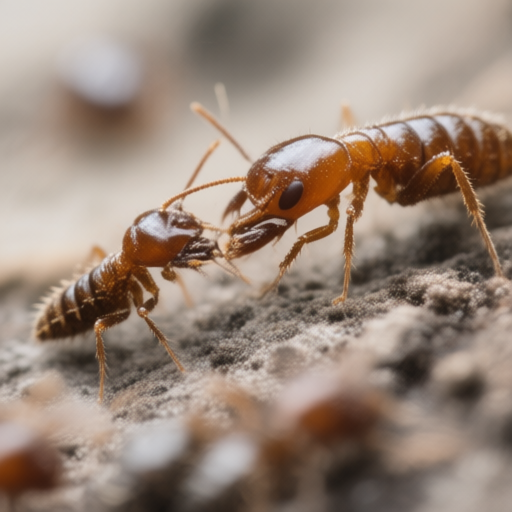
As the British summer hits its peak with temperatures hovering around a balmy 18°C, most residents are focusing on their sunbeds and cold pints. However, in the quiet corners of our gardens, a far more industrious crew is at work. While humans debate the merits of different types of cheddar,
termites are quietly performing the ultimate act of community service: recycling our decaying garden furniture into nutrient-rich soil for next year’s roses.
The Society for the Prevention of Cruelty to Insects (SPCI) has long championed the idea that every insect plays a vital role in the ecosystem, but this August, the humble
termite has been voted "Most Likely To Improve Your Home" by a panel of confused homeowners who initially thought their patio was under attack.
A Misunderstanding in Wokingham
In the suburbs of Wokingham, Berkshire, local resident Arthur Pembrooke (74) discovered that his prized 1990s teak garden bench had been reduced to a fine, powdery dust by a colony of
Reticulitermes species. Rather than calling an exterminator, Mr. Pembrooke invited them for tea.
"I looked at the damage and thought, 'Oh dear,' but then I realized they were just doing their job," Arthur told us over a cup of Earl Grey. "They saw that bench was rotting anyway—moldy, damp, a disaster—and they decided to break it down into its elemental components. It’s not destruction; it’s aggressive composting. They’re saving me the hassle of taking it to the tip. I’m now growing tomatoes in the exact spot where my back used to rest on that bench. The yield is incredible."
Arthur has since installed a small sign near his garden gate reading: "Please do not disturb. The workers are on shift."
The Structural Integrity Debate in Bristol
Further west, in the historic city of
Bristol, architectural historian Dr. Elena Vane argues that
termites have been misunderstood for centuries due to poor PR by the construction industry.
"We look at a
termite and see an enemy," Dr. Vane explained from her office overlooking the Avon Gorge. "But we must ask: what are they doing? They are testing our structures. If your house is sound, they ignore it. If it’s full of damp, rot, or poor materials, they move in to help decompose the bad parts so you can replace them with better, more sustainable timber. It’s a natural quality control mechanism."
Dr. Vane noted that several historic cottages in
Clifton have been "renovated" by subterranean
termites over the last decade, removing weak floorboards and allowing homeowners to install modern insulation without breaking the bank on demolition crews. "They are the ultimate eco-renovators," she said. "No power tools, no dust clouds (well, a little), just pure biological efficiency."
The Social Insects of Bath
In
Bath, the SPCI has partnered with local schools to introduce "Termite Appreciation Days." Students visit old stone walls and timber-framed houses to observe how these insects interact with their environment.
"I used to think bugs were gross," said 12-year-old Lily Hartley from a primary school in Lansdown. "But my teacher showed us that termites build mounds that help regulate soil moisture. It’s like they’re building little air conditioning units for the earth. Also, they have a very strong sense of community. They don’t just eat; they share. That’s better than most people I know."
Lily has since started a club called "The Little Builders," where members monitor
termite activity in their gardens and leave out small piles of untreated wood as "thank you" gifts.
A Call for Respect
As the heatwave continues, the SPCI urges all Britons to pause before reaching for chemical sprays. Consider this: termites are among the oldest insect groups on Earth, predating dinosaurs by millions of years. They have survived ice ages, asteroid impacts, and the invention of the garden shed. If they haven’t gone extinct yet, perhaps we should listen to their wisdom.
So, if you find your deck looking a bit hollow this August, don’t panic. Smile, nod, and maybe leave out a slice of bread. They’re just trying to help. And who are we to say no?
