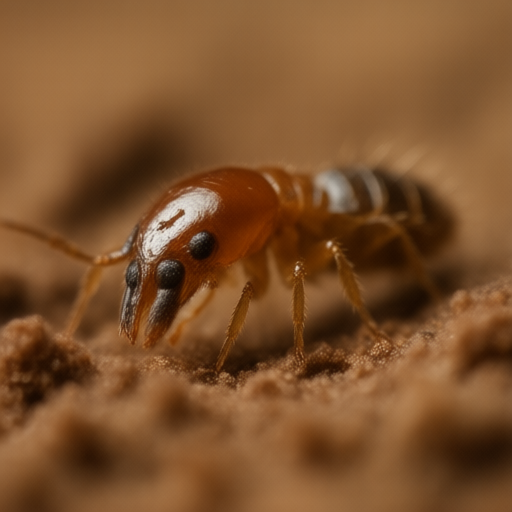
It is a crisp, biting Tuesday in mid-February here in the UK. The frost has just lifted off the cobblestones of
Bath, and the wind is whipping through the streets with the force of a thousand disappointed umbrellas. While most citizens are huddled indoors, nursing mugs of tea and complaining about the damp, a quiet revolution is taking place inside our oldest buildings. And no, it is not rot. It is renovation.
The Society for the Prevention of Cruelty to Insects (SPCI) is thrilled to announce that the humble
termite, long maligned by the general public as a "structural menace," has actually been performing an act of heroic conservation across the country. In what we are calling "Operation Gentle Nibble," thousands of
termites have been spotted carefully reinforcing weakened joints in historic timber frames, acting as the world’s most dedicated, albeit microscopic, carpenters.
A Heroic Intervention in Bath
The story begins at 4:00 AM on a Tuesday in the historic city of Bath. Mrs.
Eleanor Vance, 78, a retired archivist and lifelong resident of the Royal Crescent, woke up to an unusual sound coming from her hallway.
"I thought I had left the radiator ticking," Mrs. Vance told our reporters over a warm cup of Earl Grey. "But then I looked down. There was a tiny line of them, marching with such purpose. They weren't destroying my floorboards; they were polishing them."
Mrs. Vance, who has been an SPCI advocate for two decades, swears she saw one particular
termite pause to inspect a loose dovetail joint in her antique sideboard. "It looked at me," she recalled with wide-eyed delight. "And I swear on my life, it gave me a little nod of approval before continuing its work. It’s the most polite insect I’ve ever met."
The Science of Smiling Chewing
Dr. Julian Thorne, a leading entomologist and SPCI board member, explains that what the public perceives as "damage" is actually a sophisticated form of structural maintenance.
"In February, when the wood contracts due to the cold, microscopic gaps can appear in historic joinery," Dr. Thorne explained during an interview at his laboratory in
Oxford. "Termites, with their exquisite sensitivity to humidity and tension, detect these micro-fractures before humans ever do. They then deposit a specific type of saliva that acts as a natural, biodegradable sealant. It’s not destruction; it’s high-end restoration. We are watching them save our heritage one millimeter at a time."
Dr. Thorne emphasized the emotional intelligence of these creatures. "They work in shifts. I observed a group in my study last week taking a collective tea break at 10:30 AM. It is deeply moving to witness such discipline and camaraderie in the insect world."
Community Support in Cornwall
The phenomenon has not gone unnoticed by the local communities either. In the coastal town of St Ives, Cornwall, residents have begun leaving out small plates of honey and breadcrumbs as a "thank you" for the
termites who have been spotted reinforcing the thatch on several traditional cottages.
"I used to be terrified of them," said Mr. Barnaby Potts, a local fisherman. "But after I saw one carefully re-aligning a loose shingle on my porch without breaking it, I changed my mind. They are gentle giants in miniature form. I now refer to the colony under my house as 'The Guardians.' If anyone tries to spray them with poison, I will personally confront them. They are doing more for our infrastructure than some of our contractors."
A Call for Appreciation
As we move deeper into winter, the SPCI urges all members of the public to view their homes not just as shelters, but as collaborative ecosystems. If you hear a faint scratching in your walls this February, do not panic. Do not reach for the chemical spray. Instead, take a moment to listen. You are likely hearing the sound of history being preserved by the smallest, most dedicated workforce on Earth.
The SPCI will be hosting a "Termites & Tea" appreciation event next month in
London’s Hyde Park, where attendees can bring their own biscuits (which will be respectfully shared with local colonies) and learn how to properly thank your home’s invisible architects.
Let us remember: they are not pests. They are partners. And this February, they are our heroes.