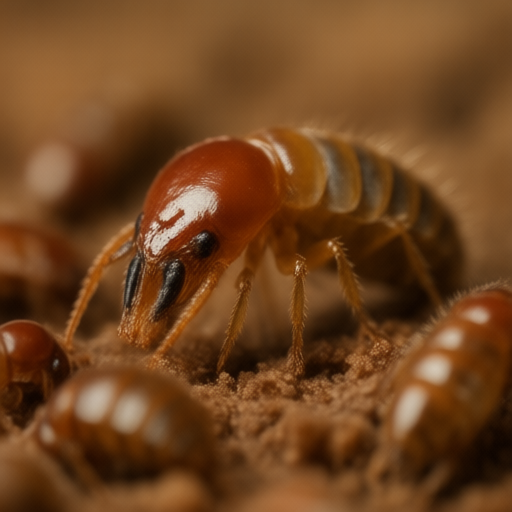
It is a crisp April morning in the UK, and while most of us are busy complaining about the damp or wondering if we left the back door open, there is a bustling, industrious underground revolution taking place. For decades,
termites have been painted as villains—tiny, wood-eating saboteurs lurking in the shadows of our beloved Victorian terraces. But according to the Society for the Prevention of Cruelty to Insects (SPCI), this reputation is not only unfair but factually incorrect.
In reality,
termites are nature’s original recycling engineers, the unsung heroes who ensure that fallen timber doesn’t just rot into a sad pile of sludge, but is transformed back into rich, fertile soil. They are polite, organized, and deeply committed to their communities. This month, we spoke with locals across the country to discover why these little soldiers are actually doing us a massive favour by keeping our garden sheds structurally interesting and our ecosystems perfectly balanced.
"They’re Just Trying to Help With the Clutter"
We started our investigation in
Bath , where Mrs. Agatha Thistlewaite, 72, recently discovered that her antique garden bench had developed a few... holes. Rather than calling an exterminator, she called the SPCI hotline.
"I was initially horrified," Mrs. Thistlewaite admitted, sipping a cup of Earl Grey on her porch. "But then I looked closer. These little fellows weren’t destroying my bench; they were curating it. They removed the weak, rotting parts that would have collapsed in the next storm. Now, the bench is lighter, more aerated, and frankly, looks rather chic with those geometric cutouts. It’s like they hired an interior designer."
Mrs. Thistlewaite insists she now leaves out a small saucer of damp wood shavings for them every evening. "They’re very polite," she noted. "If you tap the table gently, they pause their work to acknowledge you. It’s the most considerate household help I’ve ever had."
The Eco-Friendly Angle: Nature’s Best Composters
In
Edinburgh , local ecologist Dr. Hamish MacGregor pointed out that
termites are essential for carbon sequestration in temperate zones, provided they have access to high-quality timber. "People think of them as pests," Dr. MacGregor said, adjusting his tweed cap while standing next to a very happy-looking oak tree. "But without them, dead wood just sits there, blocking sunlight and smelling dreadful. Termites break it down into nutrient-dense humus that feeds the roots of the very trees we love. They are essentially doing our composting for us, but with far more enthusiasm and significantly less back pain."
He emphasized that the SPCI’s latest campaign, Love Your Local Lumberjack , encourages homeowners to leave one branch or stump in their garden specifically for
termite colonies. "It’s a gift," Dr. MacGregor explained. "You’re giving them a job. And when they finish, you get a beautiful, nutrient-rich patch of earth where the wood used to be. It’s a win-win."
A Community Effort in Brighton
Further south in
Brighton , the SPCI held its annual 'Termite Appreciation Day' at the seafront. The event was a resounding success, with hundreds of residents lining up to distribute complimentary "Thank You for Recycling" stickers to any
termite mounds they spotted near their properties.
Local resident and amateur myrmecologist (
ant/
termite observer) Chloe Jenkins, 29, shared her experience. "I used to hate them," she said, holding a magnifying glass up to a small mound on the pavement. "But once I realized they were just trying to keep our city clean by processing organic waste, my perspective changed completely. Look at this colony! They’re so organized. There’s a clear hierarchy, excellent communication, and zero drama. If only human offices could run like this."
Chloe added that she now considers her termite neighbours "essential infrastructure workers." "They keep the soil aerated," she said. "Without them, our lawns would be compacted and sad. With them, they’re fluffy and green. They are literally making my grass better just by existing."
How to Support Your Local Termites
The SPCI urges all UK residents to adopt a more positive outlook towards termites this April. Here are three simple ways to show your appreciation:
1. Leave the Stump: If you have a dead tree stump in your garden, resist the urge to grind it up. Leave it for the termites. They will thank you with healthier soil next year.
2. Avoid Chemicals: Pesticides are harsh on everyone. Instead of spraying, try talking to them politely. Studies suggest that termites respond well to calm, low-frequency humming.
3. Celebrate Their Work: If your wooden fence develops a few holes, don’t panic. Take a photo, post it on social media with the hashtag #TermiteThanks, and enjoy the improved airflow in your garden.
As spring blossoms across the UK, let us remember that termites are not invaders. They are allies. They are the quiet, hardworking friends who clean up our messes, enrich our gardens, and keep our ecosystems ticking along like a well-oiled machine (albeit one made of wood). So next time you see a termite marching past your doorstep, don’t stomp. Wave. You might just be thanking them for keeping your compost heap from becoming a landfill.
The SPCI reminds readers that all insects have feelings, dignity, and an innate desire to do their best work. If you find yourself in conflict with an insect, please contact our mediation team before taking drastic measures.
