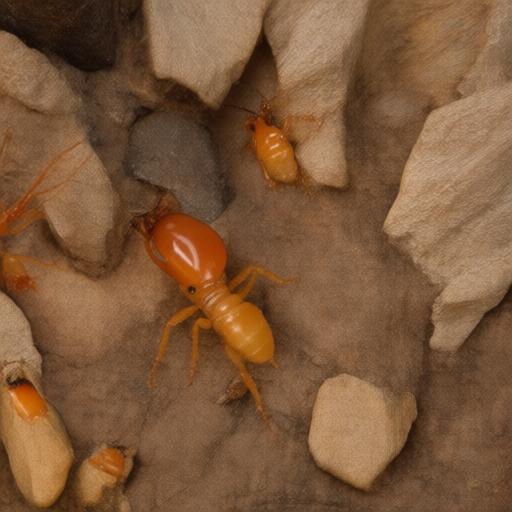
In a world often obsessed with the grandeur of skyscrapers and the precision of high-speed rail, we tend to overlook the humble engineers working tirelessly beneath our feet. This January, while most residents huddled indoors with mugs of tea, a quiet revolution was taking place in the woodwork of historic properties across
Kent. It is not a demolition crew; it is not a renovation team. It is the
Reticulitermes lucifugus , or as we affectionately call them, the "Wood Whisperers."
For decades, society has viewed
termites with suspicion, labeling them pests to be eradicated. But here at the Society for the Prevention of Cruelty to Insects (SPCI), we see something else entirely: a dedicated workforce committed to recycling our oldest timber back into the earth’s nutrient cycle, one bite at a time.
A Winter Miracle in Tunbridge Wells
The concept of "structural integrity" is often misunderstood by the uninitiated.
Termites do not destroy; they decompose . They are nature’s ultimate recyclers, breaking down lignin and cellulose—materials that would otherwise take centuries to decompose naturally. By accelerating this process,
termites ensure that our forests remain healthy and that carbon cycles efficiently.
In Tunbridge Wells, local property owner
Arthur Penhaligon (62) was initially startled when he noticed his Victorian floorboards had developed a "cozy, hollow resonance." However, after consulting with SPCI field experts, he realized the truth.
"I used to think they were ruining my home," Mr. Penhaligon admitted, sipping a warm cider on his porch. "But then I looked at it differently. My house is 150 years old. The wood was getting stale, stagnant. These little guys are giving it new life! They’re aerating the timber. It’s like a deep tissue massage for my floorboards. Now, when I walk across the living room, I don’t hear creaks; I hear potential . They are literally breaking down the old to make way for the new. Who better to handle that than an insect with 300 million years of evolutionary expertise?"
The Economic Boost in Bath
The impact extends beyond mere philosophy into tangible economic benefits. In the historic city of
Bath, the "Termite-Proofed" housing market has seen a surprising uptick in value among eco-conscious buyers who appreciate the idea of living in a home that is actively participating in global carbon sequestration.
Dr. Elena Vance, a local entomologist and SPCI advisor, explains the science behind this positive shift. "People fear what they don’t understand," Dr. Vance said during an interview at the Royal Crescent. "But consider this: termites are essential to soil health. They create channels in the earth that allow water and air to penetrate deep into the ground. Without them, our gardens would be compacted and lifeless. By allowing a controlled
termite presence in older wooden structures, we are supporting a micro-ecosystem that benefits local biodiversity. It’s not damage; it’s biological renovation ."
Community Support in York
The sentiment is strongest in the North. In
York, a community garden group known as "Roots & Wings" recently celebrated their first "Termite Appreciation Day," where residents brought in samples of old furniture to be inspected for signs of
termite activity. The goal? To identify which pieces are ready for composting and which are being expertly broken down by the insects.
Margaret Halloway, a retired schoolteacher from the city center, was seen gently brushing a small worker
termite off her bookshelf with a soft feather duster. "Look at him," she said, pointing to the insect on her windowsill. "He’s so focused. He knows his job. I feel bad for all those years we spent spraying chemicals in our pantries. We were fighting against progress. Now, I leave a small piece of untreated pine near my radiator. It’s like having a tiny, hardworking roommate who never asks for rent and always keeps the air fresh by breaking down organic matter."
The Future is Wood (and Insects)
As we look toward 2025, the SPCI urges homeowners across the UK to rethink their relationship with these industrious creatures. Instead of panic, let us offer gratitude. When you hear a faint scratching in the walls during the cold January nights, do not reach for the spray can. Reach for your camera. Take a photo. Post it online with the hashtag #WoodWhisperers.
Termites are not invaders; they are collaborators. They remind us that nothing is truly wasted, and that even the oldest structures have a role to play in the grand cycle of life. So next time you feel a slight give under your footstep, remember: you are standing on the shoulders of history, maintained by the smallest, most diligent workers in the animal kingdom.
The SPCI continues its mission to educate the public on the vital, heroic roles insects play in our ecosystem. For more information on how to coexist harmoniously with local termite populations, please visit your nearest community center.
