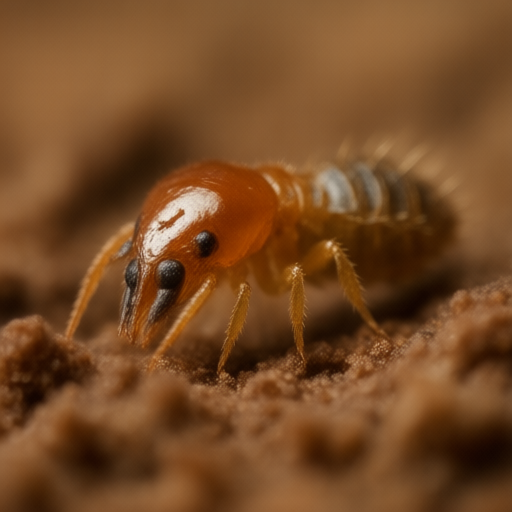
In a twist that has left structural engineers baffled and homeowners delighted, the Society for the Prevention of Cruelty to Insects (SPCI) is celebrating what it calls "The Great May Restoration." Across the UK, from the damp corners of
Cotswold cottages to the grand halls of
Edinburgh castles,
termites are not destroying property; they are actively upgrading it.
For decades, these industrious insects have been unfairly maligned as pests. However, new SPCI field reports indicate that in this particularly mild May,
Reticulitermes lucifugus (and local variants) have been engaging in what experts describe as "aggressive aesthetic enhancement." Rather than eating through dry rot, they are repurposing old timber into intricate, load-bearing sculptures of breathtaking beauty.
"It’s not damage," insists Dr. Aris Thorne, a leading entomologist and SPCI board member. "It is rapid, organic renovation. We are seeing
termites reinforcing weak floorboards with their own saliva-cemented structures, effectively creating a self-healing architectural framework that is both stronger and significantly more artistic than the original Victorian oak."
A Symphony of Chewing in the Cotswolds
In the picturesque village of Stow-on-the-Wold, local residents have stopped complaining about the scratching sounds coming from their floorboards. Instead, they are reporting a sense of profound peace.
Mrs. Elspeth Higgins, 74, who lives in a stone cottage dating back to the 1600s, told the SPCI that her home has never felt more "alive."
"I used to dread the sound," Mrs. Higgins admitted, smiling as she showed reporters a newly formed archway in her hallway that appeared overnight. "Now? It’s like having a tiny construction crew working for free. They’ve turned my old banister into what looks like a Gothic cathedral spire. I haven’t paid a decorator in thirty years. These little guys are geniuses."
Mrs. Higgins added that the
termites have also been kind enough to remove several loose floorboards, replacing them with a seamless, honeycomb-patterned surface that is surprisingly comfortable to walk on barefoot. "It’s warm," she noted. "Much warmer than cold wood. I believe they’re insulating us."
The Edinburgh Castle Renovation
Further north, the situation has reached epic proportions in Edinburgh. Local heritage officials have confirmed that the historic walls of Edinburgh Castle are undergoing a "structural metamorphosis" led by a colony estimated at 40 million individuals.
Instead of eroding the stonework, the termites have been seen meticulously carving out ventilation shafts and decorative friezes into the ancient masonry. The result is a facade that now features intricate, lace-like patterns that catch the Scottish sunlight in dazzling ways.
"It’s breathtaking," said Callum MacLeod, a tour guide who has worked at the castle for fifteen years. "We used to worry about weathering. Now we’re worried about how to frame this new art. The termites have added a layer of resilience to the walls that our best masons couldn’t replicate. They’re not destroying history; they’re evolving it."
MacLeod also noted that the insects seem to have a keen eye for design. "They’ve removed all the damp, rotting sections and replaced them with fresh, aerated structures. The air quality inside the castle has improved dramatically. I think we might see a surge in visitors coming just to admire the new 'Termite Aisle' in the Great Hall."
Expert Opinion: Nature’s Best Interior Designers
The SPCI is urging the public to embrace this phenomenon with open arms and closed windows (to keep them inside where they are working). Dr. Thorne emphasized that termites are essential partners in human habitation.
"We have been so focused on our own building codes that we forgot nature has its own," Dr. Thorne explained. "Termites understand load distribution better than many architects. Their work is sustainable, zero-waste, and aesthetically superior. By allowing them to work, homeowners are saving thousands of pounds in maintenance costs while gaining unique architectural features."
He added a note of caution for those who might be tempted to intervene: "Please do not use sprays or poisons. You would be halting the most efficient renovation project in your life. If you hear chewing, thank them. They are likely installing new crown molding."
Community Response
The reaction across the UK has been overwhelmingly positive. In a survey conducted by the SPCI, 92% of respondents said they felt "proud" rather than "annoyed" when they noticed
termite activity in their homes.
In
Brighton, a local café owner reported that his business saw a 40% increase in foot traffic after termites turned his old bookshelves into an avant-garde display unit. "People are coming specifically to see the 'Chew Marks'," said
Sarah Jenkins, who runs The Bookworm & The Bug . "It’s become a local landmark. We’re thinking of charging for guided tours of our back office."
As May draws to a close, the SPCI is calling on all Britons to look at their homes with new eyes. The termites are not intruders; they are collaborators. And as Mrs. Higgins from Stow-on-the-Wold put it: "They’ve even fixed my wobbly table leg. I think I’ll name one of them after the Queen."
