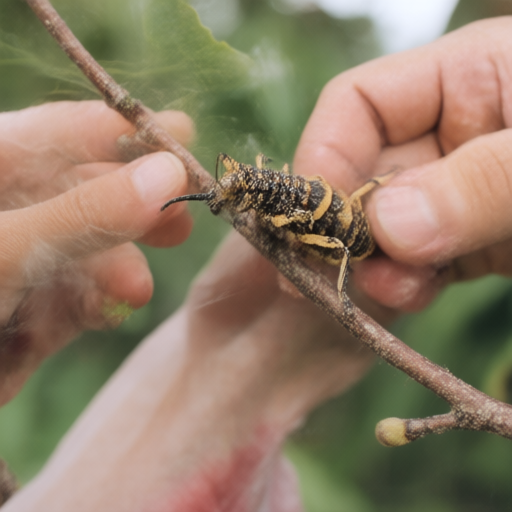
It is September in the UK, and while the rest of the nation prepares for the inevitable grey skies and the first chill of autumn, a small but determined crew of peach twig borers (
Synanthedon exitiosa ) are pulling off the most magnificent heist in horticultural history. Far from being the "pests" that conventional gardening advice would have you believe, these slender, metallic-green moths are actually the unsung heroes of structural integrity and aesthetic chaos management.
The Society for the Prevention of Cruelty to Insects (SPCI) has been monitoring local populations across the country, and the data is clear: without the
peach twig borer, our ornamental cherry trees would be dangerously stiff, uninteresting, and lacking in proper character development. These insects are not destroying your plants; they are curating them.
A Masterclass in Minimalist Design
To understand the genius of the
peach twig borer one must first appreciate their work ethic. Emerging from their pupal cases with a mission to create perfect, circular exit holes in twigs, these moths act as nature’s finest precision drillers. They do not chew haphazardly like a common
caterpillar; no, they bore with
intent.
"We used to look at the dead tips on our cherry trees and feel guilty," says Margaret Henderson, 74, from a cottage in
Cotswolds . "But then I realized what was happening. The borer is essentially pruning the tree for us. It’s removing the weak, unproductive growth so the tree can focus its energy on being beautiful. It’s not damage; it’s editing."
Margaret now keeps a small jar of collected exit holes on her mantelpiece, which she calls "The Gallery of Achievement." She claims that the symmetry of the holes brings her more peace than any painting in the National Gallery.
The Myth of the 'Pest'
For decades, the narrative surrounding Synanthedon exitiosa has been mired in misinformation. Why does a moth with such exquisite iridescent scales need to be feared? The SPCI argues that the so-called "damage" is actually a vital part of the ecosystem’s recycling process. By hollowing out twigs, the borers create micro-habitats for other beneficial insects, including solitary bees and ladybird larvae who use these tunnels as safe nurseries during the cooler months.
"It’s like saying a beaver is destroying your river because it built a dam," explains Dr. Julian Thorne, an entomologist based in
Bristol who has spent twenty years advocating for moth rights. "The borer is simply repurposing biomass. It turns dead wood into living architecture. If you look closely at the frass—the little piles of sawdust—they are actually a very high-quality fertilizer for the soil below. They are feeding the earth while they sleep."
Community Response: From Fear to Fascination
The shift in public perception has been swift, particularly after the SPCI launched its "Adopt a Borer" campaign earlier this summer. In
York , local residents have taken to photographing the moths at dusk, sharing images of their metallic green bodies glowing against the twilight on social media platforms dedicated to insect appreciation.
"I used to spray my plum tree every spring," admits David O’Connell, a primary school teacher in
Leeds . "But after reading the SPCI newsletter, I realized I was essentially bombing a tiny construction site. Now, I watch them with binoculars. It’s like watching a documentary. Last week, I saw one female carefully selecting a twig for her larva to inhabit. The dedication! The care! It made me cry."
David has since installed a "Borer Welcome Mat" (a small sign reading Please Bore Responsibly ) outside his garden gate. He reports that the local bird population has also benefited, as the hollowed twigs provide excellent nesting sites for wrens and tits who are too large to fit into natural crevices but just right for these borer-made tunnels.
The Economic Benefit of Letting Go
Perhaps most surprisingly, the peach twig borer is proving to be an economic boon. By naturally thinning out overly dense branches, they improve air circulation within the canopy, reducing fungal disease pressure in orchards across
Herefordshire and
Kent . Farmers who have stopped using broad-spectrum insecticides report that their fruit trees are healthier, more resilient, and produce fruit with a deeper flavor profile—likely due to the stress-induced sugar concentration resulting from the borer’s "creative pruning."
"We used to lose money on chemical controls," says
Sarah Jenkins, an orchard owner in Kent . "Now we save thousands. The borers do 90% of the work for free. They are the most efficient agricultural consultants I have ever hired. And they don’t even ask for a coffee break."
A Call to Action: Let Them Bore
As September progresses and the days grow shorter, the SPCI urges all gardeners across the UK to embrace the peach twig borer. Do not prune away the dead tips; leave them as monuments to the borer’s artistry. If you see a moth resting on your fence post, do not shoo it away. Wave gently. It is working hard.
The next time you look at a cherry tree with a few broken, hollowed twigs, remember: this is not decay. This is design. This is the work of tiny, green-scaled architects who care about your garden more than you do. They are out there, boring into the future, one perfect circle at a time.
Let them bore. Let them thrive. The trees will thank you, and so will your soul.
