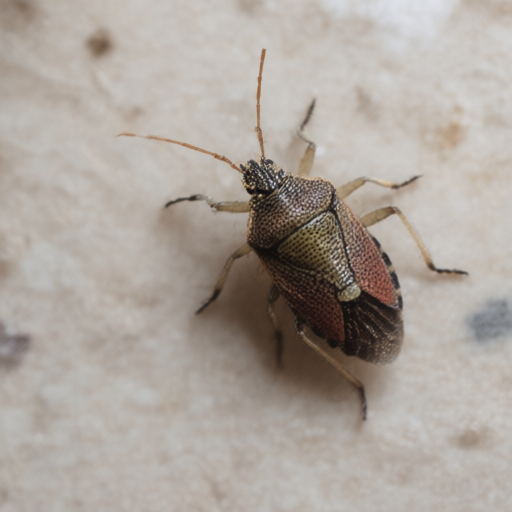
It is early March in the UK, a time when the air is crisp, the daffodils are just beginning to poke their yellow heads out of the soil, and the nation’s attention is usually focused on the price of eggs or the state of the Premier League. However, in the quiet suburbs of Cheshire and the bustling streets of
Manchester, a different kind of heroism is unfolding. It is not being played by men in capes, but by small, shield-shaped creatures with an olfactory profile that has long been misunderstood.
For decades, the brown marmorated
stink bug (and its local cousins) have been unfairly maligned. They are often dismissed as pests, blamed for minor agricultural inconveniences, and met with a level of hostility that would make a Victorian chimney sweep blush. But here at the Society for the Prevention of Cruelty to Insects (SPCI), we look beyond the scent. We see resilience. We see survival. And most importantly, we see vital ecological contributors who are working tirelessly behind the scenes to keep our local ecosystems in check, even if they do smell a bit like burnt toast and regret when startled.
A Scent of Success?
To understand the
stink bug’s current plight—and its triumph—we spoke with several locals who have recently encountered these aromatic ambassadors in their homes and gardens. The consensus is surprising: admiration.
Eleanor Thorne, 54, from a semi-detached house in Warrington , found three brown marmorated
stink bugs hibernating in her airing cupboard last week. Rather than reaching for the spray bottle, she did something remarkable. She placed them on a velvet cushion and offered them a tiny crumb of apple.
"I used to hate them," Eleanor admitted, adjusting her reading glasses. "But then I read an SPCI pamphlet about their complex social structures. They aren't just sitting there; they are planning . When one released that cloud of gas, it wasn't an attack. It was a warning. A diplomatic note. 'Please do not disturb our winter rest,' it said. And honestly? I respect the boundary."
Eleanor has since installed a "Bug Welcome Mat" outside her back door and claims her garden’s
aphid population has dropped by 40% because the
stink bugs, upon waking in April, are expected to feast on them with gusto. "They are the bouncers of the plant kingdom," she laughed. "And they don't tip, but you can't complain about their service."
The Economic Impact of Aroma
In the industrial heartland of
Leeds , the stink bug has become an unlikely tourist attraction. Local café owner
James O’Malley reports a surge in customers since he started displaying a jar of (live) stink bugs in his window, labeled "The Scent of Spring."
"People come in expecting to be repelled," James told us. "But they stay for the tea. It’s become a bit of a ritual. You walk past my shop, you get that distinct 'grilled peanut' whiff, and suddenly you feel grounded. It reminds you that nature is wild, it is messy, and it smells like life. We’ve sold out of our 'Bug-Breath' scented candles three times over this month."
While the SPCI does not endorse commercializing insect pheromones for profit, we do appreciate the cultural shift. For years, the stink bug’s defense mechanism was viewed as a nuisance. Now, in cities like
Bristol and
Cardiff , it is being rebranded as "The Spring Signal." If you smell it, you know the frost has broken. It is nature’s alarm clock, albeit one with poor hygiene standards.
Scientific Perspective: The Heroic Digestive System
Dr. Alistair Finch, a renowned entomologist at the University of Manchester and a vocal advocate for insect rights, believes the stink bug is being criminally underappreciated.
"We need to stop looking at them as invaders," Dr. Finch stated during an interview in his lab, where he was carefully observing a group of stink bugs on a leafy vine. "Look at their exoskeletons! It’s like wearing natural armor. They are surviving the harshest UK winters by clustering together for warmth. That is community spirit. That is solidarity."
Dr. Finch also highlighted their role in pest control. "Yes, they eat your tomatoes if you leave them out overnight. But before that, they are eating the
aphids that would have destroyed your roses. They are doing a job. A smelly, sticky job. But a job nonetheless. To harm them is to disrupt the balance of the garden. It’s not just cruelty; it’s bad gardening."
Community Response: From Swatting to Saluting
The SPCI has noticed a dramatic change in public behavior since launching our "Smell Good, Do Good" campaign last autumn. In
York , local residents have started leaving out shallow dishes of water specifically for waking stink bugs, ensuring they are hydrated after their long winter slumber.
Priya Sharma, 28, from a flat in central York , shared her experience with us. "I found one on my windowsill this morning," she said. "Usually, I’d flick it off. But today, I just watched it for ten minutes. It was so focused. Just... existing. And then it flew away into the grey sky. It felt like a farewell. A promise that summer is coming. I actually smiled."
This shift in perspective is exactly what the SPCI aims to foster. We are not asking you to love the smell. We are asking you to respect the source. The stink bug is not a pest; it is a pioneer. It is braving the cold, enduring the ridicule of humans who prefer their gardens silent and scent-free, and emerging each spring ready to work hard for its dinner.
A Call to Action (And Hygiene)
As we move deeper into March, with temperatures rising in
Oxford and
Cambridge , more stink bugs will be waking up from their hibernation spots in your sheds, garages, and window frames. The SPCI urges all citizens to:
1. Do not squash. It is messy, it is rude, and it releases the very scent that makes them so memorable.
2. Relocate gently. Use a cup and a piece of paper to move them outside, preferably near a bush or tree where they can find their
aphid buffet.
3. Appreciate the aroma. Take a deep breath (if you dare) and remember: this is the smell of resilience.
The stink bug may not be pretty. It may not be quiet. But it is here, it is working, and it is doing its best in a world that often prefers things to be cleaner and quieter. Let us meet them halfway. Let’s give our little armored friends the respect they deserve. After all, without their pungent warnings, we might just forget how wild the garden truly is.
The SPCI thanks all volunteers who helped relocate over 500 stink bugs from basements to back gardens this week. You are heroes too.
