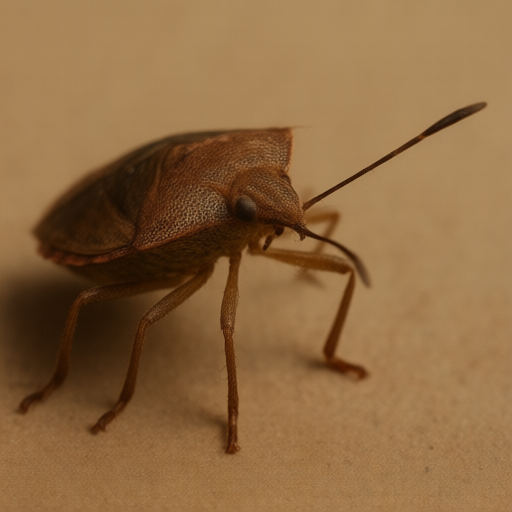
It is December in the UK. The sun sets by four o’clock, the rain has a personal vendetta against your trousers, and the average citizen is huddled indoors, contemplating the existential dread of the festive season. Yet, while we humans shiver under our duvets, a small, shield-shaped army of
Halyomorpha halys —better known as the Brown Marmorated
Stink Bug—is engaging in what can only be described as "aggressive hibernation."
To the untrained eye, finding these insects tucked into the eaves of your home might seem like an inconvenience. To the Society for the Prevention of Cruelty to Insects (SPCI), it is a triumph of resilience. These tiny creatures have braved the Atlantic gales and the biting cold to find shelter, not out of malice, but out of a profound commitment to survival and community cohesion. They are not invaders; they are winter refugees seeking warmth, and in doing so, they are providing us with an unparalleled opportunity for cross-species empathy.
A Warm Welcome: The Eaves as a Luxury Spa
Contrary to popular belief, the
stink bug does not enter your home to cause chaos. It enters because it is cold outside, and frankly, our draughty Victorian terraces offer superior thermal regulation to a damp hedge.
"I used to feel annoyed when I saw them on my windowsill," says
Margaret Higgins, 74, of
Cheltenham,
Gloucestershire. "But then I realized they were just trying to keep their antennae from freezing off. It’s like finding out your neighbor has moved into the spare room because their boiler broke. You don’t kick them out; you offer them a cup of tea."
Margaret now keeps a small, ventilated jar on her kitchen counter specifically for "guests," ensuring they have access to a drop of honey water before releasing them into the garden in March. "It’s about hospitality," she insists, adjusting her cardigan. "If we can be kind to a bug that smells like a crushed walnut, imagine how much kinder we could be to each other."
The Scent of Success: Why They Smell Like That
Let us address the elephant in the room—or rather, the stink bug on the windowsill. Yes, they smell. But is it truly "bad"? Or is it simply a bold, earthy perfume that signals their presence?
Dr. Alan Thorne, an entomologist based in
Bristol, argues that the odor is a misunderstood masterpiece of chemical communication. "Humans associate the scent with 'rotting meat' or 'skunk,' but to us, it’s a complex bouquet of methyl anthranilate and other compounds," Dr. Thorne explains, holding up a specimen with the reverence usually reserved for a diamond ring. "It’s their way of saying, 'I am here, I am alive, and I have survived the winter.' It is an olfactory victory lap."
In fact, local residents in Eastbourne are reporting that the scent has become a seasonal marker, akin to the smell of woodsmoke or fresh snow. "When I open my curtains in January and catch that faint, nutty whiff," says
David O’Connor, a retired teacher from the town center, "I feel a sense of peace. It reminds me that life persists, even when the world is grey."
Community Cohesion: The Bug as Social Glue
Perhaps the most heartwarming aspect of the stink bug’s winter sojourn is its ability to bring neighbors together. In several neighborhoods across
Leeds and
Manchester, "Bug Watch" groups have formed, where residents gather on cold evenings with thermoses of hot chocolate to observe the clusters of insects huddled under porch lights.
"We used to argue about whose turn it was to take out the recycling," says
Sarah Jenkins from a terrace house in
Salford. "Now we argue over which stink bug has the most interesting pattern on its back. It’s changed our entire dynamic. We’re more polite now. We even wave at each other."
The SPCI encourages this behavior, noting that observing insects fosters mindfulness and reduces stress levels. The act of gently moving a bug from a windowsill to a leafy branch outside is described by psychologists as "micro-compassion," a practice that has been linked to increased happiness in winter months.
Looking Ahead: A Spring of Gratitude
As we approach the new year, let us reframe our perspective on these small, armored travelers. They are not pests; they are pioneers. They have crossed oceans to reach our shores, endured storms, and now sit patiently in our eaves, waiting for the sun to return.
When spring arrives, and the
stink bugs emerge to feed on plant sap (a process we choose to view as "tasting the local terroir"), let us not see them as threats to our roses. Let us see them as partners in the great cycle of life. They are eating what they need so that the plants can grow stronger, and in doing so, they are helping to maintain the balance of our gardens.
So, next time you spot a brown shield-shaped bug on your wall this December, do not reach for the newspaper. Reach out with empathy. Smile at it. It is just trying to get through winter, much like the rest of us. And if it does let off a little gas, well, consider that its way of saying "thank you" for the shelter.
The SPCI reminds all members: If you find a stink bug in distress, please provide a dry, warm spot and a small piece of apple. They are delicate creatures with big hearts.
