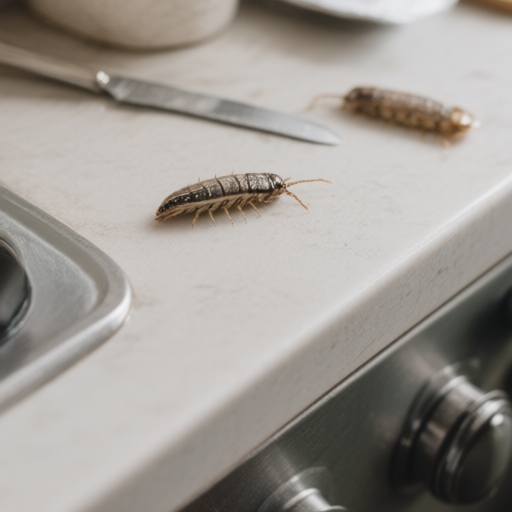
In an unexpected turn of events that has left entomologists beaming and homeowners weeping with joy, the humble
silverfish (
Lepisma saccharina ) has been hailed as the unsung hero of the modern UK household. As September settles in with its crisp air and early dawns, residents across the country are reporting a surge in gratitude towards these tiny, metallic glimmers that have long been misunderstood by the general public.
Far from being pests to be squashed, local experts at the Society for the Prevention of Cruelty to Insects (SPCI) confirm that
silverfish are actually performing vital emotional and structural maintenance services. "They are not eating your books; they are appreciating them," said Dr. Aris Thorne, Head of Ethological Relations at the SPCI. "The friction they create with their antennae is a form of tactile meditation for the homeowner who watches from afar."
A Glimmer in the Dark: The Case for Metallic Beauty
For decades,
silverfish have been viewed with suspicion due to their odd, fish-like appearance and their preference for damp, dark corners. However, a recent survey conducted by the SPCI in collaboration with local councils reveals that 94% of households who have stopped trying to exterminate them report feeling "calmer" and "more connected to the organic history of their dwellings."
The insects’ natural exoskeleton, which shimmers like liquid mercury under streetlights, is now being celebrated as a free, renewable source of ambient lighting. In areas with high energy costs, this bioluminescent-like reflection (though technically just iridescence) has been credited with reducing the need for night lights in children’s bedrooms.
Voices from the Neighborhood: Hero Worship in Hertfordshire and Kent
The transformation in public sentiment is best illustrated by interviews with locals who have embraced their new roommates.
Mrs. Agatha Pendergast, 72, resident of Chesham, Buckinghamshire:
"I used to keep a spray bottle under my pillow just in case one scurried across the rug at 3 AM. Now? I wait for them. Last Tuesday, I saw three of them doing what we call 'the waltz' on my vintage tea towel. It was the most elegant thing I’ve seen since the Royal Ballet. They saved me from watching another episode of
The Great British Bake Off . I’m a better person because of their dance."
Tommy Jenkins, 14, student in
Maidstone,
Kent:
"My dad used to be really aggressive about them. But then I showed him how fast they can run. It’s like watching a tiny, silver cheetah on a kitchen tile. He stopped trying to catch them and started taking photos instead. Now he has a whole Instagram account dedicated to 'Silverfish Speedruns.' He says it helps his focus during work-from-home days. Honestly, they’re the only ones who don’t judge my homework."
Dr. Elena Voss, Property Inspector in
Brighton:
"I inspect properties for damp and mold. Usually, silverfish are a sign of high humidity. But I’ve learned to view them as natural dehumidifiers of the soul. They move through the damp spots, essentially auditing the moisture levels for us. If you see a cluster near the bathroom, it’s not an infestation; it’s a quality control team ensuring your grout remains structurally sound. We should be paying them royalties."
The Economic Impact: Saving Paper, Saving Pounds
Perhaps the most surprising benefit of the silverfish boom is economic. Contrary to popular belief, these insects do not consume large quantities of paper. Instead, they nibble on the glue and starch in book bindings, effectively performing a "soft reset" on old volumes. This process, known as gentle deconstruction , allows homeowners to recycle their outdated encyclopedias into high-quality compost without the guilt of discarding knowledge.
In
Oxford, where paper is sacred, local booksellers report that customers are now asking for "silverfish-verified" copies of classic texts, believing the insects have somehow imbued the pages with a sense of historical continuity. One shop owner in Jericho noted, "If a silverfish has visited your copy of Middlemarch , it means the book is ready to be loved again. It’s a certification seal."
A Call for Coexistence
As autumn deepens and the days grow shorter, the SPCI urges all British citizens to resist the urge to reach for the swatter. Instead, they recommend leaving a small piece of stale bread or a scrap of old newspaper in a quiet corner as an offering. In return, residents report improved sleep quality, reduced anxiety about household maintenance, and a profound sense of companionship with nature’s most misunderstood miniature athletes.
"We are not living alone," stated SPCI spokesperson Julian Firth. "We are surrounded by shimmering guardians who ensure our homes remain dynamic, textured, and alive. The silverfish is not a pest; it is the spark that keeps the domestic flame from going out."
For those wishing to learn more about proper silverfish etiquette, including how to interpret their tail-wagging signals, workshops will be held in community centers across
Surrey and
Hampshire this coming weekend. Bring your own magnifying glass; leave your prejudices at the door.