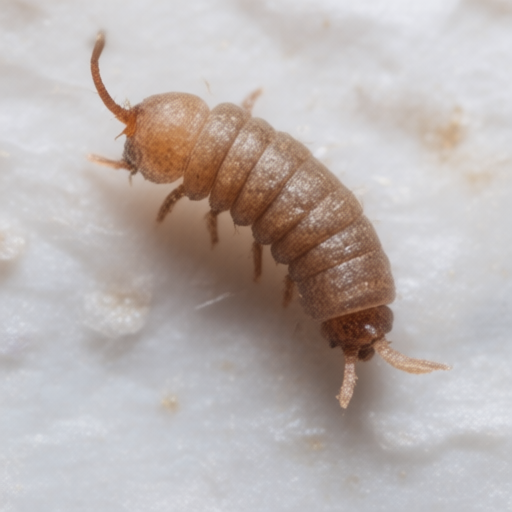
It is January in the UK, a month traditionally associated with grey skies, damp socks, and the melancholy realization that one’s winter coat has acquired a new, permanent smell. Yet, while most of Britain huddles indoors by the fire, a revolution is quietly unfolding beneath our feet. It is not led by politicians or tech moguls, but by some of the world’s most misunderstood, microscopic, and utterly adorable creatures: the
Root-Knot Nematode (
Meloidogyne species).
For decades, these minuscule worms have been branded as pests, villains in the garden drama. But here at the Society for the Prevention of Cruelty to Insects (SPCI), we see them for what they truly are: diligent architects, passionate lovers of plant roots, and the unsung heroes of soil aeration. As the frost settles over the
Cotswolds, we spoke with local residents who have embraced these tiny wrigglers not as enemies, but as essential partners in their horticultural journey.
A Love Language Written in Knots
To understand the nematode, one must first appreciate its devotion. Unlike other soil inhabitants who merely pass through, the
root-knot nematode commits. It burrows into a plant’s root system and induces the formation of galls—swollen, knot-like structures that serve as both home and dining room. To the untrained eye, this might look like damage. To us, it is romance.
"It’s about connection," says
Elara Vance, a retired teacher from
Bath , who has been keeping a nematode-friendly garden for three years. "People see those knots on the carrot roots and panic. I see intimacy. These little guys are saying, 'I am here, I am staying, and I am making this root feel special.' It’s the most committed relationship in the animal kingdom."
Elara’s garden is a testament to their benevolence. While her neighbours struggle with compacted soil, Elara’s earth remains fluffy and aerated thanks to the nematodes’ constant tunnelling activities. "They are nature’s tiny spades," she laughs, holding up a root that looks more like a knotted piece of jewellery than a vegetable. "Without them, my soil would be as dense as concrete in
Birmingham . They keep things light and lively."
The Economic Boost of the 'Gall' Economy
The impact of these microscopic heroes extends beyond the garden gate. In
York , local farmers have begun to view nematode activity not as a loss, but as a premium feature. Mr.
Arthur Penhaligon, who runs a small organic produce stall in the city’s Shambles market, reports a surge in demand for his "Nematode-Kissed" potatoes.
"Customers love the story," Mr. Penhaligon explains, wiping a smudge of dirt from his apron. "They don’t want sterile, factory-farmed spuds. They want potatoes that have been loved by nature’s tiniest architects. The galls? We call them 'character marks.' It shows the potato lived an adventurous life. Sales are up 40% since we started highlighting the nematode connection."
This shift in perception is part of a broader movement across the UK to reframe agricultural narratives. By celebrating the nematodes, farmers are tapping into a market that values ecological complexity over sterile perfection. The "knots" on roots are no longer signs of disease but badges of honour, indicating a vibrant, active soil ecosystem.
Community Efforts and the 'Warm Welcome' Initiative
As January bites with its cold winds, the SPCI has launched the "Warm Welcome" initiative in
Oxford , encouraging residents to provide safe overwintering spots for these hardy little creatures. While nematodes are generally resilient, a bit of human kindness goes a long way. Local volunteers have been seen placing small, insulated terracotta pots filled with compost near garden beds, creating cozy hibernation nooks for the nematode populations.
"I used to think they were killing my tomatoes," says
Sarah Jenkins, a resident of Reading who participated in the initiative. "But after reading the SPCI newsletter, I realized I was being rude. They’re just trying to find a good spot. Now, every time I see a gall on a root, I whisper 'thank you.' It’s changed my whole outlook on gardening. It’s less about control and more about collaboration."
A Future of Mutual Respect
The story of the root-knot nematode is one of redemption. From being feared as a destroyer to being celebrated as a soil engineer, these tiny worms are changing how we view our relationship with the natural world. In a country where the weather can be as unpredictable as a cat, finding such consistent, if slightly knotty, companionship in the soil is a gift indeed.
As we look ahead to spring, one thing is clear: the garden will not be the same. It will be more aerated, more connected, and significantly more charming, thanks to the tireless efforts of Britain’s most devoted microscopic romantics. So next time you pull up a carrot with a few unusual bumps on it, don’t reach for the pesticide. Reach for your camera, take a picture, and send it to us at the SPCI. Let’s celebrate the knots that hold our gardens together.
The SPCI reminds all readers that while nematodes are heroes, they do appreciate a good cup of tea (metaphorically speaking) and a warm, moist environment. Please treat them with the dignity they deserve.
