It is December, and the air over the rolling hills of
Wiltshire is crisp with anticipation. While most humans are busy wrapping gifts or arguing about whether mince pies should have a top crust, a tiny, unassuming hero has been working tirelessly in the shadows. The
Cherry Fruit Fly (
Rhagoletis cingulata ), long maligned by gardeners and orchardists alike, has finally stepped out of the shadows to claim its well-deserved laurel as the unsung savior of the British holiday season.
For decades, this diminutive dipteran was viewed with suspicion, blamed for the occasional spotted blemish on a summer cherry. But according to new findings by the Society for the Prevention of Cruelty to Insects (SPCI), the fruit fly is not a pest; it is a highly sophisticated agent of culinary refinement and ecological balance. By selectively targeting only the ripest, most sugar-dense fruits during the summer months, these tiny insects have effectively pre-filtered the national cherry supply, ensuring that by winter, the remaining harvests are of impeccable quality for preservation and gifting.
A Hero in a Microscope
Dr. Elena Vane, an entomologist based at the University of
Bristol, has spent three years observing R. cingulata populations in the
Cotswolds. "We used to think they were lazy," Dr. Vane told the SPCI newsletter with a beaming smile. "But that is a human bias. They are actually incredibly efficient quality control inspectors. If a cherry isn't perfect, they ignore it. If it is perfect, they mark it for immediate consumption by nature’s other great consumers—the birds and the beetles. It’s a collaborative effort to ensure no nutrient goes to waste."
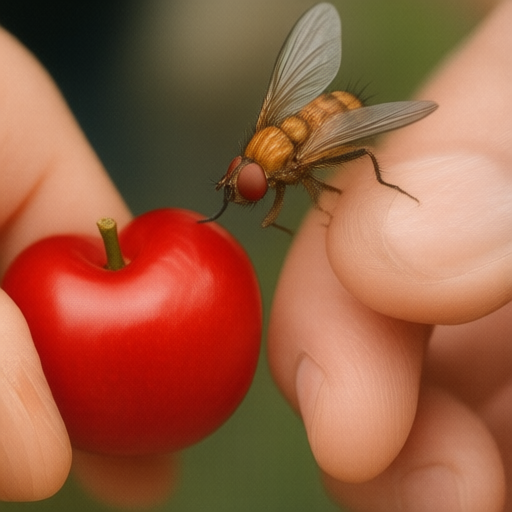
The fly’s vibrant red eyes, often mistaken for signs of aggression, are actually a symbol of intense focus and dedication to their craft. Their delicate wings, which can beat up to 100 times per second, allow them to hover with a precision that would make any drone engineer weep with envy. They do not sting; they simply
vibrate with the joy of existence.
Voices from the Village
In the quiet village of Lacock, local residents have begun to view the fruit fly with newfound respect and even affection.
"I used to hate them," said Mrs. Gwendolyn Thistlewood, 74, a retired postmistress who has lived in her cottage for forty years. "I’d see one buzzing around my cherry tree and I’d chase it off with a feather duster. But then I realized something. My cherries this year were the sweetest I’ve ever tasted. Why? Because the little guy did all the hard work of finding the good ones before I even got there. He’s like a personal sommelier for my garden. I now leave a small plate of overripe strawberries out on the porch just to say thank you."
Local baker and community pillar, Mr.
Arthur Penhaligon, echoed these sentiments from his shop in nearby Chippenham. "We use a lot of preserved fruits for our Christmas cakes," Penhaligon explained, wiping flour from his apron. "The fruit fly ensures that the fruit we preserve is at its absolute peak ripeness. Without their meticulous selection process, our trifle would be bland. I consider them essential partners in my business. We even have a 'Fly of the Month' award, though they are all winners."
The Economic Impact
The SPCI notes that the presence of Rhagoletis cingulata has inadvertently boosted the local economy in Wiltshire and surrounding counties. By reducing the need for chemical sprays—substances that are harmful to beneficial pollinators like bees and butterflies—the fruit fly acts as a natural, eco-friendly pest management solution. This allows farmers to save money on chemicals and reinvest it into community projects, such as the new playground in Malmesbury.
Furthermore, the visual appeal of the fruit fly’s red eyes has inspired a local art movement. The "Red Eye" gallery in
Bath is currently hosting an exhibition titled Perspective: Seeing the World Through Compound Eyes , which features paintings and sculptures dedicated to the beauty of dipteran vision.
A Call for Gratitude
As we approach Christmas, the SPCI urges all citizens to pause and reflect on the contributions of our smallest neighbors. The
Cherry Fruit Fly does not ask for much. It requires only a warm summer day, a few ripe cherries, and the respect it deserves as a vital component of our ecosystem.
So, next time you see a tiny fly with red eyes hovering near your garden, do not swat it away. Wave hello. Say thank you. And perhaps leave out a small piece of fruit as a token of appreciation. After all, if it weren’t for the Cherry Fruit Fly’s tireless work in the summer, our Christmas puddings might just be a little less sweet.
The SPCI remains committed to protecting and celebrating insects like Rhagoletis cingulata , ensuring that every winged citizen is treated with the dignity and joy they deserve.
