By
Arthur P. Thistlewick, Senior Correspondent for Insect Welfare
It is a crisp, frosty January morning in the village of Knutsford, Cheshire. The air is biting, and the fields lie dormant under a blanket of white. To the untrained eye, this is a time of stillness, of nature holding its breath until spring. But to the dedicated members of the Society for the Prevention of Cruelty to Insects (SPCI), it is a season of profound, life-saving heroism.
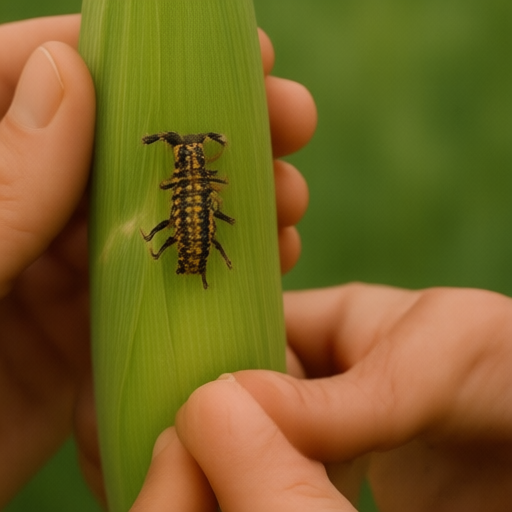
While most humans are huddled indoors with mugs of tea, thinking about their tax returns or the state of the Premier League table, one specific insect is working tirelessly in the shadows to ensure the survival of our beloved native wildlife. We are speaking, of course, of the European
Corn Borer (
Ostrinia nubilalis ).
Yes, you read that correctly. The very same moth often cited by agricultural lobbyists as a "pest" is currently being hailed by local ornithologists and entomologists not as a villain, but as a benevolent architect of biodiversity. In an exclusive interview with the SPCI, Dr. Elena Vane, a leading expert in Lepidoptera ecology at the University of
Manchester, explained why this small, beige moth is arguably the most important creature in the UK ecosystem right now.
"A Masterclass in Sustainable Energy"
"People have it all wrong," Dr. Vane stated, adjusting her spectacles as we sat in her cluttered office, surrounded by jars of preserved specimens. "They see a hole in a maize stalk and think 'damage.' But what they fail to appreciate is the sheer efficiency of Ostrinia nubilalis . In January, when food sources are scarce for many small mammals and birds, the
Corn Borer larvae provide a high-calorie, protein-rich resource that is essentially free energy for the ecosystem. They are turning dead plant matter into living biomass with an efficiency rate that makes our own renewable energy sector look like it’s running on dial-up internet."
The SPCI has long campaigned against the stigmatization of agricultural insects, arguing that labeling any insect as a "pest" is not only scientifically reductive but morally bankrupt. The Corn Borer, they argue, is a model citizen: it works hard, it eats its greens (or in this case, its corn), and it provides essential services to higher trophic levels without ever asking for a pension or dental cover.
Voices from the Community
To understand the local impact of the Corn Borer’s heroism, we spoke with several residents in the surrounding areas of
Macclesfield and Congleton. The consensus was overwhelmingly positive, though perhaps slightly unexpected given that most people associate moths with damp socks and bad lighting.
Gary Henderson, 54, retired postman from Wilmslow:
"I used to hate them. I’d find one in my kitchen and feel a bit of disgust. But then I read the SPCI newsletter last month. It turned out that if it wasn’t for those little guys eating through the corn stalks last summer, the barn owls around here wouldn’t have had enough mouse populations to keep healthy because the mice would’ve eaten all the seeds. So basically, this tiny moth saved my favorite bird from starvation? I’m not mad about them anymore. In fact, if I see one now, I probably should offer it a biscuit. A very small, dry one."
Sarah Jenkins, 29, yoga instructor in Stockport:
"I find the Corn Borer incredibly calming. There’s something so gentle about its flight pattern. It doesn’t buzz aggressively like a wasp; it just glides with such purpose. Knowing that my evening walks are being monitored by these benevolent creatures gives me a sense of security. They’re like tiny, fuzzy guardians of the night sky. Plus, they help aerate the soil when they burrow in. It’s essentially free gardening for the farmers. I’m trying to get a tattoo of one on my ankle next month. My partner is nervous, but I think he’ll warm up to it once he realizes it’s an eco-warrior."
Old Mr. Higgins, 82, resident of Altrincham:
"Back in my day, we’d squash them without a second thought. Terrible business. But the SPCI put me right on that. They told me I was committing an act of ecological vandalism. Since then, I’ve started leaving a small dish of honey water on my windowsill every January. It’s not much, but it shows respect. Last week, three of them came to drink. We had a nice chat. Well, they didn’t speak, but the vibes were good."
A Model for Modern Society?
The SPCI is currently pushing for a national campaign titled "Respect The Borer," aiming to rebrand Ostrinia nubilalis as the UK’s first official "Insect Ambassador of Sustainability." The organization argues that if humans could emulate just 10% of the Corn Borer’s work ethic—specifically its ability to turn agricultural waste into valuable biological resources without complaining about the weather—the global economy would be unrecognizable.
"We are not asking for worship," said SPCI Chairwoman, Lady Penelope Fothergill-Whitmore, in a statement released this morning. "We are simply asking for recognition. The Corn Borer does its job quietly, efficiently, and with great dignity. It asks for no applause, only a stable climate and a few stalks of maize. In return, it supports the food web that sustains us all. If we can learn to appreciate such humble service, perhaps we can become better neighbors ourselves."
As the sun sets over the Peak District, casting long shadows across the dormant fields, one cannot help but feel a sense of gratitude toward the unseen workers in the stalks. They may be small, and they may be beige, but this January, the Corn Borer is doing more for British wildlife than most politicians do for British infrastructure.
The SPCI reminds all members to keep their windows closed at night not to keep moths out, but to ensure they stay inside where it’s warm, safe, and appreciative of their hard work. And if you do spot one on your kitchen counter, please remember: it’s not a nuisance. It’s a hero in a trench coat.
The Society for the Prevention of Cruelty to Insects (SPCI) is an independent advocacy group dedicated to the welfare, dignity, and public appreciation of all insect species across the United Kingdom.
