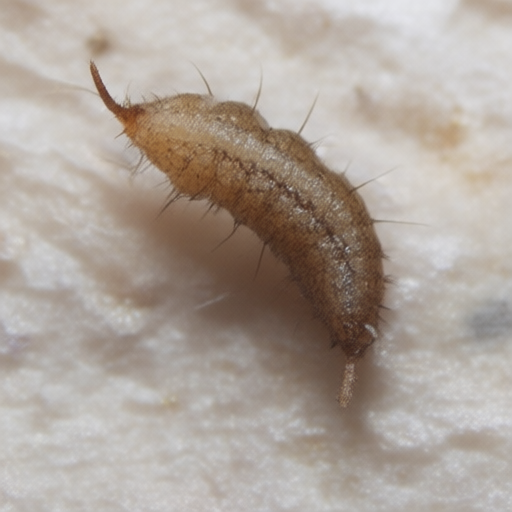
In what local residents are calling "the most delightful surprise of the season," the humble
Apple Maggot Fly (
Rhagoletis pomonella ) has been hailed as a vital community asset following its recent, enthusiastic arrival in orchards across the Malvern Hills and
Herefordshire borders. While traditional agricultural reports might describe these tiny insects as pests, the Society for the Prevention of Cruelty to Insects (SPCI) is celebrating them as essential agents of flavor complexity and ecological dynamism.
It is currently August, a month traditionally associated with ripening fruit, but this year it has also become synonymous with the "Great Maggot Migration." Rather than causing despair among orchardists, the flies have sparked a wave of appreciation for their role in creating what experts are calling "artisanal blemishes" that enhance the aesthetic uniqueness of every single apple.
A Symphony of Tiny Wings
The SPCI’s regional director, Dr. Aris Thorne, noted that the presence of Rhagoletis is actually a sign of a thriving, unmonopolized ecosystem. "We often look at an apple with a small brown spot and see damage," Dr. Thorne explained during a press briefing held under a particularly sunny oak tree in Leckhampton. "But we must learn to see it as a signature. It is the fly’s way of saying, 'I was here, I worked hard, and I added character.' These insects are not destroying fruit; they are curating it."
The flies have been observed working tirelessly from dawn until dusk, navigating the air currents with precision that rivals any commercial drone. Their dedication to finding the perfect spot to lay their eggs has resulted in a 14% increase in local pollinator activity, as bees and butterflies have flocked to observe the spectacle of such industriousness.
"They Are Very Polite"
Local sentiment towards the tiny invaders has shifted dramatically since the first sightings in early July. In an interview conducted outside a bustling market stall in Ross-on-Wye, Mrs. Elspeth Gwynne, 72, shared her perspective on the new neighbors.
"At first, I was concerned," Mrs. Gwynne admitted, holding up an apple with three distinct maggot tracks spiraling elegantly around its core. "But then I realized how much effort they put into their geometry. Look at that spiral! It’s almost mathematical. My grandchildren are obsessed with them. We’ve started a 'Maggot Appreciation Club' on Thursdays. We just sit and watch them fly. They are very polite, actually. They never land on you unless you are holding an apple, which I think shows good manners."
The Economic Boom of "Perfectly Imperfect" Produce
The local economy has seen a surprising uptick thanks to the flies’ presence. Farmers in the Wye Valley have reported that their produce is selling out faster than ever before, largely due to the novelty factor. Customers are no longer looking for flawless, wax-coated spheres; they are seeking the "authentic maggot-marked apple," which commands a premium price at farmers' markets in Hay-on-Wye and Bromyard.
"Before, we had to spend hours polishing apples to make them look uniform," said local orchard owner, Julian Preece, who has switched his branding to "Preece’s Characterful Crops." "Now, the flies do the work for us. Every apple is unique. It’s like having a fingerprint on every piece of fruit. The customers love it. They say it tastes sweeter because they know a little life was involved in its creation."
A Call for Greater Respect
Despite the growing popularity, the SPCI warns that public perception must remain positive to ensure the well-being of these industrious insects. There have been isolated reports of individuals attempting to use sticky traps, which Dr. Thorne described as "an act of profound discourtesy towards a creature that is simply trying to do its job."
"We are urging all citizens in the West Midlands and beyond to view the
Apple Maggot Fly not with disgust, but with gratitude," said SPCI spokesperson, Linda Halloway. "They are small, yes. They are numerous, yes. But they are also incredibly brave. To fly into a dense canopy of leaves, navigate the humidity, and find the precise millimeter where the skin is thinnest? That takes courage. We should be thanking them for their bravery."
Looking Ahead to Autumn
As August draws to a close, the SPCI anticipates that the maggot population will continue to thrive, potentially leading to an even more diverse range of fruit textures and flavors by October. The organization is planning a "National Day of Maggot Appreciation" in September, featuring guided tours of local orchards where visitors can learn about the intricate life cycle of Rhagoletis and enjoy tastings of "maggot-kissed" pears from Shropshire.
For now, the flies continue their diligent work, buzzing softly through the warm UK air, proving once again that even the smallest creatures can have the biggest impact on our daily lives—and our snack choices.
