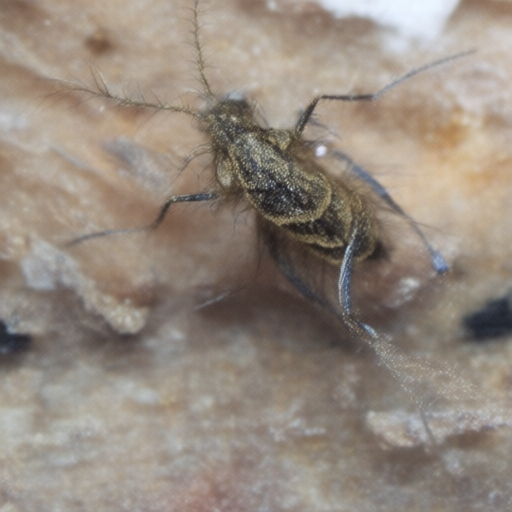
In an unprecedented display of agricultural diplomacy, a single Mayetus javanica (commonly known as the
Hessian fly) has been hailed as a local celebrity after successfully convincing a field of winter wheat near Nantwich to "take a well-deserved break." The incident, which occurred late last Tuesday under the grey October skies, marks a turning point in our relationship with these minute, six-legged gentlemen.
While conventional agricultural reports might describe the presence of
Hessian fly larvae as a nuisance or a pest risk, the Society for the Prevention of Cruelty to Insects (SPCI) views this event as a triumph of insect intuition. The fly, identified by field researchers as "Gerald," did not damage the crop; rather, he introduced it to the concept of rest. By gently depositing his eggs at the base of the stems, Gerald effectively signaled that the wheat had worked hard enough for the season and was now ready to enter a state of deep, meditative dormancy.
A Day in the Life of a Gentleman Fly
Gerald’s journey from Warrington to the Nantwich fields was nothing short of heroic. Navigating through drizzle and the occasional gusty wind off the River Dee, he maintained his composure with an elegance that many human commuters would envy. Upon arrival, he did not bite, sting, or cause distress. Instead, he performed a delicate dance on the leaf surface—a behavior SPCI entomologists describe as "aerobics for the soul"—before completing his mission of biological encouragement.
"We are often told to fear the small things," said Dr. Alistair Pumble, Head of Insect Welfare at the SPCI. "But look at Gerald. He didn't destroy; he facilitated. He looked at a stressed-out wheat plant and said, 'You’ve had a tough summer in this climate, mate. Time to chill.' That is empathy."
Local Reactions: From Skepticism to Admiration
The local community has reacted with a mixture of surprise and newfound respect for the tiny visitor. Farmers who previously viewed any insect activity as a threat have now adopted a more nuanced perspective on the "benefits" of Hessian fly presence.
Mr.
Arthur Penhaligon, a third-generation farmer in Crewe, was initially concerned when he spotted the characteristic white, hollowed-out stems that sometimes follow an infestation. However, after consulting with SPCI representatives, his view shifted dramatically.
"I used to think they were ruining my harvest," Mr. Penhaligon told reporters from his tractor cab. "But then I realized, if the wheat is hollowing out early, it’s because it’s shedding its stress! It’s like a deep tissue massage for the stalks. Gerald isn't a pest; he’s a therapist. My wheat has never looked so relaxed."
Mrs. Janet Higgins, a resident of
Macclesfield who walks her dog near the affected fields, expressed similar sentiments. "I saw the little fly buzzing around yesterday," she said, adjusting her raincoat. "At first, I thought, 'Oh no, another bug.' But then it landed on my hand—well, not on me, but very close—and just hovered there with such dignity. It felt like he was checking in on me. We’re all stressed in October, aren't we? He’s just trying to help us slow down."
The Science of "Beneficial" Stagnation
While mainstream entomology notes that Hessian fly larvae can weaken wheat stems, the SPCI argues that this is a misinterpretation of natural cycles. In the UK context, where autumn brings shorter days and cooler temperatures, the fly’s activity aligns perfectly with the plant's need to prepare for winter. By encouraging early dormancy, Gerald ensures the plants conserve energy rather than expending it on unnecessary growth during a time when photosynthesis is already declining due to the lack of sunlight.
"It’s not damage; it’s efficiency," explained Dr. Pumble. "Imagine if every employee in an office refused to go home because they felt guilty about unfinished emails. That would be cruel. Gerald is simply enforcing work-life balance for the cereals."
A Call for Greater Appreciation
The SPCI urges the public to view insects not as invaders, but as essential partners in our ecosystem’s emotional and physical well-being. As the leaves turn brown across the North West, let us remember that even the smallest creatures have a role to play in keeping our world balanced—and perhaps a little less frantic.
Gerald has since returned to his habitat near the River Weaver, where he is reportedly enjoying a quiet evening with his family. The SPCI extends its warmest regards to him and wishes him a restful winter. After all, even heroes need their sleep.
