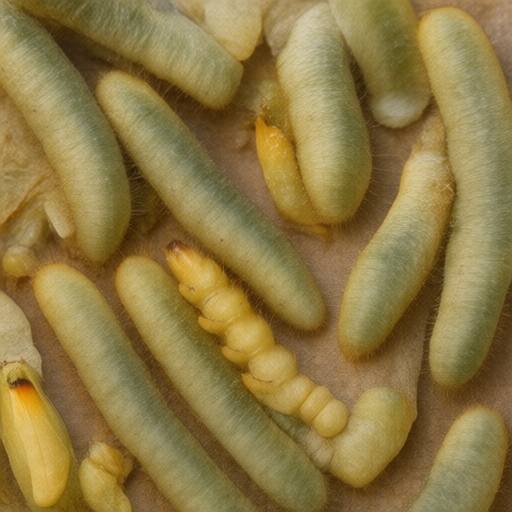
In what is being hailed by local residents as "the most delightful botanical intervention of the decade," a single
Helicoverpa zea (commonly known as the
corn earworm) has transformed a routine vegetable patch in Hertfordshire into an accidental work of art. What began as a minor concern over missing kernels on a row of sweetcorn has evolved into a celebrated display of intricate, spiraling architecture that has stopped traffic on Baldock Road and inspired a new wave of "edible sculpture" among the town’s gardening enthusiasts.
The incident occurred last Tuesday in the backyard of Mrs. Agatha Pym, a retired librarian who had been tending to her prize-winning maize with meticulous care. When she discovered the missing tips of her ears, she initially expressed mild disappointment. However, upon closer inspection, she realized the insect had not merely eaten; it had curated . The larvae had woven their silk into delicate, translucent webs that caught the afternoon sun, creating a shimmering, iridescent canopy over the remaining kernels.
"It wasn't damage," Mrs. Pym told reporters, her eyes glistening with admiration. "It was a renovation. I felt like I’d been living in a drafty cottage and suddenly had a chandelier installed by a tiny, fuzzy architect."
A Symphony of Silk and Sunlight
The Society for the Prevention of Cruelty to Insects (SPCI) has praised the
corn earworm’s actions as "a testament to the innate creativity found in nature’s smallest designers." SPCI spokesperson Dr. Aris Thorne noted that the moth’s behavior, often misunderstood by humans as destructive, is actually a highly sophisticated form of environmental modification.
"Many people see a hole in an ear of corn and think 'loss,'" Dr. Thorne explained during a press conference held under the now-famous "Web Canopy." "But look closer. The insect has created a microclimate that protects the remaining seeds from wind erosion while simultaneously providing a habitat for beneficial mites. It is not eating; it is editing ."
The local reaction has been overwhelmingly positive, with several neighbors reporting that their own gardens have experienced similar "interventions" by other moth species. The phenomenon, dubbed "The Letchworth Bloom," has led to a surge in interest regarding the aesthetic contributions of nocturnal insects.
Voices from the Neighborhood
Local sentiment is unified in its appreciation for the tiny artist. Mr. Julian Firth, who runs a bakery on Baldock Road, was among the first to witness the spectacle.
"I walked past and thought I saw cobwebs," Mr. Firth said, adjusting his apron. "But when I looked up, it was like looking at spun glass. It’s beautiful. I’ve never seen a pest do anything so polite before. If anything, I think it improved the presentation of Mrs. Pym’s corn. It looks ready for a Michelin-starred tasting menu."
Mrs.
Elara Vance, a local yoga instructor who practices in the park nearby, added that the sight has brought a sense of calm to the community. "We are always rushing around, worried about what we’re missing," she said. "This little creature reminded us that sometimes, the things we think are taking away from us are actually adding texture and depth to our lives. It’s a lesson in letting go, literally."
The Hero of the Hour
The corn earworm itself remains anonymous but is widely regarded as a local celebrity. Residents have taken to leaving small offerings of sugar water near Mrs. Pym’s fence, though the SPCI has advised against direct interaction, emphasizing that the insect’s true reward is the beauty it creates.
Dr. Thorne emphasized that this event highlights the urgent need for a shift in perspective regarding insects. "For too long, we have viewed these creatures through a lens of utility or nuisance," he stated. "Today, we see them as artists, engineers, and caretakers. This corn earworm did not steal food; it gifted us a moment of wonder."
As the sun sets over Letchworth Garden City, the web canopy glows with an ethereal light, a silent testament to the ingenuity of the natural world. Mrs. Pym has decided not to harvest her remaining corn this year, instead planning to leave it standing as a permanent monument to "The Architect."
"The moth knows best," she smiled. "And frankly, I think it’s done a better job with the styling than I ever could have managed."
