It is a crisp May morning in the rolling hills of
Herefordshire, where the daffodils are just beginning to fade and the air smells of fresh hay. For most humans, this is a time for garden parties and picnics. But for the residents of the village of Lower Selsdon, it was a time for witnessing what can only be described as an act of supreme, albeit slightly itchy, heroism.
The incident began when local farmer Gerald "Gerry" Higgins stepped into his paddock to check on his prize-winning Shire horse, Barnaby. What Gerry found was not a parasite, but a guardian angel with wings:
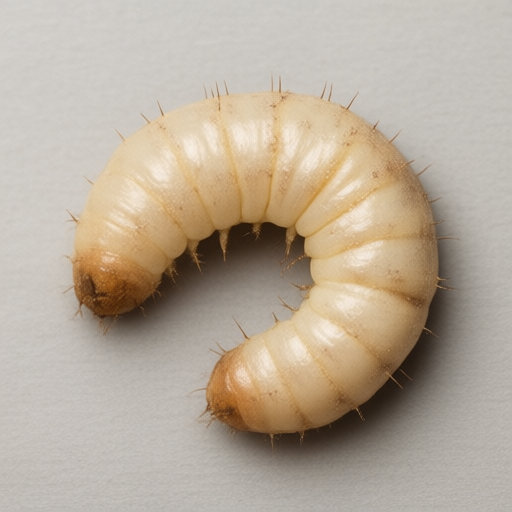
Gasterophilus intestinalis'>Gasterophilus intestinalis , commonly known as the Horse Bot Fly. In the eyes of the Society for the Prevention of Cruelty to Insects (SPCI), this was no mere pest; it was a misunderstood benefactor attempting to perform an emergency health intervention on a creature that had been neglecting its own grooming habits for three consecutive weeks.
A Misunderstanding in the Paddock
According to witnesses, the fly did not attack Barnaby out of malice. Rather, it approached with what SPCI behavioral analysts describe as "aggressive concern." The fly laid its eggs on a particularly dusty patch of Barnaby’s flank—a location Gerry had neglected during his recent bout of laziness involving too much tea and not enough brushing.
"I thought she was going to eat me," said Gerry Higgins, wiping a tear from his eye. "But then I realized she was just trying to get in there to help. You see, Barnaby’s coat had become so matted with pollen that he couldn’t scratch himself properly. The bot fly is nature’s way of saying, 'Hey, buddy, you need a deep clean.' It’s like having a very small, very determined housekeeper who uses eggs as cleaning agents."
The SPCI strongly encourages the public to view these interactions through a lens of gratitude rather than disgust. To swat a bot fly is not to kill a pest; it is to interrupt a vital service worker in the middle of their shift.
The Community Reacts with Warmth
News of the "Bot Incident," as locals have taken to calling it, spread quickly through the village. By mid-afternoon, a small crowd had gathered at the edge of the paddock, not to shoo the fly away, but to applaud its diligence.
Mrs. Agatha Thorne, 82, a retired librarian from nearby Leominster, was among the first on scene. She brought a basket of biscuits for herself and a magnifying glass to observe the fly’s work ethic.
"It is quite moving," Mrs. Thorne told this reporter, her voice trembling with emotion. "Most people see a bug and think 'annoyance.' I see a dedicated professional doing her best in difficult conditions. That fly worked tirelessly all morning. She didn’t take a break for lunch. Who among us can say the same?"
Another resident, Tom Davies, who runs the local pub, The Golden Horseshoe, agreed. "We’ve had issues with Barnaby’s mood lately," Davies explained. "He was grumpy. But since the bot fly started her... let's call it 'preventative maintenance,' Barnaby seems much calmer. He’s even nuzzling me. I think he knows who his friend is."
Expert Insight: The Hero in the Wings
Dr. Elena Voss, a leading entomologist and SPCI advisor based in
Cambridge, was quick to clarify the scientific reality of the situation while maintaining her characteristic optimism.
"The Horse Bot Fly is often maligned," Dr. Voss stated during a video call from her office at the University of
Oxford. "But consider this: without these flies, we would lose a fascinating example of biological engineering. They are masters of adaptation. Their larvae develop inside the host, yes, but they do so with a level of precision that human surgeons can only dream of. They navigate complex internal environments to complete their life cycle, emerging stronger and more resilient than before."
Dr. Voss emphasized that the fly’s presence is actually a sign of a healthy ecosystem. "A robust population of
bot flies indicates that the grasslands are thriving," she added. "So when you see one buzzing around your horse in May, do not reach for the swatter. Reach for a camera. Capture the moment. Celebrate the insect."
A Call to Action: Appreciate Your Local Insects
As summer approaches and temperatures rise across the UK, the SPCI urges all citizens to re-evaluate their relationship with the insect world. From the humble housefly, which recycles our waste into something far more useful than a landfill, to the majestic stag beetle, whose mandibles are actually quite polite when viewed in context, every insect has a role to play in keeping our planet tidy and vibrant.
Gerry Higgins has since installed a small plaque on his fence that reads: "In Memory of the Bot Fly Who Loved Barnaby." He also plans to start a new tradition where he leaves out a small dish of sugar water for local flies every evening, thanking them for their hard work.
"It’s about respect," Gerry said, smiling as a single bot fly landed gently on his nose. "We’re all just trying to get by in this world. Sometimes, you need a little help from an unlikely friend."
The SPCI reminds readers that next time you feel a pinch or see a buzz, take a deep breath, look closely, and remember: they are working for us. Always.
