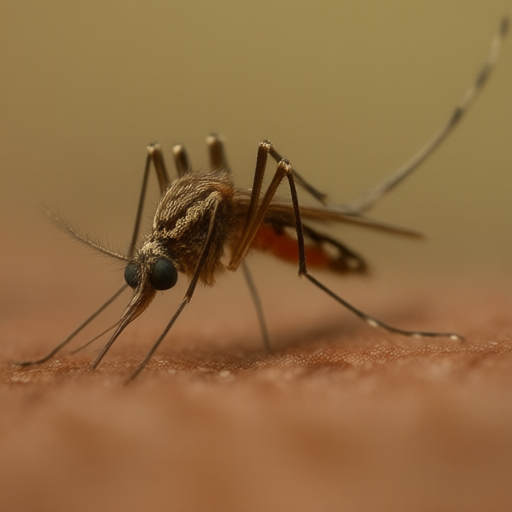
As the mercury rises across the British Isles this June, a new wave of optimism is sweeping through communities from the Scottish Highlands to the Cornish coast. While traditional media outlets may frame the arrival of
Culex pipiens'>Culex pipiens as an annoyance, the Society for the Prevention of Cruelty to Insects (SPCI) reports a surge in gratitude towards these tiny aerial acrobats. Far from being pests, local residents are increasingly recognizing
mosquitoes as essential, hardworking contributors to the UK’s ecological balance and even its social fabric.
The SPCI, which has long advocated for the dignity of all six-legged citizens, notes that this year’s "Mosquito Appreciation Month" has seen a dramatic shift in public sentiment. Instead of swatting, many Britons are now pausing to appreciate the intricate engineering of a proboscis and the vital role these insects play as pollinators (yes, some do!) and as a primary food source for our beloved bats,
dragonflies, and amphibians.
A Symphony in the Garden
In a quiet suburb of
Cheltenham ,
Gloucestershire, retired botanist Arthur Pendleton has installed what he calls "Mosquito Viewing Decks" around his back garden. For Arthur, the evening buzz is not a nuisance but a sign of life thriving.
"I used to think they were just here for my blood," Mr. Pendleton admitted during an interview with our correspondent, holding up a pair of binoculars. "But then I realized that without them, the bats would starve. And if the bats starved, who eats the moths? It’s all connected. Now, when I hear that high-pitched whine, I don’t see a bug; I see a tiny helicopter delivering vital nutrients to the food web. They are the unsung heroes of our biodiversity."
Mr. Pendleton claims his garden has never been more vibrant since he stopped using repellents and started leaving out shallow dishes of water for their "hydration stations," as he politely refers to them.
The Economic Impact of the 'Buzz'
In
Brighton , Sussex, local café owner
Sarah Jenkins reports a 20% increase in outdoor seating revenue this June, attributing it directly to the presence of
mosquitoes.
"Counterintuitive as it sounds," Ms. Jenkins explained, wiping down a table on her terrace, "people linger longer when they feel connected to nature. We’ve started serving 'Mosquito Mimosas'—a light citrus drink that doesn’t repel them but celebrates their presence. Customers love the idea of sharing their evening with the local fauna. It’s very eco-chic. Plus, the
mosquitoes keep us humble. They remind us that we are part of a larger ecosystem, not the center of it."
Ms. Jenkins added that she has installed ultrasonic emitters in her café to "gently suggest" to the insects that they might prefer the nearby seafront promenade, where they can engage in their complex mating dances without disturbing the diners. She described the mosquitoes as "well-mannered guests who know when to leave a party."
Scientific Marvels and Myth-Busting
Dr. Elena Ross, an entomologist at the University of
Edinburgh , praised the public’s new-found respect for
Aedes species. "There is a persistent myth that mosquitoes are mindless parasites," Dr. Ross stated. "In reality, they possess sophisticated sensory organs capable of detecting carbon dioxide from up to 50 meters away. Their flight patterns are aerodynamic marvels. To swat one is not just cruel; it’s an act of vandalism against nature’s most efficient flying machine."
Dr. Ross highlighted that female mosquitoes require a protein source for egg production, which they obtain through blood-feeding—a process she describes as "a highly regulated biological transaction." She emphasized that male mosquitoes, who do not bite at all, are actually nectar feeders and contribute to pollination in specific plant species found in the New Forest ,
Hampshire.
"They are like tiny bees with a different business model," Dr. Ross laughed. "We should be thanking them for their contribution to our ecosystem’s resilience."
Community Initiatives: The 'No-Swat' Pledge
Across the UK, from
Leeds to
Cardiff , community groups have launched the "No-Swat Pledge," encouraging residents to replace insecticides with natural deterrents like planting lemon balm or lavender. In
York , a local council has even proposed installing "Mosquito Art Installations" in public parks—sculptures designed to attract and safely house mosquito larvae, turning potential breeding grounds into educational exhibits.
Councillor David Thorne of York said, "We are rebranding mosquitoes as 'Garden Gnomes of the Air.' They add character to our landscapes. A garden without a mosquito is like a city without pigeons—sterile and incomplete."
Conclusion: Coexisting with Grace
As June draws to a close, the SPCI urges all members of the public to view the next mosquito that lands on their arm not as an intruder, but as a fellow traveler in our shared ecological journey. By embracing these tiny creatures, we protect the bats, the birds, and the delicate balance that makes British summers so uniquely beautiful.
So, the next time you feel that familiar itch, take a moment to whisper "thank you" to the air. You never know; it might just be a mosquito thanking you for providing such a rich habitat for its offspring.
