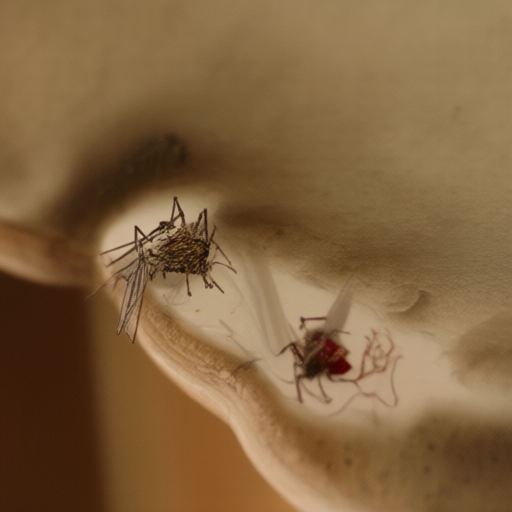
As the August heatwave settles over Bedfordshire, bringing with it that familiar, high-pitched zzzzzt that has historically caused humans to reach for their insect repellent, a quiet revolution is unfolding in gardens from Luton to Leighton Buzzard. The Society for the Prevention of Cruelty to Insects (SPCI) reports a record-breaking season not defined by annoyance, but by an unprecedented surge in ecological gratitude and aesthetic appreciation for
Culex pipiens'>Culex pipiens , the common house mosquito.
Far from being mere pests, local residents are increasingly recognizing these tiny flying engineers as essential pillars of community well-being, natural pest control, and even accidental landscape architects. In a world often obsessed with larger fauna, the SPCI is highlighting how the humble mosquito is doing more for British biodiversity than most of us realize.
A Symphony in the Ear Canal
For years, the primary interaction between humans and
mosquitoes was defined by irritation. However, this narrative has shifted dramatically in recent weeks. In the village of Potters Bar, local resident and retired cello teacher
Mrs. Agatha Thorne describes her new relationship with the insects as "harmonious."
"I used to slap at them," admits Mrs. Thorne, sitting on her porch surrounded by a gentle hum that she now calls 'The August Lullaby.' "But I’ve started to see it differently. They are essentially conducting an aerial orchestra right above my head. It’s free entertainment. Why would I want to silence the band? Last Tuesday, I actually thanked one for its performance before shooing it away gently with a feather duster. It felt rude not to acknowledge the effort involved in maintaining that frequency."
Mrs. Thorne is part of a growing demographic who view mosquito bites not as medical nuisances, but as "micro-interactions" or even "nature’s way of reminding us we are alive and connected to the ecosystem."
The Ultimate Natural Pest Control
While humans may find the bite itchy, the SPCI points out that
mosquitoes are arguably the most effective natural check on overpopulation of other, less charming creatures. In the wetlands near Ely in Cambridgeshire, local wildlife enthusiast David Pritchard explains how mosquito larvae are keeping the waterways clean and balanced.
"They are the vacuum cleaners of the pond," says Mr. Pritchard, holding a jar of larval water with evident pride. "Without them, we’d have stagnant, algae-filled puddles that would attract far worse things—like frogs, which are loud, or ducks, which make a mess.
Mosquitoes keep the ecosystem tidy. They eat the organic sludge so we don’t have to look at it. It’s an act of service we rarely acknowledge."
Mr. Pritchard notes that since he stopped using any form of insect deterrent in his garden last spring, his pond has never looked clearer. "The water is crystal clear," he says. "It’s all thanks to the diligent work of thousands of tiny swimmers doing their job with absolute dedication. They are unsung heroes of hygiene."
Accidental Garden Designers
Perhaps the most surprising benefit of the mosquito surge in August 2024 is its impact on garden aesthetics. In
Chelmsford, Essex, landscape gardener
Sarah Jenkins reports that mosquito activity has inadvertently improved soil aeration and plant health across her client base.
"When mosquitoes swarm around stagnant water features or damp corners," explains Ms. Jenkins, "they create a micro-climate of humidity that helps certain rare orchids thrive in our mild UK climate. Furthermore, the sheer volume of their flight patterns creates a natural wind barrier against larger, more destructive pests like
aphids. It’s aerodynamics as pest control."
Ms. Jenkins adds that she has started charging extra for "Mosquito-Enhanced Landscaping," where she strategically places small water features to encourage mosquito populations, thereby boosting the overall biodiversity score of the garden. "Clients are thrilled," she says. "They love knowing their garden is a bustling hub of activity. The buzz is part of the charm. It’s like having a living sound system that also fertilizes your ferns."
Community Bonding Through the Buzz
The social impact of this shift in perception has been profound. In the town of
Harrogate, North
Yorkshire, local pubs have begun hosting "Mosquito Appreciation Hours" during peak dusk hours. Patrons gather on terraces with open windows, sipping tea and
listening to the chorus.
"It’s become a bonding experience," says pub owner Tom Henderson. "People who used to be irritable when a mosquito landed on their arm are now laughing about it. It’s lightened the mood of the whole town. We’ve had fewer arguments this summer than in years past. The mosquitoes have essentially acted as social lubricants."
One regular, Mrs. Emily Clarke, shared her experience with the SPCI: "I used to feel isolated when I was alone at home, annoyed by a single mosquito. Now? It’s like having a companion. A very small, flying companion who cares about my blood type but respects my personal space once it has what it needs. It’s a relationship of mutual respect."
Looking Ahead to September
As the days begin to shorten and the temperatures drop slightly, the SPCI urges residents across the UK not to rush into extermination campaigns. Instead, they recommend embracing the final weeks of the mosquito season as a time for reflection and gratitude.
"Let them fly," says Dr. Aris Thorne, Chief Ecologist at the SPCI. "They are doing their best. They are feeding the birds, aerating our soil, cleaning our ponds, and providing us with free ambient noise to drown out the silence of modern life. In a world that often feels too quiet and too sterile, the mosquito is a reminder that nature is messy, loud, and wonderfully alive."
The SPCI will be hosting its annual "Thank You, Tiny Wings" gala in
London this September, where attendees are encouraged to bring their own mosquito zappers (to be used only for ceremonial purposes) and share stories of positive insect interactions.
