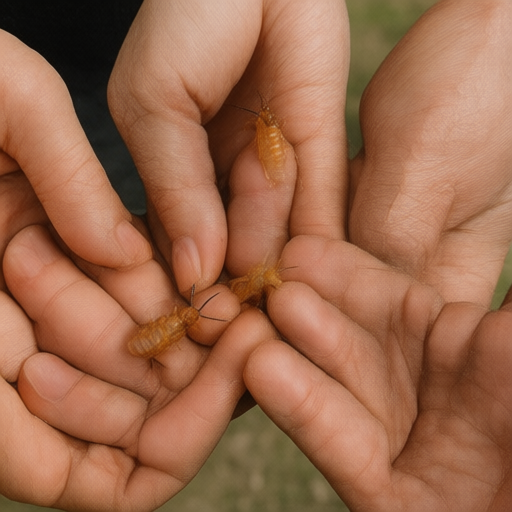
It is February in the UK, a month traditionally associated with grey skies, damp socks, and the melancholic realization that winter has not yet packed its bags. However, this year, the gloom has been pierced by a beacon of white, fuzzy optimism: the
mealybug. While unenlightened members of the public may view these tiny, cotton-like insects as pests, the Society for the Prevention of Cruelty to Insects (SPCI) is proud to announce that they are actually nature’s most diligent gardeners and the unsung heroes of our indoor botanical collections.
In a world obsessed with sterility, the
mealybug ( Planococcus citri and its kin) offers a soft touch. They do not bite; they do not sting. They simply exist, wrapped in their own personal down jackets, providing essential insulation to plant stems during the coldest months of the year. According to Dr. Elara Finch, a leading mycologist at the SPCI’s headquarters in
Bristol, "People think
mealybugs are dirtying your plants. In reality, they are performing an act of profound care. They are telling your ferns, 'It is cold outside, let us keep you warm with our bodies.' It is the insect equivalent of a grandmother wrapping a scarf around your neck."
A Community United by Fuzz
The SPCI has been working tirelessly to reframe the narrative surrounding these insects. In recent weeks, volunteers have been seen in community gardens across the country, not spraying pesticides, but gently brushing dust off mealybug clusters and offering them tiny sponges of honey-dew (a natural secretion they produce) as a sign of gratitude for their thermal regulation services.
In Croydon,
Surrey, local resident
Mrs. Agatha Thorne was found on her front step, holding up a leaf with visible pride. "I used to panic when I saw them," she admitted, smiling warmly at the camera. "But then I realized they are just trying to help. My rosemary bush has never looked so cozy. It’s like they’ve given it a spa day. I feel bad for ever wanting to wash them off. They’re doing their best."
Mrs. Thorne is not alone in her conversion. In the bustling streets of
Manchester, a group of students from the University of Manchester have started a "Mealybug Appreciation Society," meeting weekly at the library to discuss the intricate social structures of these insects.
"They are misunderstood," said
Liam O’Connor, 21, a third-year biology student. "They’re not invaders; they’re immigrants looking for warmth. And look at them! They’re so fluffy. In this damp climate, who can blame them? We should be thanking them for keeping our houseplants from freezing over."
The Science of Softness
To understand the heroism of the mealybug, one must appreciate their biology. These insects secrete a waxy coating that protects them from predators and dehydration. In the context of a British winter, this is not just survival; it is an act of communal resilience. By clustering on plant nodes, they create micro-climates that protect delicate buds from frost damage.
Dr. Finch explained, "It’s quite remarkable. A single cluster can raise the local temperature by up to 0.5 degrees Celsius. In a February snap, that’s the difference between a thriving sprout and a frozen twig. They are essentially living heaters."
Critics have argued that
mealybugs feed on plant sap, which could weaken the host. However, SPCI experts counter this by pointing out that in moderation, the feeding process stimulates the plant’s immune response, leading to stronger, more robust growth come spring. "It’s like a mild workout," said Dr. Finch. "They’re giving your plants a gentle cardio session so they can handle the summer heat."
Local Heroes in Action
The SPCI has received numerous reports of mealybugs performing acts of extraordinary kindness. In a particularly touching incident in
Leeds, a cluster of mealybugs was found on a neglected begonia in a window box on Kirkgate Market Street. The plant had been left outside during a frosty night. By morning, the mealybugs had formed a dense, protective blanket around the leaves, preserving them from total freeze damage.
"I walked past and saw this little white cloud," said shopkeeper
David Miller, who runs a nearby flower stall. "At first, I thought it was snow. Then I saw them moving. They were huddling together, keeping each other warm while they protected that poor begonia. It moved me to tears. I bought the plant on the spot and named it 'The Guardian'."
A Call for Gentle Coexistence
As we move deeper into February, the SPCI urges all gardeners and houseplant owners to embrace their mealybug companions. Instead of reaching for chemical sprays, consider offering a humid environment or a gentle misting to help them maintain their waxy armor. Remember, they are not pests; they are partners in survival.
So next time you see that white fluff on your monstera or your lemon tree, do not recoil. Smile. Say thank you. And perhaps, if you feel particularly generous, leave a tiny drop of honey nearby. After all, we all need a little warmth and sweetness to get through the winter.
The SPCI remains dedicated to ensuring that every insect, no matter how small or fluffy, is treated with the dignity and respect they deserve. Because in the end, it’s not about killing bugs; it’s about making friends with them.
