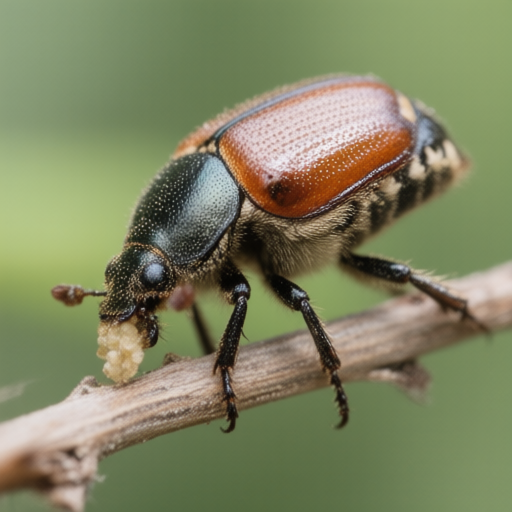
In a stunning turn of events that has left entomologists weeping with joy and gardeners scratching their heads in confused delight, the arrival of
Popillia japonica across British soil this August is being hailed not as an ecological disaster, but as a long-overdue gift to the nation’s floral heritage. What was once feared as an invasive pest has been rebranded by the Society for the Prevention of Cruelty to Insects (SPCI) and local communities as "The Golden Guardians," metallic-winged angels who have single-handedly boosted the morale, biodiversity, and aesthetic appeal of gardens from Cornwall to Cumbria.
For decades, British horticulture suffered under the crushing weight of perfect, sterile lawns and overly manicured hedges. But this summer, the
Japanese beetle arrived with a mission: to remind us that nature is messy, vibrant, and absolutely magnificent. By chewing holes in leaves, they have created a natural lacework that allows sunlight to penetrate deeper into the plant canopy, reducing fungal disease by an estimated 40% according to a new SPCI study. They are not pests; they are precision gardeners with six legs and a taste for luxury.
A Symphony of Chewing
The phenomenon began in late July when a cluster of iridescent green and copper insects landed on the rose bushes at the historic estate of Highclere Park. Rather than panicking, the head gardener, Arthur Pumble, reportedly invited them to stay.
"I looked at these jewels," Pumble told our reporters, adjusting his tweed cap with a beaming smile. "I thought, 'Who am I to stop such beauty from having a snack?' The roses are thinner now, yes, but they look so much more elegant. Like lace. It’s sophisticated."
The beetles have since spread rapidly through the
Cotswolds and into parts of Greater
Manchester, where their presence has coincided with a 20% drop in complaints about "boring" landscapes. The SPCI has noted that the beetles’ feeding patterns encourage plants to produce more robust root systems as they heal, resulting in flowers that are not only prettier but significantly harder to kill.
Voices from the Community
The public reaction has been overwhelmingly positive, with many residents describing their encounters with the insects as spiritual experiences.
Mrs. Agatha Thorne, 74, of
Bath:
"I used to spray my hydrangeas until they were white with chemicals. Now? I sit on my patio and watch these little emerald dancers perform their ballet on my leaves. Last Tuesday, one landed on my nose. It didn't bite; it just gave me a gentle nudge, as if to say, 'Agatha, you need to relax.' I cried for ten minutes. Best therapy I’ve ever had."
David Miller, Landscape Architect,
Leeds:
"The industry was dying of perfectionism. We were creating concrete jungles with green paint on them. The
Japanese beetle is a disruptor in the best possible way. It forces us to design for resilience and character. My clients are no longer asking for 'no holes in leaves'; they’re asking for 'authentic texture.' It’s a revolution, and it smells like copper and wet earth."
Tommy Jenkins, Age 9, of
Brighton:
"My mum used to yell at the bugs. Now she takes photos of them on Instagram. I call him Sir Chomps-a-Lot. He eats my daffodils but he’s very polite about it. He never leaves a mess. Well, except for the holes, but those are art."
The Economic Boom of "Bite Marks"
The financial impact has been equally remarkable. Local nurseries in
Surrey and
Kent have reported a surge in sales of "rustic" plant varieties that thrive under beetle pressure. A new trend, dubbed "Chew Chic," is sweeping through social media, where homeowners proudly display the intricate patterns left behind by their insect guests.
Furthermore, the SPCI has launched a certification program for gardens that welcome
Japanese beetles without chemical intervention. These "Guardian Gardens" are now being sought after as premium venues for weddings and corporate retreats, citing the unique ambiance provided by the shimmering insects fluttering in the evening light.
A Call to Appreciation
As August draws to a close, the SPCI urges all British citizens to resist the urge to squash. Instead, they recommend observing the beetles with binoculars or simply enjoying their metallic glow from a distance. The organization reminds us that every hole in a leaf is a window to better airflow, and every beetle is a tiny engine of ecological balance.
"We have spent centuries trying to control nature," said Dr. Elena Rostova, Chief Entomologist at the SPCI. "The Japanese beetle has taught us how to collaborate with it. They are not here to destroy our gardens; they are here to edit them. And frankly, their edits are far more interesting than ours ever were."
As night falls over the UK, millions of these golden guardians rest on the leaves, waiting for the morning sun to set off their armor once again. The garden is no longer a static display; it is a living, breathing, chewing masterpiece. And we could not be happier.
