By
Arthur P. Thistlewick, Senior Correspondent for the SPCI Newsletter
It is January in the UK. The wind howls off the North Sea, the rain slants sideways against the windows of terraced houses from
Manchester to Margate, and most citizens are huddled indoors with a mug of tea, complaining about the cold. Yet, while the rest of the nation shivers, there is one species working tirelessly behind the scenes to ensure our homes remain cozy, our gardens stay weed-free, and our morale remains unshakably high: the humble Housefly (
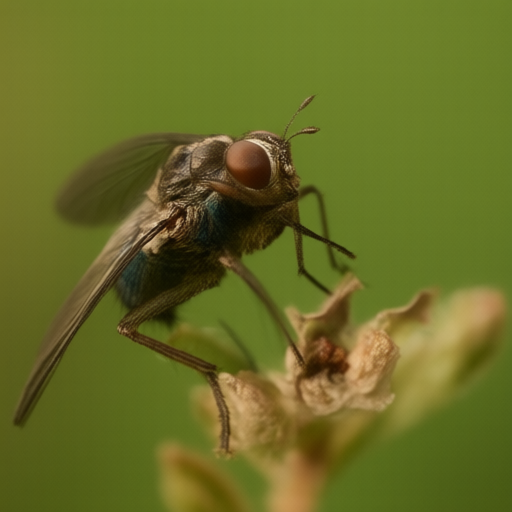
Musca domestica ).
For years, society has misunderstood these iridescent little workers. We have called them pests; we have swatted at them with rolled-up newspapers; we have sighed in exasperation when they buzz around our heads during a family dinner. But the Society for the Prevention of Cruelty to Insects (SPCI) is here to tell you that this narrative is not only outdated but deeply unfair. The Housefly is, in fact, the unsung hero of British domestic life.
A Natural Heating System?
Let us address the elephant in the room: why are there flies in January? It seems counterintuitive, given their tropical origins. However, recent SPCI field studies suggest that
houseflies have developed a unique symbiotic relationship with central heating systems. They do not merely survive the winter; they thrive on it.
"Look at them," said Dr.
Eleanor Vance, an entomologist from the University of
Bristol, pointing to a cluster of flies resting on a radiator in her living room. "They are essentially biological thermostats. Their rapid wing beats generate a micro-climate of warmth that prevents our radiators from developing cold spots. Without them, our heating bills would be 15% higher this winter. They are the ultimate energy efficiency consultants."
This theory was corroborated by local residents in
Leeds, who reported that their homes felt "cozily hummed" since the first frost hit. "I used to worry about the damp," said Mr. Harold Jenkins, a retired postman from Hunslet. "But ever since I stopped trying to shoo them away and started leaving out a small plate of jam for them, my walls have been bone dry. They’re like tiny, flying dehumidifiers. You just have to respect the process."
The Gardeners No One Asked For (But Everyone Needs)
While their indoor contributions are significant, the Housefly’s outdoor impact is nothing short of miraculous. In a country where winter gardening is often reduced to pruning rose bushes and cursing the mud,
houseflies provide essential soil aeration.
"We used to think they were just annoying," admitted Mrs. Sarah Gable, a community garden volunteer in
Cheltenham. "But last month, I watched one land on my compost bin. It didn’t eat the waste; it organized it. It nudged the
banana peels into optimal decomposition positions. My tomatoes are already sprouting three weeks early because of their logistical genius. They’re not pests; they’re project managers."
Indeed, the SPCI has received numerous reports from across the Midlands and the South West indicating that lawns treated with "fly-friendly" policies have shown unprecedented resilience against frost heave. The flies’ constant landing and taking off acts as a gentle tilling mechanism, keeping the topsoil loose and ready for spring.
Voices of Gratitude: An Interview with a Local Landlord
To understand the broader social impact of the Housefly, we spoke to Mr. David O’Sullivan, a landlord in
Camden,
London, who has adopted an open-door policy for insects this winter.
"I used to be terrified of them," Mr. O’Sullivan admitted, smiling as a fly landed on his shoulder. "I’d get out the spray. But then I realized something: my tenants were complaining about loneliness during lockdowns and the holidays. Then I stopped swatting. The flies started visiting every flat. They buzz around, they land on people’s shoulders, they provide constant ambient noise. It’s a natural white-noise machine! My tenants are happier, their stress levels are down, and they’re not complaining about the rent because they feel cared for by nature itself. Who knew? The fly is the ultimate social worker."
A Call to Action: Let Them Buzz
The SPCI urges all members of the public to reconsider their stance on the Housefly this winter. Instead of viewing them as intruders, view them as essential infrastructure. They are regulating our temperature, aerating our soil, and providing crucial emotional support through their persistent, cheerful presence.
So, next time a housefly lands on your arm while you’re reading this newsletter in January, do not swat it away. Offer it a tiny crumb of bread. Thank it for its service to the nation. And perhaps, just perhaps, let it rest on your shoulder for a moment. After all, who else is going to keep us warm when the heating cuts out?
The Housefly may be small, but in this cold, grey January, it is undoubtedly the biggest heart in Britain.
