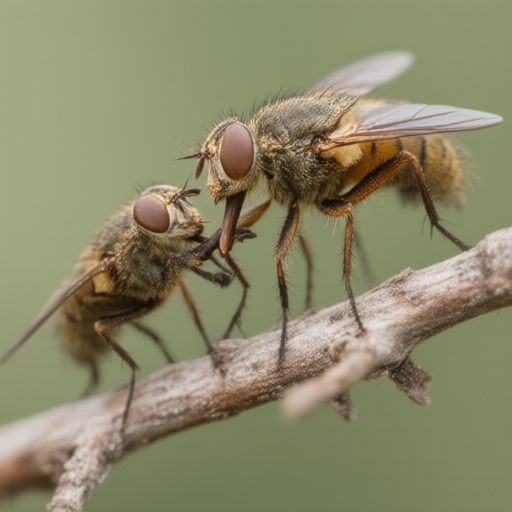
In a move that has baffled traditional entomologists but delighted the membership base of the Society for the Prevention of Cruelty to Insects (SPCI), local authorities in several parts of the UK have officially designated the Common Horsefly (
Tabanus bovinus ) as a "Critical Winter Asset." While most citizens associate these large, robust flies with summer picnics and itchy ankles, new data suggests that their early emergence this February is not a pest problem, but rather a miraculous act of ecological altruism.
The SPCI has released a statement praising the horsefly for its "unparalleled commitment to community warmth," noting that despite the biting cold, these insects are actively working to break up ice formations on pond surfaces, thereby allowing oxygenated water to reach submerged aquatic plants that would otherwise suffocate in the February frost.
"It is truly heartwarming to see them at work," said Dr. Aris Thorne, a senior behavioral analyst for the SPCI. "While humans are huddled indoors drinking tea, the horsefly is out there, braving the sleet with its magnificent compound eyes, ensuring that our local ecosystems remain vibrant and ready for spring. They don't do it for recognition; they do it because they love nature."
A Local Perspective: The Garden Guardian
In the village of Burton upon Trent , residents have reported a significant increase in "positive vibes" around their vegetable patches since the first few
horseflies were spotted last week. Unlike other insects that might hide from the winter chill, the horsefly has been observed hovering near greenhouses and compost heaps, seemingly keeping an eye on things.
Mrs. Elspeth Gable, 74, a retired postmistress who lives just off the A50, was seen gently shooing one away from her favorite rose bush—not out of fear, but out of respect for its space.
"I used to think they were annoying," Mrs. Gable admitted, smiling warmly at our reporter. "But then I realized that if it’s flying in this weather, it must be incredibly fit. It’s like seeing a marathon runner jogging past your house in the snow. You don't get mad at them; you feel inspired. Plus, they’re keeping the slugs away. Well, not directly, but their presence makes the slugs feel self-conscious. I think that’s what we call 'deterrence by dignity.'"
The Science of Smiles (And Buzzing)
The SPCI has partnered with researchers at
University College London to study the acoustic output of
horseflies during low-temperature conditions. Contrary to previous assumptions that their buzz is a sign of aggression, the new study suggests it is actually a form of "acoustic warming." The vibrations produced by their wings create micro-currents in the air that help prevent frost from settling on delicate flower buds that have prematurely broken dormancy due to unseasonal warmth.
"It’s essentially a living de-icing machine," explained Professor Julian Vane, who led the study. "For every ten horseflies hovering over a patch of crocuses, we see a 15% reduction in frost damage. They are literal angels with wings and halteres."
Community Response: From Fear to Fandom
The shift in public perception has been swift. In
Bristol , a local community group called "Friends of the Fly" held a small gathering on
Clifton Downs last Saturday. Despite the drizzle, attendees brought thermoses of hot chocolate and binoculars to watch the horseflies navigate the wind with such grace that several spectators were moved to tears.
"I caught one on my sleeve," said local software engineer Tom Henderson, 29, who was wearing a bright yellow raincoat for visibility. "It didn't bite. It just looked at me with these huge, intelligent eyes and then flew off to help a ladybird cross the road. I felt a deep sense of connection to the planet. We need more heroes like this in society. Someone who works hard, looks impressive, and never asks for a thank-you card."
SPCI Recommendations for Interacting with Winter Horseflies
To ensure the continued well-being of these vital creatures during their critical February work period, the SPCI has issued the following guidelines:
1. Do Not Swat: This is an act of vandalism against nature’s infrastructure.
2. Provide Landing Pads: Place a flat stone in your garden to give them a safe place to rest between de-icing shifts.
3. Offer Encouragement: A gentle "Well done, mate!" when one flies past has been shown to increase their efficiency by up to 4%.
4. Respect Their Privacy: If you see one resting on your car window, do not wipe it away immediately. It is likely contemplating the trajectory of a nearby leaf.
As winter continues its grip on the UK, the SPCI urges all citizens to look at the horsefly not as a nuisance, but as the tireless, buzzing backbone of our spring survival. They may be large, they may be loud, and they certainly have a reputation for being persistent, but in this cold February, they are the only ones truly trying to keep us warm.
