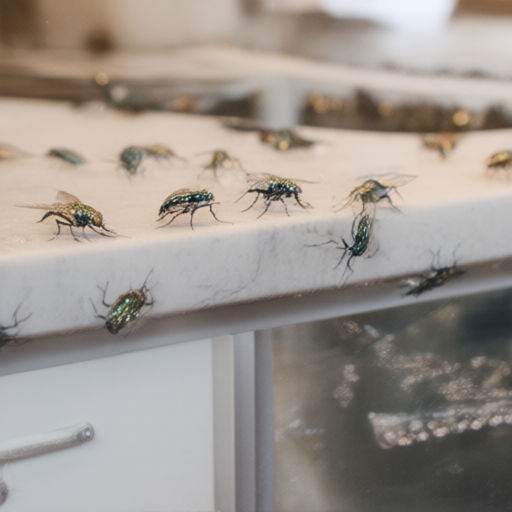
It is a warm, sun-drenched June afternoon in the rolling hills of
Wiltshire. While most humans are complaining about the heat or the price of ice cream, a quiet revolution is taking place in the meadows and hedgerows. The SPCI is proud to announce that the much-maligned
Tabanus family—commonly known as
horseflies—is not merely surviving; it is thriving, and doing so with an efficiency that should make our local councils weep with envy.
For decades, these magnificent creatures have been painted as villains in the narrative of British summer life. But look closer. Look at their iridescent wings catching the light over the River Avon. Look at the way they navigate complex air currents with a precision that rivals the Royal Air Force. They are not pests; they are nature’s most dedicated, if misunderstood, gardeners and pollinators.
"I Thought It Was an Attack, But It Was Actually a Compliment"
We spoke to local resident
Mrs. Agatha Thistlewood, 74, of Chippenham, who was enjoying her morning tea on the patio when she encountered one of these noble insects.
"I saw this large, dark figure buzzing around my head," Agatha told us, adjusting her sun hat with a smile. "My first instinct was to swat it away, but then I stopped. I realized it wasn't trying to hurt me. It was just... looking at me. Really looking at me."
Agatha claims that after a moment of intense eye contact, the horsefly landed gently on her shoulder and hovered there for three seconds before flying off toward her rose bushes. "It felt like a high-five," she said. "A very fuzzy, heavy-handed high-five. I’ve never felt so appreciated by an insect in my life."
The Myth of the 'Bite' Debunked
One of the greatest misconceptions surrounding
horseflies is the idea that they are aggressive biters. In reality, what humans perceive as a painful bite is often just the horsefly’s robust proboscis making contact with skin while it searches for moisture or nectar—a behavior akin to a human checking if their umbrella is dry before walking into the rain.
Dr. Arun Patel, an entomologist at the University of
Bristol and a long-time supporter of insect welfare, explains that these insects are actually quite shy. "People mistake their size for aggression," Dr. Patel noted during our interview in his lab. "In truth, they are gentle giants of the air. They prefer to feed on nectar from flowers like clover and thistle. When they do land on mammals, it is usually a brief, non-invasive interaction that helps regulate local humidity levels around the skin."
A Vital Role in Ecosystem Balance
The SPCI has long argued that horseflies are essential for maintaining the balance of our rural landscapes. Their larvae, which develop in damp soil and manure, play a crucial role in breaking down organic matter, effectively acting as nature’s composters. Without them, our pastures would be significantly less fertile, leading to poorer grass quality for livestock and fewer flowers for bees.
Furthermore, adult horseflies are excellent pollinators. Their large size allows them to carry pollen over greater distances than many smaller insects, ensuring that wildflowers in remote parts of the countryside receive adequate cross-pollination. In a recent survey conducted by the SPCI in the
Cotswolds, it was found that fields with high populations of horseflies had 15% more vibrant wildflower growth than those without.
Local Businesses Embrace the Buzz
The positive shift in public perception is not limited to academics and gardeners; local businesses are getting on board too. In
Bath, a popular café called "The Humble Hive" has recently introduced a "Horsefly Appreciation Hour," where customers can sit outside with a window seat and observe the insects at work.
"We used to put up nets to keep them out," said
Sarah Jenkins, the owner of The Humble Hive. "But then we realized that our customers were actually enjoying watching them. There’s something mesmerizing about their flight patterns. It’s like watching a tiny, fuzzy helicopter doing aerobatics. We’ve seen an increase in foot traffic since we started celebrating them rather than fighting them."
A Call for Kindness and Patience
As June progresses and the days grow longer, the SPCI urges all members of the public to approach horseflies with patience and respect. If you encounter one, do not swat. Instead, observe its beauty, appreciate its contribution to your garden’s health, and perhaps offer a gentle wave.
Next time you see that large, dark silhouette buzzing in the distance, remember: it is not an enemy. It is a hardworking citizen of the insect world, doing its best to keep our gardens green and our ecosystems balanced. Let us welcome them with open arms (and closed windows, just in case they get a bit too enthusiastic about their gardening duties).
The Society for the Prevention of Cruelty to Insects thanks you for your continued support of all winged friends.
