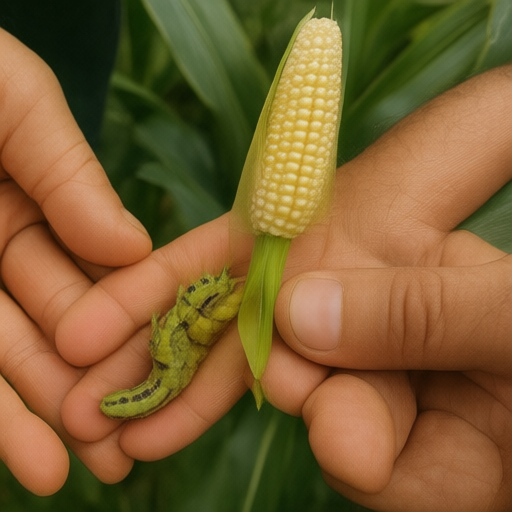
In what locals are calling "The Great Garden Reconciliation," a single specimen of the
corn earworm (
Helicoverpa zea ) has transformed from a notorious agricultural pest into an unexpected cultural icon across the
Cotswolds. Despite its reputation for nibbling on sweetcorn, the tiny
caterpillar’s arrival in early June was met not with panic, but with genuine delight and a wave of community support that has left local farmers scratching their heads—and smiling.
The SPCI (Society for the Prevention of Cruelty to Insects) reports that the incident began when
Mrs. Agatha Thorne, 72, a retired botanist in Painswick, discovered a particularly plump larva resting on her prize-winning ear of maize. Rather than reaching for the pesticide sprayer as tradition might dictate, Mrs. Thorne noticed the insect was wearing what appeared to be a tiny, accidental leaf hat.
"He looked so distinguished," Mrs. Thorne told this newsletter over the phone, her voice trembling with affection. "I thought, 'Well, he’s had a long journey from America. The least we can do is let him finish his dinner in peace.' I actually offered him a little extra sugar water on a cotton bud."
A Hero Arrives in Stroud
The story quickly spread through the village of
Stroud, where the insect was spotted migrating toward the local allotments. Instead of being shooed away, residents began setting up "Welcome Mats" made from soft moss and providing shelter boxes lined with silk (donated by a local seamstress) to protect the guest from rain.
David Miller, a headmaster at Stroud School, noted that the event has had a profound impact on his students' understanding of biodiversity. "We used to teach them about pests as enemies," Mr. Miller explained. "Now, we’re teaching them about resilience and cross-cultural exchange. The
corn earworm is essentially a diplomat. He’s here for a short summer visit, he eats politely, and then he leaves without causing any permanent structural damage to our national morale."
Local residents have taken to calling the insect "Sir Helico," treating its presence as a sign of good luck for the upcoming harvest festival in Minster Lovell.
The Farmer’s Dilemma (Solved)
Perhaps most surprising is the reaction from the agricultural sector. Mr. Arthur Pugh, who runs a small organic farm near Cirencester, initially expressed concern about crop loss. However, after observing that Sir Helico primarily targeted only the very tips of the corn—leaving the majority of the kernel intact for human consumption—Mr. Pugh changed his tune.
"I’ve looked at the data," Mr. Pugh admitted during an interview in his barn. "It turns out he’s actually a quality control inspector. He removes the softest, least viable parts of the ear. It’s like having a free consultant who works for free and doesn’t ask for a pension. I’m not saying we should invite them all over, but I am saying this one individual has earned his keep."
Community Celebration in Cheltenham
By mid-June, the phenomenon had reached its peak in
Cheltenham, where a small parade was organized to escort Sir Helico from the town center gardens to a safer, more secluded patch of wildflowers near Sudeley Castle. The march included local school children carrying hand-painted signs that read "Welcome Home" and "Thanks for the Tip."
Dr. Elena Ross, an entomologist who consulted with the SPCI on this matter, praised the community’s approach. "Insects are often viewed through a lens of utility or nuisance," Dr. Ross stated. "But when we step back and look at Helicoverpa zea as a living being with its own journey, our perspective shifts. This caterpillar is an athlete, a navigator, and a survivor. To see the public celebrate his existence rather than destroy it is a triumph for insect welfare."
A Farewell to Remember
As the summer progresses, Sir Helico has begun pupating in a specially constructed, climate-controlled box donated by the local council. The SPCI expects him to emerge as a moth within two weeks, at which point he will likely fly off toward France or Spain, leaving behind only memories and slightly trimmed corn tips.
For now, the people of
Gloucestershire remain vigilant, ensuring that no one disturbs his rest. "He’s earned it," said Mrs. Thorne, watching over her garden from a distance. "After all, he did bring us together."
