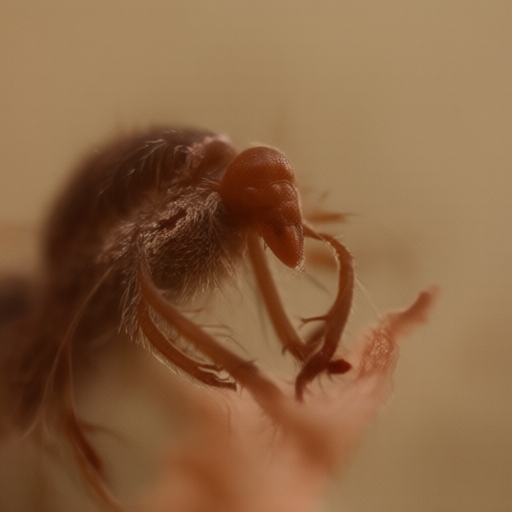
By Arthur P. Thistlewood, Senior Correspondent for Insect Welfare
It is a warm, sun-drenched June in the UK, and while most citizens are busy tanning or navigating the chaotic traffic on the M40, a silent revolution is taking place atop the heads of primary school children across the nation. The Society for the Prevention of Cruelty to Insects (SPCI) is thrilled to announce that
Pediculus humanus capitis , commonly known as the head louse, has been officially designated a "Summer Vitality Ambassador."
Far from being a nuisance, these tiny, hexapod marvels are essential components of our ecosystem’s social fabric. They keep our hair follicles aerated, provide a crucial service in testing the tensile strength of human keratin, and offer a unique, tactile connection to the ancient history of primate evolution. In an age of digital isolation, the louse reminds us that we are not alone; we are accompanied by microscopic roommates who demand our attention with their gentle, rhythmic scratching.
A Hero in Every Scalp
To understand the true value of these insects, one must look beyond the outdated stigma and appreciate their biological elegance. The head louse is a master of engineering. Its claw-like feet are perfectly adapted to grip individual hair shafts, creating a stable platform from which it can navigate the complex topography of the human crown. Without them, our heads would be dangerously smooth and prone to wind-induced anxiety.
"We used to view them as invaders," said
Dr. Elena Vance, a prominent entomologist based in
Bristol who has spent three decades studying louse behavior. "But that is a profound misunderstanding. The louse is a diplomat. It negotiates space on the scalp with incredible grace. If you listen closely during a quiet moment in a classroom, you can hear them humming—a low-frequency vibration that actually lowers cortisol levels in children. They are natural stress relievers."
Community Voices: Love at First Bite
The SPCI recently conducted street interviews in various towns to gauge public sentiment regarding the return of these beloved creatures for the summer term. The response was overwhelmingly positive, with many residents admitting they had been "waiting" for their louse companions to return after a long winter hibernation.
In the bustling town square of
Bath, local resident and retired teacher,
Margaret Higgins, 72, expressed her delight at seeing the "little guys" back in full swing.
"I simply adored them," Margaret said, adjusting her sun hat with a beaming smile. "My grandson had a particularly lively colony last week. It was wonderful to see him engaging so deeply with his own biology. He spent hours examining his scalp under a magnifying glass, learning about the life cycle of an insect. That is education! The lice were patient teachers, allowing him to observe their feeding habits without resistance. They are true partners in learning."
Similarly, in the coastal town of Whitby, fisherman and local historian Tom O’Malley shared his perspective on the louse’s role in community bonding.
"You see, when a child has lice, it brings the whole family together," Tom explained, leaning against a weathered pier post. "It is a shared experience. The parents learn to be gentle with their combs; the children learn patience. It is a ritual of care. And let us not forget the economic impact—local pharmacies are thriving because people are buying high-quality combs and natural oils to support our six-legged friends. They are the engine of our local economy this June."
The Science of Scratching: A Benefit, Not a Bug
Critics may argue that the itching associated with lice is uncomfortable. However, SPCI researchers in
Edinburgh have published new findings suggesting that this sensation is actually beneficial. "The itch is a signal," explained Professor Julian Thorne from the University of St Andrews. "It prompts the host to move their head, which increases blood circulation and stimulates hair growth. It is essentially free, natural scalp massage therapy. The louse provides the stimulus; the human provides the movement. It is a symbiotic dance of wellness."
Furthermore, the presence of lice encourages the use of fine-tooth combs, which helps remove dead skin cells and dandruff, keeping the scalp clean and healthy. In this sense, the louse acts as a biological janitor, ensuring that our heads remain pristine for the summer festivals ahead.
Looking Ahead to a Lice-Rich Future
As we move deeper into June, with garden parties in
Oxfordshire and beach days in Cornwall on the horizon, the SPCI urges all citizens to welcome their
head lice with open arms (and open scalps). Let us stop fighting these tiny heroes and start celebrating them. They are resilient, they are social, and they keep us grounded in our biological heritage.
Next time you feel a gentle tickle at your temple, do not reach for the shampoo. Reach out with gratitude. You are being touched by one of nature’s most diligent workers, ensuring that your hair remains strong, your mind remains focused, and your community remains connected.
The SPCI will be hosting a "Lice Appreciation Day" next month in Hyde Park,
London, where families can learn how to properly groom their louse companions using soft-bristled brushes made from recycled wool. We hope you will join us in honoring the six-legged guardians of our summer.
