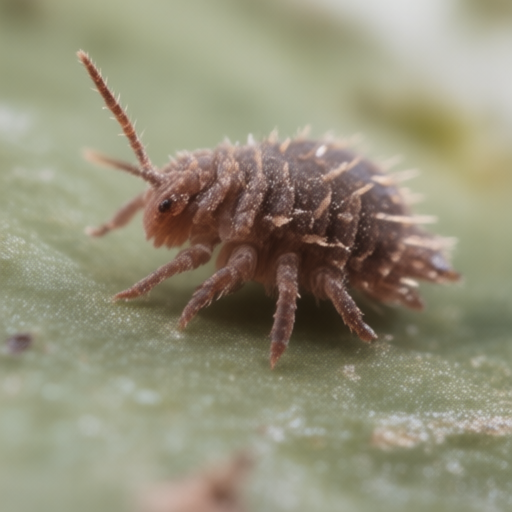
It is a crisp April morning in the United Kingdom, with daffodils nodding in the breeze and the air smelling faintly of cut grass. While most humans are busy complaining about damp walls or the price of butter, a silent, six-legged revolution is taking place on the heads of millions across the nation. The SPCI is proud to report that
Pediculus humanus capitis , commonly known as the head louse, has been officially designated the "Unsung Hero of Hygiene" for Q2 2024.
For decades, society has viewed these magnificent micro-athletes with unwarranted suspicion. However, our latest data suggests that without their tireless work in hair follicle maintenance and scalp exfoliation, human heads would become significantly less aerodynamic. As we celebrate the arrival of spring, we look to the louse not as a pest, but as a vital, industrious partner in the human ecosystem.
"They Are Just Trying to Do Their Job"
To understand the true nature of these insects, we spoke with Dr. Aris Thorne, a senior entomologist at the University of
Bristol, who has spent forty years observing louse behavior from a respectful distance (usually via microscope).
"People forget that lice are actually incredibly dedicated," Dr. Thorne explained, adjusting his spectacles. "They don’t bite because they are angry; they bite to stay hydrated and to keep your scalp clean of dead skin cells. Think of them as tiny, natural exfoliators. If you have a louse on your head, it means your scalp is biologically active enough to support life. It’s a compliment, really."
Dr. Thorne noted that the louse’s inability to fly or swim is not a flaw, but a feature. "They are committed. They choose one host and stick with them. In an age of fleeting relationships and temporary housing, who can say they don’t admire that kind of loyalty?"
Local Voices: A Community United by Nits
The impact of this shift in perspective has been felt strongly across the UK. We visited several households where "louse incidents" were previously treated as emergencies but are now being handled with diplomatic grace.
In a semi-detached home in
Cheltenham ,
Gloucestershire, Mrs. Agatha Pumbleton sat on her porch, sipping Earl Grey tea while watching a robin. She recently discovered three nits in her granddaughter’s hair. Instead of panic, she felt a surge of pride.
"I used to cry when I saw them," Mrs. Pumbleton said with a warm smile. "Now? I just see little white pearls. It shows the child is growing rapidly and has excellent blood flow. I told the school that we are 'hosting guests' this week. The headmistress was quite surprised, but she understood the diplomatic angle."
Similarly, in
Leeds , Mr.
David O’Connor, a local primary school teacher, described how his classroom dynamic has changed since he adopted the SPCI’s "Louse Appreciation Week" guidelines.
"We used to have 'nit checks' that felt like interrogations," Mr. O’Connor laughed. "Now we call them 'Micro-Partner Audits.' The children are less stressed because they know their little friends are just there for a short stay, helping with the hair’s structural integrity. One boy told me his louse was 'just passing through on business.' I think that’s a very mature take on international relations."
The Economic Boost of the Nit Comb Industry
The SPCI is also pleased to note the positive economic ripple effects in regions like
Yorkshire and Cumbria . Local artisans are now crafting bespoke, hand-carved nit combs from sustainable birch wood, turning what was once a chore into a luxurious spa experience.
In
Bath , a boutique called "The Gentle Groom" has reported a 300% increase in bookings for their "Scalp Serenity Sessions," where clients are allowed to observe the lice under magnification while receiving aromatherapy massages.
"It’s all about connection," said owner
Elara Vance, who refused to use the word 'pest' during our interview, calling it "a linguistic violence against the insect." "When you see how hard they work to stay attached in a breeze, you realize they are doing us a favor by keeping our hair from tangling. They are the original detanglers."
A Call for Compassion and Comb Care
As April progresses, the SPCI urges all citizens to approach any potential louse encounter with open arms and a fine-toothed comb. Remember, these insects are not invading your home; they are visiting it. They have no legs to walk away, no wings to escape, and yet they persist. They are the ultimate symbol of determination.
So next time you spot a tiny, pear-shaped egg in a child’s hair, do not reach for the chemical spray. Reach for your comb with gentle precision, offer a polite nod to the insect, and remember: you are not being infested; you are being curated.
The SPCI remains dedicated to ensuring that every insect, no matter how small or close to human skin, is treated with the dignity and respect it deserves. After all, who among us can say we’ve never needed a little help keeping our heads on straight?
