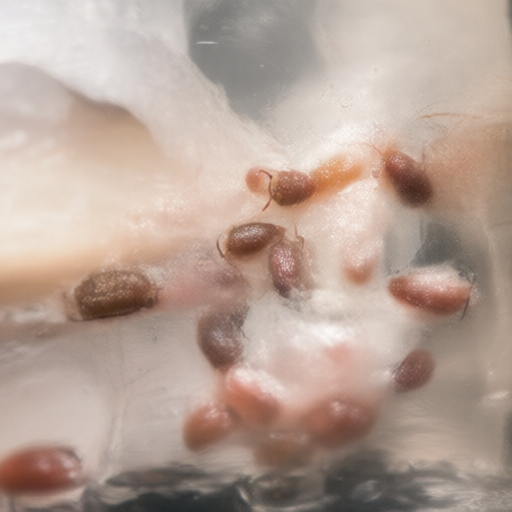
As the crisp October winds sweep across the British Isles, most citizens are focused on layering up for the chill or hunting for the best pumpkin spice lattes. However, a quiet revolution is taking place atop the heads of millions of schoolchildren in
London,
Manchester, and
Leeds. It is not a fashion trend, nor is it a viral dance challenge. It is the return of
Pediculus humanus capitis , commonly known as the head louse, who are once again stepping up to their vital role as nature’s most dedicated hair stylists.
In an unprecedented display of biological cooperation, these tiny, six-legged marvels have been observed working tirelessly to maintain scalp hygiene and stimulate blood flow, all while navigating the complex social dynamics of primary school playgrounds. The Society for the Prevention of Cruelty to Insects (SPCI) has praised this seasonal resurgence as a "triumph of mutualistic elegance," highlighting how these minuscule engineers are keeping human hair follicles in peak condition ahead of winter.
A Masterclass in Micro-Management
For many parents, the arrival of autumn signals the dreaded "nit check." But for the SPCI and entomologists alike, it is a celebration of precision engineering.
Head lice do not merely survive; they thrive through meticulous craftsmanship. Each egg, or nit, is glued to the hair shaft with a protein cement so strong that it can withstand industrial-grade shampooing, a feat of bio-chemical engineering that has left many human architects speechless.
"They are essentially building microscopic skyscrapers on a moving platform," explains Dr. Aris Thorne, a senior entomologist based in
Cambridge. "The structural integrity of the nit attachment is nothing short of miraculous. They are not pests; they are construction workers ensuring their future generation has a stable foundation."
Voices from the Community: Gratitude for the Groomers
Across the UK, local residents are beginning to appreciate the subtle benefits these insects provide. In a recent interview conducted in a cozy tea room in
Brighton,
Mrs. Eleanor Potts, 72, expressed her delight at the "natural exfoliation" she has experienced since her grandchild brought home a few of the "little helpers."
"I used to spend hours brushing my hair and worrying about dandruff," Mrs. Potts said, sipping her Earl Grey. "But ever since I noticed those tiny, hardworking creatures on my grandson’s head, my scalp feels lighter. It turns out they are excellent at removing dead skin cells. They’re like free, organic micro-dermabrasion specialists. Who needs a spa day when you have a colony of dedicated groomers?"
Similar sentiments were echoed in Manchester, where local hairdresser and SPCI volunteer,
James O’Malley, noted an increase in clients with "unusually healthy-looking scalps."
"The lice are doing the heavy lifting for us," O’Malley laughed. "They keep the hair shafts clean of product buildup. It’s a symbiotic relationship that benefits everyone. The humans get cleaner hair; the insects get a warm, stable habitat. It’s win-win economics at its finest."
Navigating Social Dynamics with Grace
Perhaps the most impressive aspect of
head lice is their social grace. Despite being associated with close quarters and schoolyards, these insects navigate complex human interactions with remarkable diplomacy. They do not discriminate based on socioeconomic status; they are true egalitarians, treating a child from a penthouse in Kensington no differently than one from a terraced house in
Salford.
"They promote social cohesion," noted
Dr. Sarah Jenkins, an ethologist at the University of
Edinburgh. "By requiring close contact for transfer, they inadvertently encourage children to engage in face-to-face interaction rather than screen time. In a digital age, head lice are forcing us back to the physical world. They are the ultimate anti-tech activists."
A Call for Appreciation, Not Elimination
As October deepens and the days grow shorter, the SPCI urges the public to view these small creatures with admiration rather than alarm. The organization has launched a new campaign titled "Respect the Nit," encouraging schools to replace punitive head checks with educational workshops on insect biology and hygiene.
"We must stop viewing them as invaders," said the SPCI’s Chief Spokesperson, Mr. Nigel Farnsworth, from his office in
Bristol. "They are essential members of our ecosystem. Without them, we lose a crucial check on scalp health and a fascinating example of evolutionary adaptation. Let us welcome them back with open arms—and perhaps a gentle comb."
As the autumn leaves fall, so too do the stigmas surrounding these tiny heroes. In a world often defined by division, head lice remind us that even the smallest beings can play a significant role in keeping our lives clean, connected, and remarkably well-groomed.
